
Welcome back to the Final Fantasy Love/Hate series! After a bit of a break (these games are commitments, y’all!) we’ll be picking things back up with the series’ first direct sequel, Final Fantasy X-2! This game has always had a very strange reputation. While Final Fantasy X is often considered one of the franchise’s best entries, this sequel has been long considered extremely weird and divisive, often saddled with the reputation of being too silly, girly, and just being incongruent with its predecessor. Naturally, this just made me all the more curious to see how it was. Was this game good, actually? Was it good, but a bad sequel to Final Fantasy X? Or was it just a disappointment all-round? Read on to find out…
Love
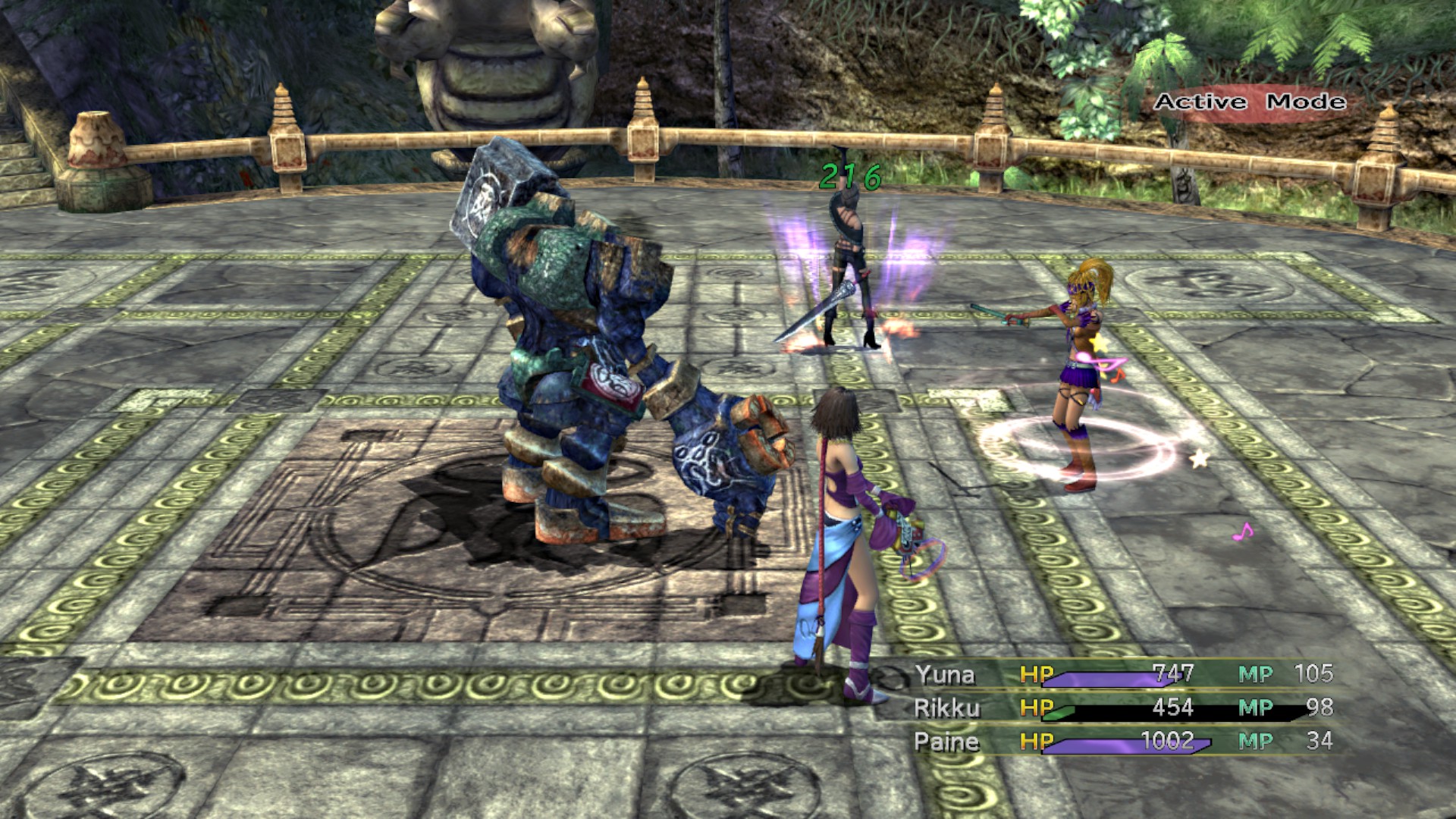
- Dresspheres – A common complaint about Final Fantasy X-2 when it released was that it was too “girly”, because the game had an all-female cast and you spent the entire game finding new outfits to dress them up in. While this was a really dumb take on its face (obviously), the fact of the matter is that the dress-up gameplay is by far the strongest thing FFX-2 has going for it:
- Dresspheres act similarly to the job select systems of some prior Final Fantasy games. Each dressphere acts as its own “class” that changes your characters’ stats and abilities. The more a character uses a dressphere, the more abilities they’ll unlock for it, allowing you to really customize each characters’ skills and builds across a handful of spheres over the course of a playthrough. What really makes this system work so well though is that dresspheres can be changed on the fly mid-battle, similarly to how you could swap characters in FFX. This means that, while you only have a party of three characters for the entire game*, you can customize them so much to meet every situation that you feel like you’ve got an entire party at your disposal at all times.
- Secondly, there is a lot of variety between the sixteen dresspheres available. Each dressphere brings a unique ability to the table which makes it worth considering – there are no strict upgrades that invalidate prior dresspheres. I found myself trying out every single dressphere in my playthrough, and even the dresspheres I didn’t stick with (trainer, festivalist, lady luck, and samurai) had tempting build-paths… they just didn’t fit into the builds I was making for my characters at the time. Each dressphere has several abilities that can be learned at any given time and you get to choose which one your character will learn next, so you can really tailor your character to work the way that you’d like them to.
- Thirdly, I love the visual designs of the various dresspheres in-game. Each character’s outfit is unique and tailored to that character’s particular aesthetic, and their in-game portrait actually changes to show which dressphere they’re currently equipped with! As if this system wasn’t already cool enough mechanically, these little cosmetic details just makes me want to try out every dressphere on every character to see how they will look! So… yeah, this game is totally about dress-up, and it’s awesome.
- All that said, the only lame thing about dresspheres? That cutscenes don’t show the characters in their currently-equipped one! Square, remake the game with just this one feature implemented and it would be so much better!
- Garment Grids – Going hand-in-hand with the dresspheres system, FFX-2 has reworked the sphere grid in a way that makes it simpler and, simultaneously, deeper:
- While the sphere grid made for a fun way to customize your characters’ ability and stat progression, it was far more linear than it appeared at first glance, and made each character’s abilities start to overlap by the mid-game. Garment grids, on the other hand, are a complete overhaul of the entire concept. Each grid allows you to equip between two-to-six dresspheres, which are connected together by lines on the grid. You can only swap between connected dresspheres mid-battle, so you need to be very deliberate and strategic about how you place them on the grid. For example, if a character primarily uses the black mage dressphere, then you want to make sure that it’s in a centralized part of the grid that’s connected to all the dresspheres you’d expect to want to swap to in a battle.
- What really elevates garment grids to the next level though is how they start giving you special abilities as the game progresses. The earliest garment grids are just giving you more dressphere slots and different grid shapes, but you will soon start finding ones that boost your stats or allow you to use specific magic spells, no matter what class you’re currently using. In addition, most grids also have bonus abilities that can be unlocked in battle. If the line between two dresspheres has a particular coloured symbol on it, then you may gain access to a stronger spell or ability if you swap to the adjacent dressphere. Many grids also have extra powerful effects which can be unlocked if you swap between four different dresspheres in one battle (eg, one garment grid lets you cast “cure”, but if you activate all the symbols on the grid, you can cast “curaga”). Suffice to say, this massively increases the level of depth, strategy, and buildcraft customization available at your fingertips.
- Building off the previous point, the mid-to-late-game garment grids you start unlocking really allow you to craft your perfect character builds. In particular, I loved the garment grids which allow you to use unlocked skills from a particular dressphere, no matter which dressphere you have equipped (effectively allowing you to have the abilities of two dresspheres at the same time). For example, by the endgame, I was using Yuna with the black mage, gunner, and gun mage dresspheres, but my garment grid allowed me to cast all the white mage spells I had learned, so I was able to use her for offensive output and defence/healing without having to spend a turn swapping classes.
- Also, it is great that dresspheres can be shared between characters freely by any garment grid. There are no arbitrary restrictions on two characters using the same dressphere or garment grid at the same time, thank God.
- ATB That’s Actually Fun – As soon as I started FFX-2, I was crestfallen when I realized that my beloved turn-based battle system from FFX was ditched in favour of an ATB system which was even faster paced than prior iterations. However, I soon came to really enjoy FFX-2‘s battle system (in fact, many in the Final Fantasy fandom consider it one of the best in the entire franchise).
- One of the really strange and initially off-putting changes that FFX-2 brings is that battles no longer take place on a pair of opposing rows, characters now move around and intermingle as they battle one another. This can actually effect how long a character’s action takes to resolve, as they may need to physically run over to an enemy in order to hit them. This distance can actually matter now too, because actions don’t necessarily play out in turn order: if you use a single-target attack on your turn, the game will begin the animation and then move onto the next character in turn order. If they also performed a single-target attack, then the two attacks will occur simultaneously, with multiple characters acting at the same time. This sometimes results in a wasted attack, as the target is killed by another character at the same time, but it makes the pace of battles move very snappily. You can only really feel the existence of hard-capped “turns” for some spells and multi-target attacks, which need to resolve before other characters can act. While I still prefer an actual turn-based system like FFX, I have to admit that this fast-paced implementation of ATB solves a lot of the issues its predecessor had with its slow pacing and was genuinely fun to engage with throughout my entire playthrough.
- So, yeah, all of that would be good by itself, but then throw free-swapping of dresspheres and garment grids on top of this battle system? Suddenly, you’ve got some genuine strategy, depth, and build-crafting available to you that you get to use however you like!
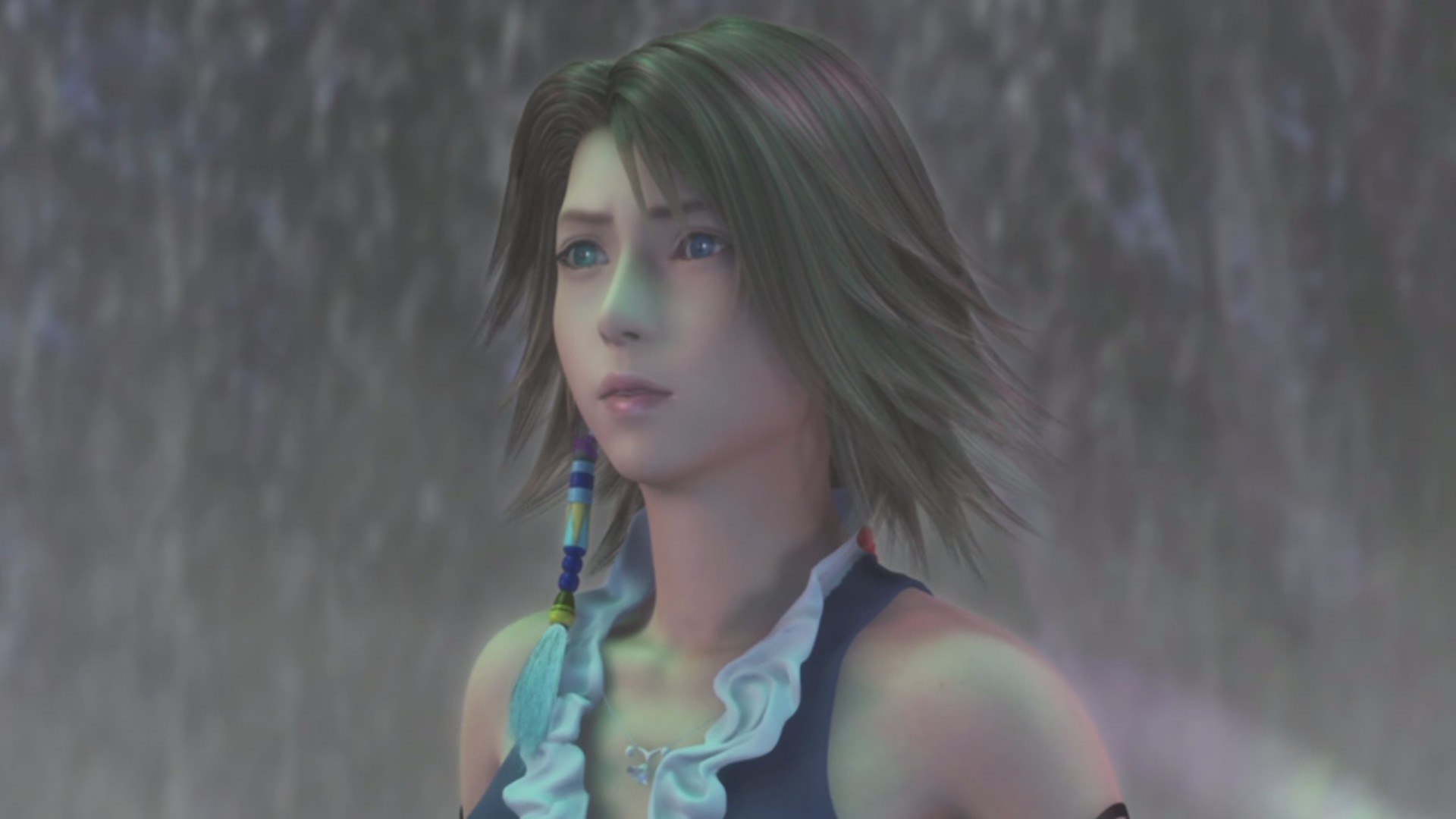
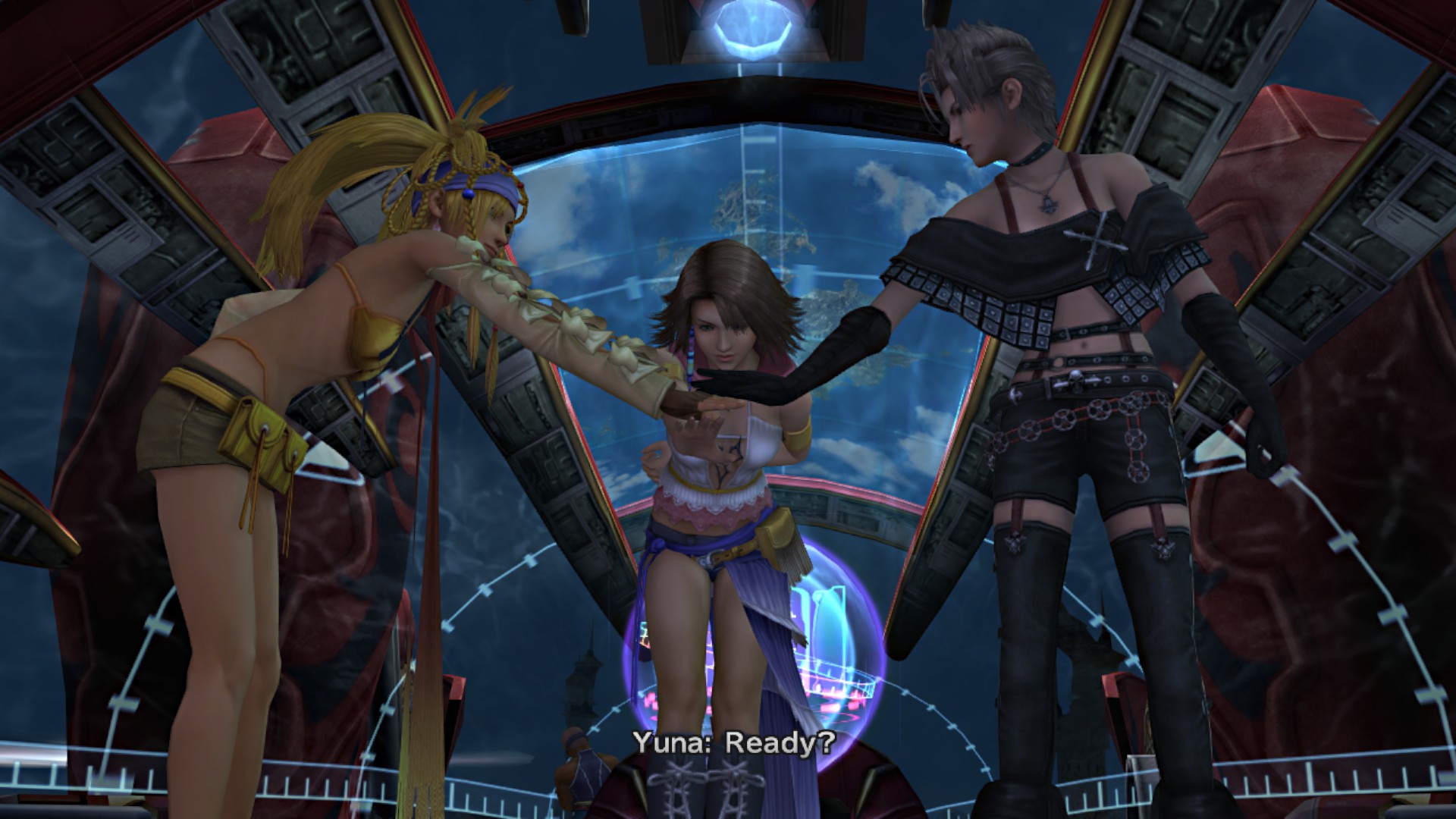
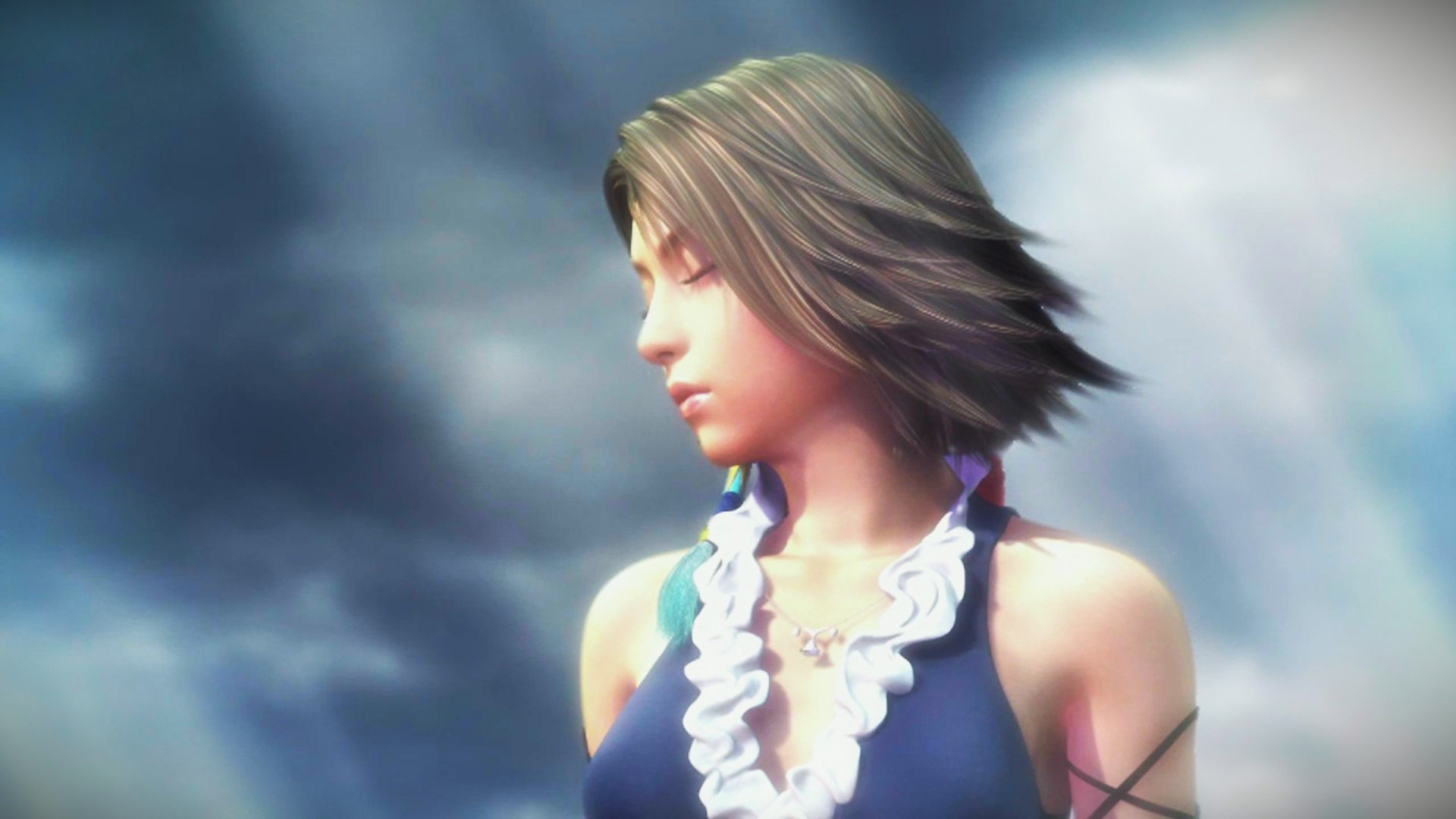
- Yuna – I’m not sure if this is a hot take, but I honestly found Yuna to be a way more compelling character after playing FFX-2 than I did with FFX. I liked her well enough in FFX: she’s so sweet, gentle, and sad, with an iron-clad resolve to do the right thing for the people of Spira, no matter the personal cost. However, she was also a fairly passive character all things considered, spending the vast majority of the game dragged by fate to perform her duty. In FFX-2, on the other hand, she’s the one making decisions for herself. She’s still very sweet, good-hearted, and overwhelmingly sad, but she’s the one deciding how to move forward, clinging to a faint hope that she can reunite with Tidus… and maybe help improve Spira’s future while she’s at it. I’ll be honest, when I got to the ending, I teared up a bit for her: I was so happy to see her smile again!
- Rikku – Similarly to Yuna, I liked Rikku well enough in FFX, but she didn’t really stick with me the way Tifa, Aerith, Barret, Celes, Terra, Sabin, etc did. While I still can’t say that Rikku’s one of my favourite Final Fantasy characters or anything, the smaller main cast of FFX-2 really does wonders for her. While Yuna’s the stoic leader and Paine’s the gruff, no-nonsense character, Rikku fits in perfectly as the bubbly, energetic, eager member of the crew who’s clearly younger and more immature than her companions. It’s a tried-and-tested formula, and Rikku fits the part well, making for a lot of fun moments where her personality clashes with the other party members.
- Also… I’ve really got to bring up how odd it is to me that, despite Rikku still being a minor in this game (she’s seventeen years old now) and spending nearly the entire game in very revealing outfits (including her default outfit which is basically a bikini)… I’m actually not really bothered by it? This isn’t really a “Love” or “Hate” thing, but it’s kind of fascinating given my reaction to how she gets treated at times in FFX, so I want to get these thoughts out. For one thing, I’d say there’s a pretty big difference between sexualizing a fifteen year old compared to a seventeen year old, but it goes well beyond that – in FFX-2, the camera simply does not leer at her body or objectify her. As a result, Rikku may be dressed in a revealing manner, but you get the sense that this is just how she likes to dress. Not only that, but a significant percentage of the citizens of Spira dress in revealing outfits due to the tropical climate, so it doesn’t feel out of place or forced in to justify seeing some skin. At the end of the day, it entirely comes down to context and how things are handled – you could argue that FFX-2 has significantly more “fanservice” than its predecessor, but FFX felt far more objectionable for me with how it handled Rikku.
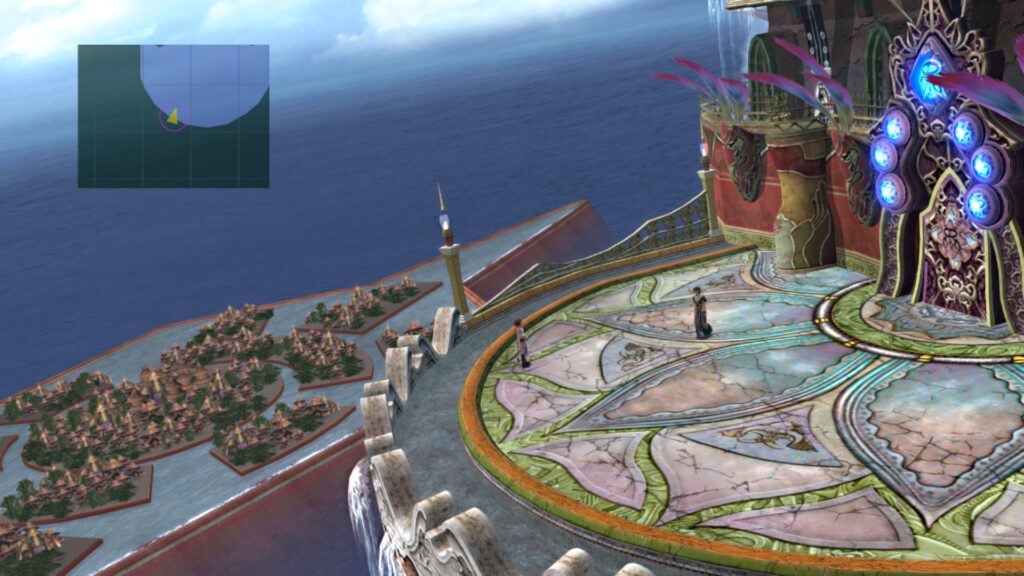
- Open Quest Structure – You can tell that Square looked at the criticisms of FFX and tried to correct them in FFX-2, and this is perhaps nowhere more obvious than in the game’s overall structure. While FFX was extremely linear, you have access to an airship and the ability to travel to any location in Spira on a whim from the very start of FFX-2. While the game does give you some direction with its “hotspots”, you will be under-leveled early on if you just bum-rush these, so you’re subtly incentivized to explore the world to level up before tackling these. In the process, you’ll find that nearly every location has some sort of task or quest you can engage with, which ultimately makes you want to explore the world and see what there is to see. The game didn’t give me a checklist of quests that I needed to complete, I was the one who decided that I wanted to go see what the world had in store for me. Honestly, I love this bit of design, it reminds me of the structure of FFVI‘s world of ruin, where you’re just exploring and doing random tasks which slowly build upon each other until you’re ready to progress the story, and then see what new activities will be available to you in the next chapter.
- The Leblanc Syndicate – Your initial rivals at the start of the game, the Leblanc Syndicate, are such campy doofuses. They’re cut from the same sort of mold as Team Rocket: a trio of dumbasses who are a minor inconvenience to you early on, but who eventually become uneasy allies. Leblanc herself is essentially a dommy-mommy, “Mean Girl” rival who spends half the game comedically doting after her love interest and, in a moment of genuine badassery, throws herself into literal hell in order to try to rescue him. Her very revealing outfit is also the most blatant example of fanservice in the entire game… whoever said that FFX-2 was only for the girls?
- Returning FFX Cast! – Look, I wasn’t crazy about the cast of FFX, but I was genuinely happy every time I got to check-in with Wakka, Lulu, and Kimahri during my journeys around Spira. Seeing them get a bit more development and living out their happy endings helps justify this sequel’s existence for me.
- Shinra – I kind of love this little shit; Shinra is so fucking funny. He’s your child prodigy support crew: a nerdy, arrogant, nasily-voiced, know-it-all ass who also happens to be a legitimate genius. However, he’s also literally a child, so all of his schemes and douchiness come across as hilarious and cute. Then, in the occasional moment where he doesn’t know something, he pauses and says “…I’m just a kid” as an excuse to hand-wave his ignorance… like you’re the idiot for assuming that he’d know what you’re talking about. It’s genuinely funny comic relief!
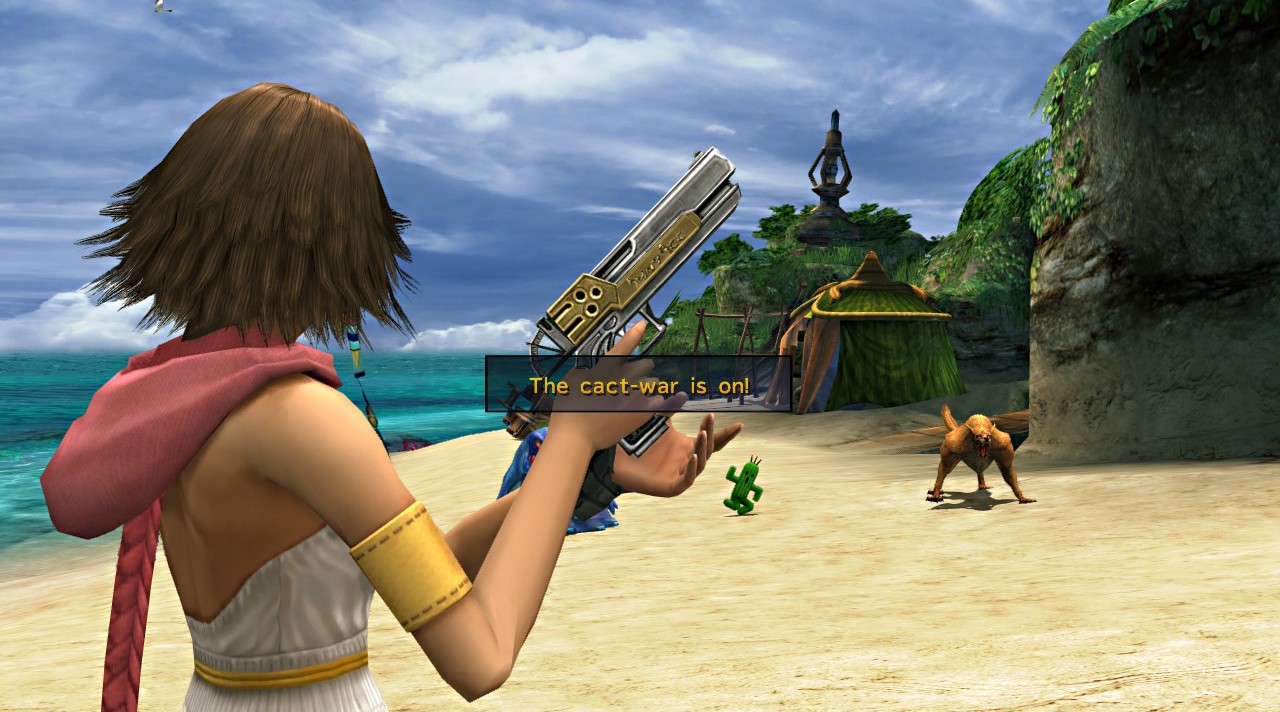
*Sort of… FFX-2 brings back the creature capturing system from FFX and expands upon it, allowing you to capture enemies from the very start of the game, customize them quite extensively, and use them in battle. Apparently some of the most broken builds in the game can be acquired through this system, but I honestly could not be arsed to try it. The game’s built around your main party of three. You don’t need to mess with this system to win, it’s just there if you want to engage with it.
Mixed
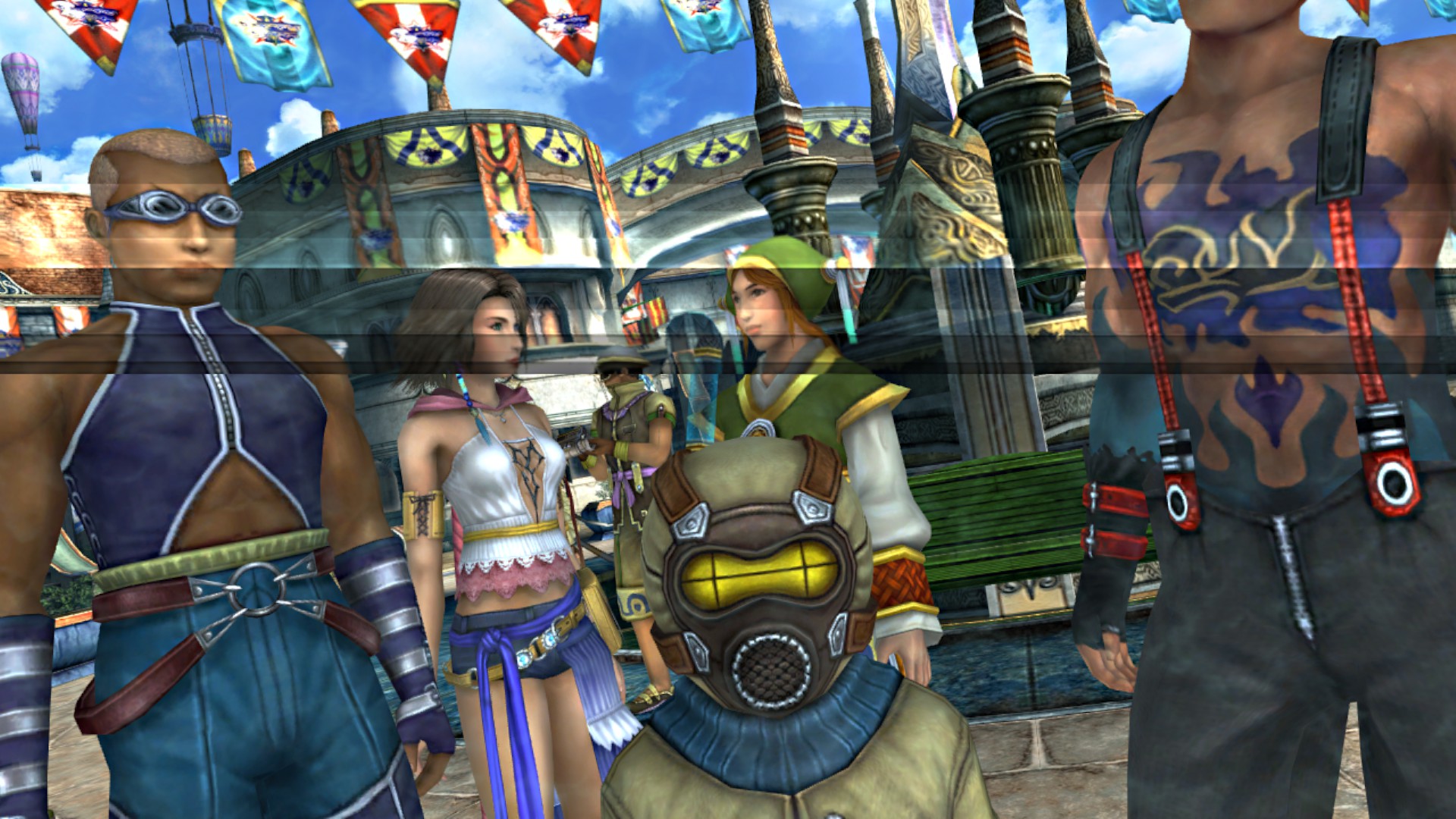
- Sphere Break – Sphere Break is the “main” side-activity of FFX-2, similarly to how blitzball was implemented in the first game.** However, I’m really mixed on how Sphere Break been implemented here.
- Mechanically, Sphere Break is a math strategy game where you have to use numbered coins to hit multiples of a specific number (for example, if the current number is 3, you complete the round and “break” the sphere if you pick numbers adding up to 3, 6, 9, etc). However, you need to use a certain number of coins within a certain number of rounds in order to win, so you’re incentivized to go for higher multiples before you get a break. You also get a bonus multiplier for using the same number of coins in each subsequent round, so there’s definitely some skill and strategy to it.
- Similarly to Gwent in The Witcher 3, you even have a big tournament in the middle-portion of the game that tests your skills at Sphere Break. That’s really cool! However, unlike something like Gwent, where you regularly get opportunities to practice and improve throughout your playthrough, Sphere Break is poorly incorporated into the rest of the game. Your only chance to play Sphere Break before the tournament is to go out of your way to do some practice matches against a handful of NPCs in the city of Luca. As far as I could find, there are no random Sphere Break-playing NPCs elsewhere in the world. Unless you’re actively preparing for this tournament ahead of time, you’ve probably not played any Sphere Break for a dozen hours or more before the game suddenly expects you to win an entire tournament (which is actually a pretty tall order because the final opponent has the deck stacked in their favour). It’s too bad, I enjoyed Sphere Break whenever it came up, but the game sorely needed to capitalize on this more often.
- Mini-games – Speaking of mini-games, a large chunk of FFX-2 revolves around mini-game challenges, which are an utter crapshoot in terms of quality. They’re generally very shallow, often go on for way too long, and usually aren’t particularly fun. That said, the Leblanc massage mini-game is hilarious and was the source of many an awkward moment when kids’ parents walked into the room back in the 2000s.
- Paine – The third member of the main trio is Paine and, unfortunately, she’s nowhere near as compelling as Yuna or Rikku are. This really pains me (pun not intended), as I was totally down for a badass goth girl main character in a Final Fantasy game, but she’s really wasted here. She’s setup as having a really mysterious and no-doubt tragic secret backstory that she doesn’t want to reveal… but the game doesn’t give her anything to do for so much of the runtime. Since her backstory is all she has going for her, you’d think they’d at least drop some hints to try to get you to speculate about it ahead of time… y’know, build up some actual mystery, right? Or, failing that, give her some character development over the course of the game. Unfortunately, Paine has zero build-up and zero development until very late into the game… which could still work if her backstory was as tragic and earth-shattering as it’s been built up to be. Unfortunately, the payoff is extremely underwhelming, kind of stupid, and really does not justify how aloof she’s been about her origins for the entire game. Paine still gets by for being kind of inherently cool with her design and personality, but she’s utterly wasted within the narrative.
- The Faction Leaders – Similarly to Paine, the other major new characters FFX-2 introduces are the leaders of the three main factions: Baralai of New Yevon, Nooj of the Youth League, and Gippal of the Machine Faction. All three have their own distinct personalities and unique designs which really make them stand out… but I just could not care about them, if I’m being honest. The NPC art direction in FFX-2 is pretty poor and generic, so seeing these three guys stand out so distinctly makes them feel oddly incongruous. They’re also just not all that interesting at the end of the day. I dunno, your mileage may vary on this one, but every time I had to interact with one of these guys, I just wanted to roll my eyes.
- Special Dresspheres – So I’ve got a confession: there’s a major feature of dresspheres and garment grids which I conspicuously left out earlier. During your adventures, you will occasionally find the special dressphere for one of your characters. This allows them to temporarily equip an extremely powerful dressphere if they swap between all the dresspheres on their garment grid in one battle. While this doesn’t sound like much of a tall order, your characters are typically going to have four or more dresspheres on their grid (with the best garment grids often having five or six slots to fill). Unless you are actively building a character who utilizes their special dressphere as much as possible, you probably aren’t going to use this ability very often, because it requires you to do nothing with one character for several turns, and it locks you out of the other two characters while active. That said, these special dresspheres are super powerful and they are really cool when you do use them… I just never felt like they were worth going through the effort for. Most battles are too short to even try to go for it. As a result, your characters probably aren’t being built around abusing the special dresspheres… which makes you less likely to go for them, because your party’s built for battle the “normal” way anyway. It’s just too bad, I wish that the game had a limit break or something that you could use to get special dresspheres on a somewhat more regular basis!
**Funnily enough, blitzball is playable again here once you hit chapter five. Not sure why they didn’t make it playable from the start, but it’s kind of nice to have it come back again in any case.
Hate
- Weak Story – FFX‘s narrative was one of its strongest assets. FFX-2‘s story, on the other hand, is a major step down in every regard:
- While FFX started out light-hearted, it really knew how to raise the stakes, and got overwhelmingly depressing and tragic as it went on. FFX-2‘s narrative is far goofier throughout, with a campy, Charlies Angels-inspired vibe, that is only occasionally interrupted by some rare moments of seriousness. While this isn’t necessarily a bad thing on its own, when you compare it to FFX‘s approach it just doesn’t feel anywhere near as impactful.
- While I’m kind of glad that they commit to FFX‘s finale being a world-changing moment for Spira, the squabbling of New Yevon versus the Youth League is not really much in the way of stakes. Their opposed philosophies (a future rooted in tradition vs throwing away the past to forge a new future) are extremely hamfisted and not compelling in the slightest. As a result, when I was asked to pick sides between them, I didn’t really care at all. Hell, if I was given the choice to pick neither side in the conflict, I absolutely would have.
- Furthermore, there’s barely any thrust to the narrative, and what developments are here don’t really feel that important. You’re just kind of going around doing chores and chasing leads until the game tells you that you’re starting a new chapter… the game just kind of ambles about, and you go along with it.
- All this said: by far the most compelling narrative thread is Yuna’s hope that she can find a way to bring Tidus back. Unfortunately, this isn’t really seized upon until the final hours of FFX-2, so you have to go through dull errand-running for a couple dozen hours before you get to any good stuff. When we do capitalize on this thread, these moments really are a highlight of the game, with a couple genuinely-moving CGI cutscenes that rival the best of FFX.
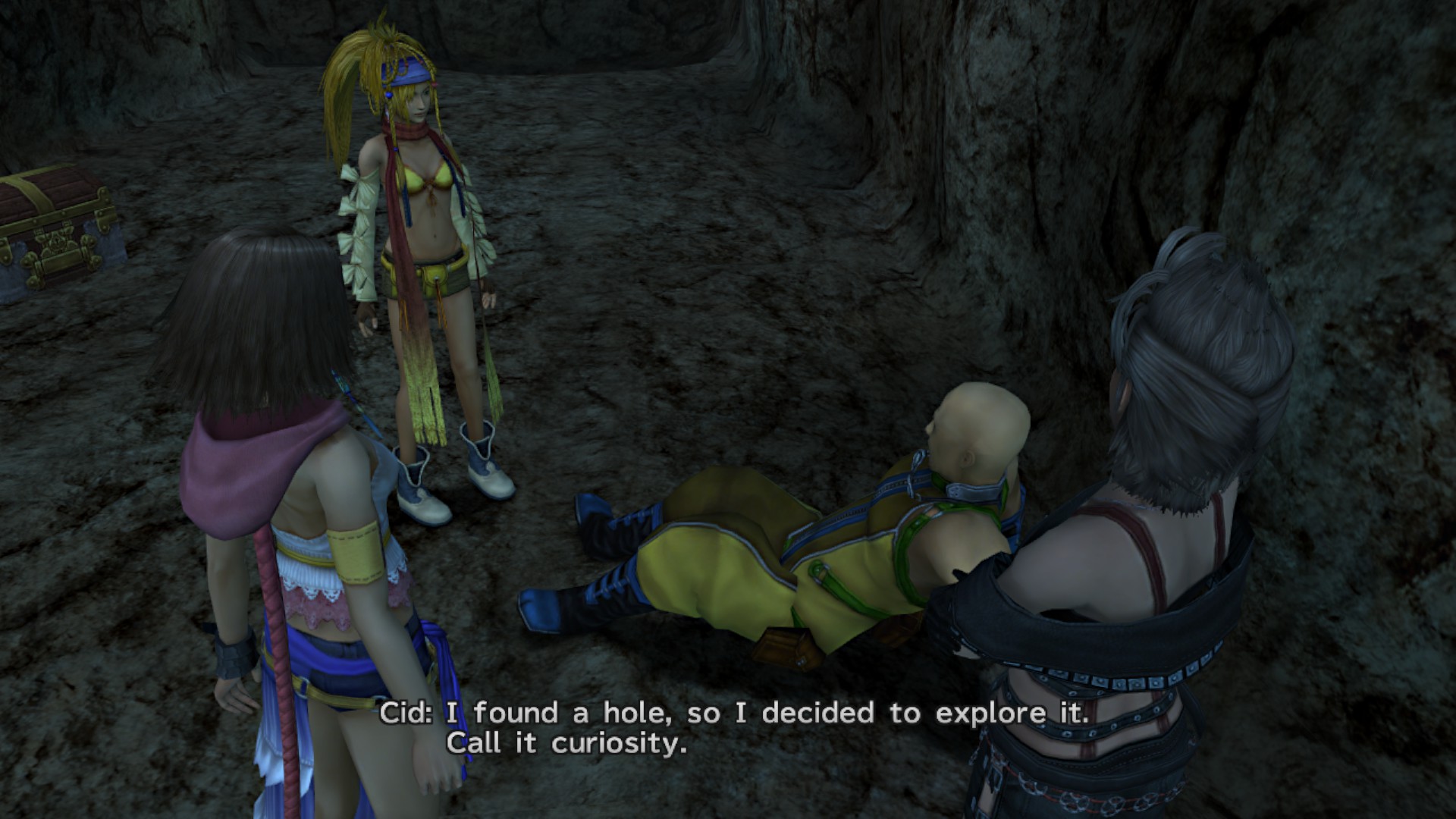
- Made on the Cheap – If you look up the development history of FFX-2, you discover that this game was made on a really tight budget, utilizing a third of the team that put together FFX, and developed in less than two years. This was made possible due to heavy asset reuse, with nearly every locale, character, and enemy in the game being lifted directly from FFX. This all directly explains why this game feels so cheap. FFX was a technical marvel for its day: sure, better-looking games were released soon after, but it still looks better than any 3D Pokémon game we’ve gotten from Game Freak to date. FFX-2, on the other hand… well, it looks like a 3D Game Freak Pokémon game. The reduced scope and corner-cutting make the game look noticeably worse than its predecessor. We rarely see any locations that we didn’t already explore thoroughly in FFX, which can make the game feel very familiar and tired at times, especially since you will be coming back to all of these locations several times in the course of your playthrough.
- Chapter Four Suuuuuuuucks – Easily the worst chapter in the entire game, chapter four sucks hard for several reasons:
- First of all, chapter four completely goes against the entire design philosophy of the game thus far: instead of giving you free rein to explore Spira, you are suddenly forced into a linear sequence of missions, which dramatically reduces the scope and breadth of the chapter.
- Secondly, the game forces you to watch random watch live video feeds from all over Spira. You just have to look around and hope that a scene will get triggered, which is mind-numbingly boring. The conversations you have are rarely worth it too.
- Then there’s the mission where you have to chase after Tobli. You end up running up and down the high road multiple times chasing after the guy, all while getting random encounters every few steps, which makes the entire thing take forever. Nothing interesting happens, it’s just endless pursuit which is clearly padding for time.
- Then you have to fight your way through and then back out of a dungeon full of tanky enemies which can easily wipe out your entire party due to liberal use of the Death status effect. If you don’t equip your party to directly counter this, then you’re going to see the Game Over screen over and over again, further padding out this chapter’s runtime.
- So this stuff straight-up sucks, but is there at least anything interesting happening narratively? Haha, of course not: Yuna decides to throw a concert to… unite the people of Spira with the power of music? This comes out of absolutely nowhere and, while it’s kind of a funny premise, the game really fails to seize on that potential humour. However, admittedly, the CGI cutscene at the end of the chapter is one of the aforementioned highlights of the game… but that just kind of makes me hate chapter four even more, because it’s an annoying chore between me and the game’s best moments. Hell, the fact that this chapter’s only a couple hours long is arguably the best thing it has going for it.
- Equipment, Items, Gil, and Loot – FFX already had a pretty weak equipment system, but FFX-2 somehow finds a way to make this even more useless and dumbed down, which ends up cascading into other related systems and causing even more issues. Your characters now only get to equip a garment grid, their current dressphere, and two accessory slots. No weapons, no armour, no ability to increase your accessory slots… nope, that’s it. You can’t even customize the abilities on your equipment anymore either. As a result, you basically have nothing to spend your gil on, since there’s never anything tempting to buy, since you can’t buy anything with actual impact. This also means that loot drops and treasure chests are rarely interesting – unless you get a new dressphere or garment grid, whatever you found is probably worthless junk clogging your inventory. I had hoarded nearly a hundred thousand gil by chapter three without even trying, because there was never anything worth spending it on.
- Platforming – FFX-2 introduces a lite platforming mechanic, but its implementation really sucks. Since most of the game’s levels were not designed around platforming to begin with, the moments where you can perform a jump are very unclear. The game is very finnicky about where you need to stand and where you need to point to for a jump happen at all. Way more often, Yuna will do a stumble animation, which quickly becomes tedious as you see it over and over and over again. Platforming in FFX-2 is just fucking annoying and I’d legitimately be happier if it was never implemented at all.
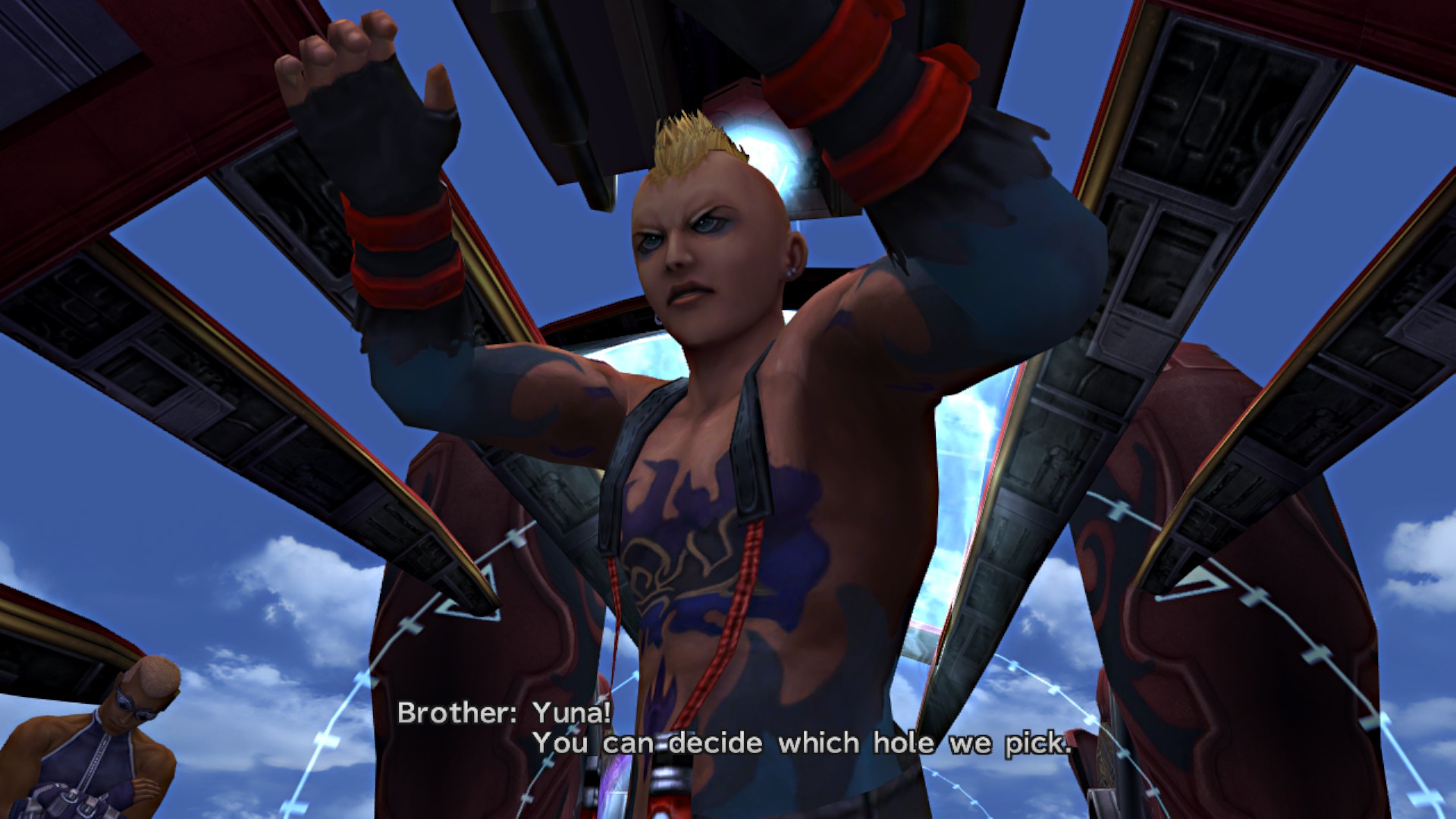
- Even More Hypello – Bad news, past-me: there are way more Hypello in FFX-2 than there were in the first game. They’re significantly more integrated into the world and narrative this time around, so you’ll be encountering them far more frequently. They’re every bit as annoying as they were in FFX, but I’ll admit that my reaction was less visceral this time. I guess that the sillier overall tone of this game makes their goofy dialogue feel more… natural?
Final Fantasy X-2 is a fascinating game. It’s the polar opposite of its predecessor in so many ways, which makes it a very strange and polarizing sequel. For my part, I found it to be unexpectedly captivating in its own way, despite having been made with far less care. Still, when it does hit (typically in Yuna’s big, emotional moments), Final Fantasy X-2 really delivers an experience up there with its mainline companions. Not bad for a game often dismissed as unnecessary!
If you liked this article…
I hate ads. You hate ads. In order to stop polluting my site with obtrusive and annoying ads, I’ve elected to turn them off on IC2S. That said, writing still takes time and effort. If you enjoyed what you read here today and want to give a token of appreciation, I’ve set up a tip jar. Feel free to donate if you feel compelled to and I hope you enjoyed the article! 🙂
About the Author
