
Welcome back, once again, to the Ninja Gaiden Love/Hate series! In this entry, we’ll be covering the third and final game of the Year of the Ninja, Ninja Gaiden 4! As I said back in May and August, I’ve been very leery about Ninja Gaiden 4 for a few reasons:
- It’s developed by PlatinumGames rather than Team Ninja. This is worrisome because PlatinumGames have had a spotty record of late between the utter disaster of Babylon’s Fall and the fan-reviled Bayonetta 3. In addition, several key staff have left the company since NieR: Automata, widely considered their last classic release, leaving a lot of doubt about whether the company can still live up to its pedigree.
- Platinum have their own distinct style within the action game genre, so the game could end up not “feeling” like a Ninja Gaiden game.
- Reinforcing that concern, Ryu Hayabusa is not the main character, so the game could easily feel more like a spin-off (like Yaiba) than a true, numbered entry. This also makes me worried that there’d be very little connection between this game and previous installments (and the wider world of Ninja Gaiden and Dead or Alive).
- It’s being funded by Microsoft Game Studios, which have had an extremely inconsistent record of quality. Their parent company is also complicit in the Gaza genocide*…
So yeah… there was certainly potential for Ninja Gaiden 4 to be good, but I was just as prepared for the eventuality of it being terrible, or for it to be a good game, but a terrible representation of Ninja Gaiden. So how did it turn out? Read on to find out…
Given that this is a Ninja Gaiden game, it’s probably worth advising that I played this game on Normal mode for my playthrough. I did start in Hard mode initially and got a couple chapters in before I hit a wall and had to drop down to Normal. I was just not “getting” the combat system at first and that was getting me killed over and over again. There are a few reasons for this: I was coming off of ~60 hours of Nioh 2 before I started this game, I had taken an edible the first couple times I played, so my ability to get to grips with the new combat system was definitely impaired, and the starting weapon, the dual swords, was my least-favourite weapon in the game, so it wasn’t really “gelling” for me. Honestly, I’m glad I dropped to Normal in the end for this initial playthrough, it made coming to grips with the combat system more forgiving and I imagine that it would make any subsequent Hard playthrough much more manageable… kind of like Ninja Gaiden (2004) in that regard!
*For this reason specifically, I didn’t actually pay money for this game. I had a free month of Xbox Game Pass Ultimate I was specifically saving to play Ninja Gaiden 4. If you must play Ninja Gaiden 4, just keep this in mind and go about it in a way that you feel is ethical.
Love
- Combat – You’d sure as hell hope that the combat in a Ninja Gaiden game would be good, and thankfully PlatinumGames lived up to their reputation here. Let’s break this up into a couple sections:
- First of all, there’s Yakumo’s combat style, which is what you’ll be using through 85% of the game’s runtime. Yakumo’s combat style definitely feels more Platinum than Team Ninja. Whenever you attack, Yakumo launches himself at whatever enemy is nearest, and his attacks will often sending him flying across the screen wildly. This gives combat a very fast and manic feel to it. Killing enemies will also fill your Bloodbind Ninjutsu meter, which you can use to activate “Bloodraven form” attacks while holding L2. This allows you to break an enemy’s guard, either when blocking or when they glow red during an unblockable attack. Weapons in Bloodraven form also have different, often dramatically altered movesets and playstyles, and many of your most powerful techniques can only be activated while in Bloodraven form. As a result, a large part of the combat system revolves around balancing between base and Bloodraven form, which makes for a fun core gameplay system. Add in that Yakumo gets access to four wildly different weapons and you’ve got a very solid and varied combat system at this game’s core. When you really get to grips with the combat system, you’re just on constant offense, landing combo string after combo string as you melt enemy health bars with the occasional dodge or parry thrown in.
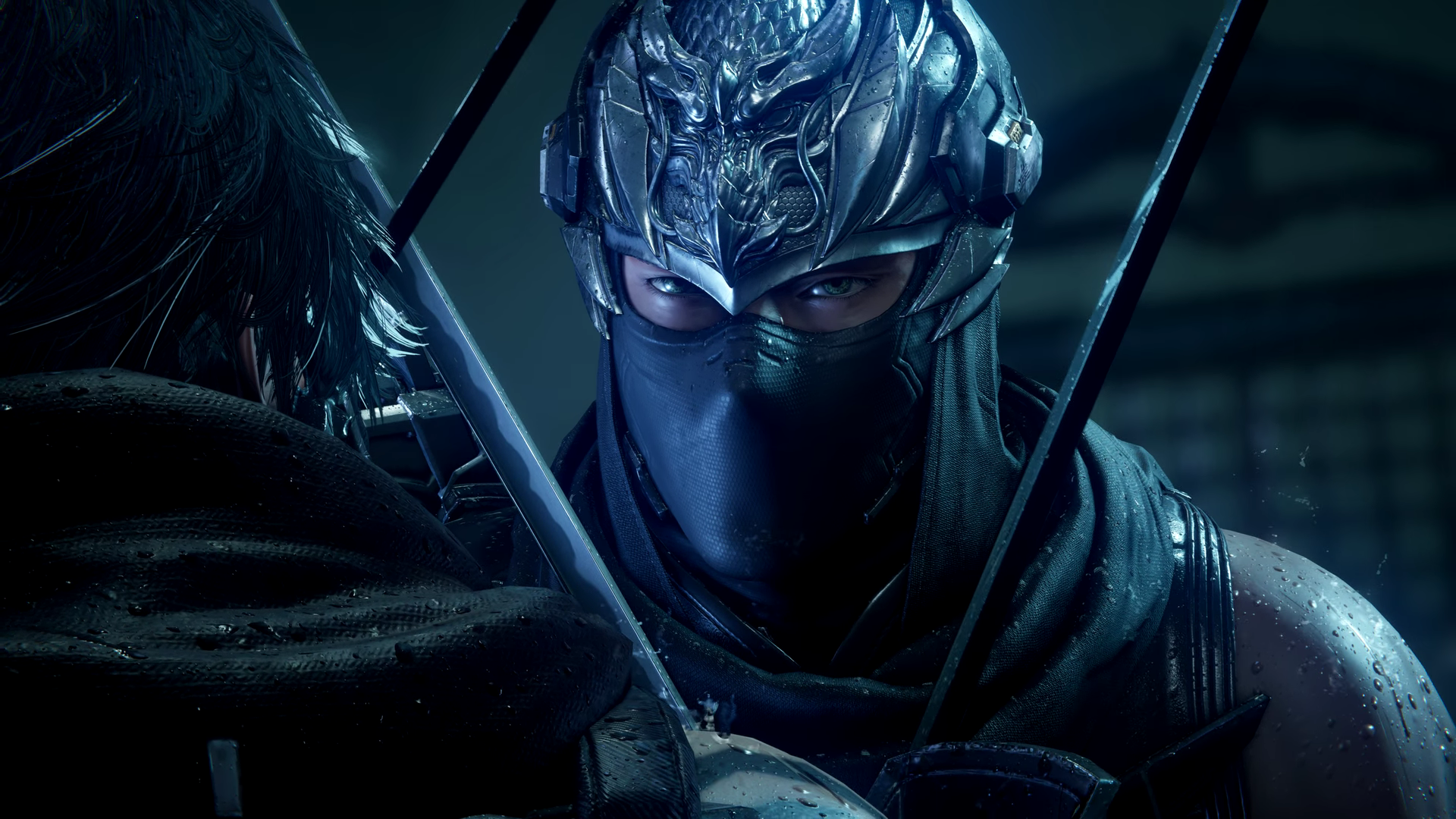
- Then there’s Ryu. Maybe I’m just a snobby Ninja Gaiden purist, but I really liked Ryu’s gameplay. They make sure to bring back many of his classic animations and techniques, including the dodge slide from NG3, wall jumps, running on water, etc, rather than just reusing Yakumo’s existing animations. This really helps to provide distinction between the two characters, and is much appreciated. As for his combat style, Ryu plays very similarly to how he did in Ninja Gaiden II (ie, he’s not leaping around the battlefield like Yakumo does). Yakumo’s meter system has been used as the basis of Ryu’s ninpo system, but with some differences. Holding L2 does not transform Ryu’s dragon sword, but instead it becomes “awakened”, which allows Ryu to put out a flurry of blows in an instant. He can also use the meter to cast his four classic ninpo spells, which offers Ryu a lot of versatility! Unfortunately, this versatility is also because Ryu only gets the dragon sword, so his options are kind of limited… then again, I play with the dragon sword for like 90% of my Ninja Gaiden playthroughs anyway, so this doesn’t bother me too much.
- As for combat in general, blocking is not really a viable strategy in Ninja Gaiden 4. You can block a few attacks, but your guard will break fast and leave you staggered. Instead, the game incentivizes you to dodge enemy attacks at the last second, or to guard at the last second to parry an enemy’s attack. Being able to break an enemy’s guard with Bloodraven form also really helps emphasize the effort to make this a “constant offense” sort of game (almost Doom Eternal-like in that regard). The game is also extremely responsive, with near-instant input execution (which feels especially satisfying when performing obliterations on downed enemies).
- Purgatory – Ninja Gaiden 4‘s take on tests of valor, these optional challenge areas have you fight through a few waves of difficult enemies in order to gain a reward (generally just the in-game currency and skill points). It’s cool to see this return, but what makes this awesome is that you enter the test with the ability to wager a portion of your “soul”. What this means is that you can voluntarily reduce your maximum health bar by a set percentage for the course of the fight, making the test more difficult, but gaining greater rewards in the process. I love this sort of “choose your own difficulty” design decisions, the challenges get to be as easy or as difficult as you’d like! They’re also a hell of a lot more interesting than fighting sixty of the same enemy over and over again for twenty minutes like tests of valor sometimes were.
- Soundtrack – Look, I wasn’t kidding with the Doom Eternal comparison there earlier, this game legitimately seems to be influenced by Doom‘s mixture of constant movement and thumping soundtrack. When the cheesy metal kicks in, it really does make combat hit differently. This makes the boss fights against Kagachi and Ryu particularly exciting, as the music kicks into overdrive and starts hitting those “anime fight scene brought to life” highs.
- Yatousen – Yakumo’s rapier which transforms into a massive drill, the Yatousen was easily my favourite Yakumo-exclusive weapon in the game. I wasn’t getting on too well with Takeminakata (Yakumo’s starting twin swords), but as soon as I got the Yatousen, the game “clicked” for me and I started enjoying Yakumo’s gameplay more. While I do find all of the weapons in the game to be solid, and you often need to swap between them to deal with different types of enemies, I always find myself falling back on the Yatousen as my “default” weapon.
- New Time Period! – Ninja Gaiden 4 represents some juicy new developments in the Ninja Gaiden/Dead or Alive canon. For someone like me who is stupidly-invested in these games, it is awesome to see what this universe looks like a couple decades in the future! Not only that, but the game takes place in the ruins of Sky City Tokyo, the inexplicably-futuristic, cyberpunk city seen in the opening levels of Ninja Gaiden II. This is just a nice throw-back, and it’s cool to see the metropolis from a new perspective. It’s also just really cool to see aged-up versions of Ryu and Ayane make an appearance!

Mixed
- Characters (SPOILERS IN THIS ONE) – I was certainly fearing the worst when I first saw this game’s cast, but thankfully they ended up growing on me over the course of the game… for the most part:
- First off, Yakumo. He’s a stereotypical edgelord, Shonen anime protagonist. He’s excessively serious and arrogant, with a dismissive and impatient attitude. At first it’s eye-rolling, but after a while and after seeing Yakumo accomplish a bunch of remarkable feats… yeah, you do kind of deserve to be arrogant, you’re clearly very capable. Not a deep character at all, but he gets the job done.
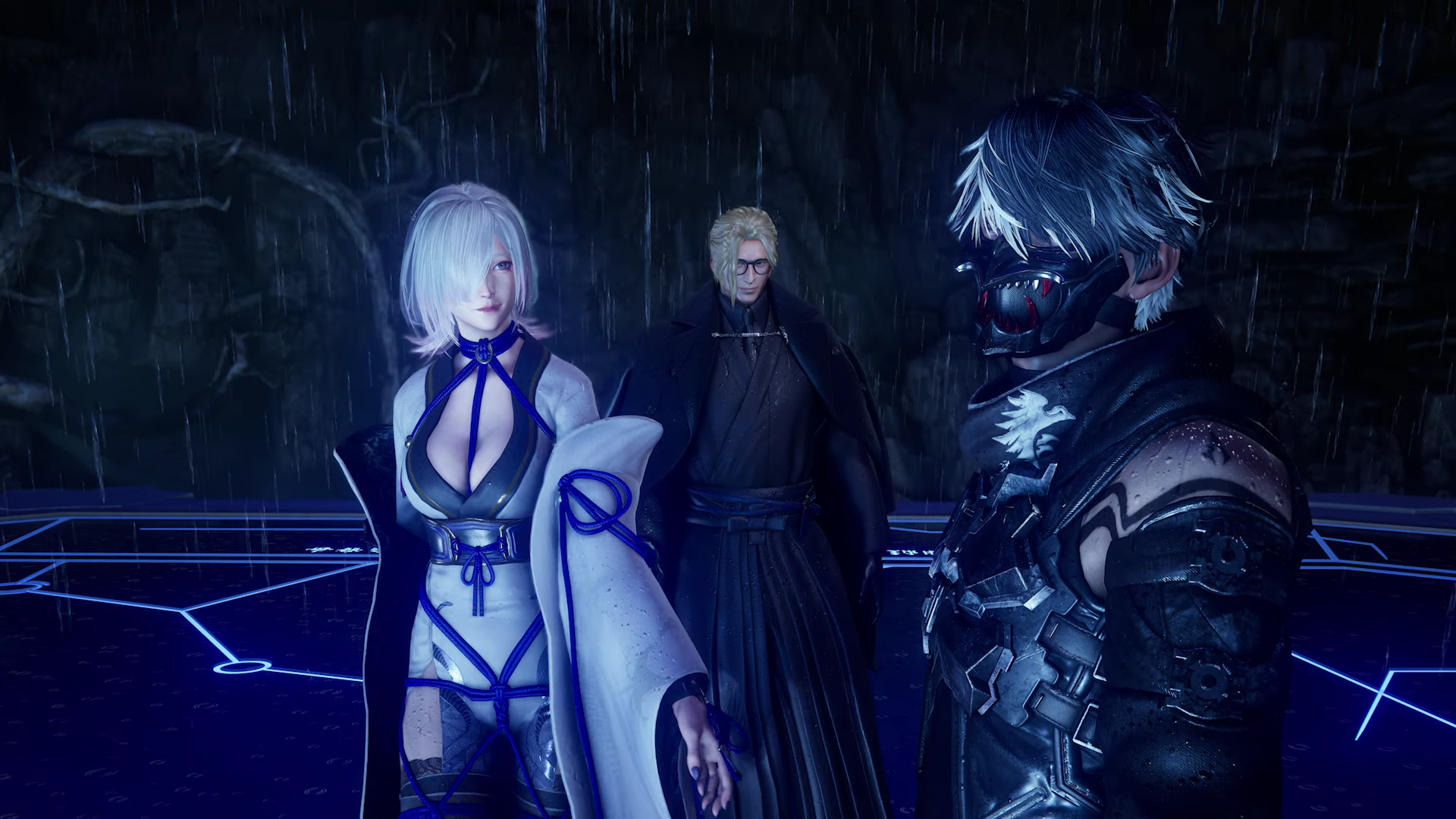
- Then there’s Seori, the Priestess of the Dark Dragon. She has a very cutesy, playful, chipper attitude, which seems really strange and incongruent for someone who is basically a vessel for Satan’s soul. That said, she does have a fun personality and you’re left wondering all game if it’s just a ruse.
- Then there’s Misaki… his “character” is a complete nothingburger. He’s forced into the narrative so unnecessarily that it becomes blindingly obvious that he’s going to be a “twist” villain.
- Then there’s Kagachi, who is setup as if he’s the going to be Yakumo’s Jetstream Sam. Honestly though, he’s also really underserved by the narrative. He shows up briefly a couple times early on, but he doesn’t get to do anything cool or show off why we should be excited to fight him (other than the fact that he works with Ryu Hayabusa, so he must have some level of competence).
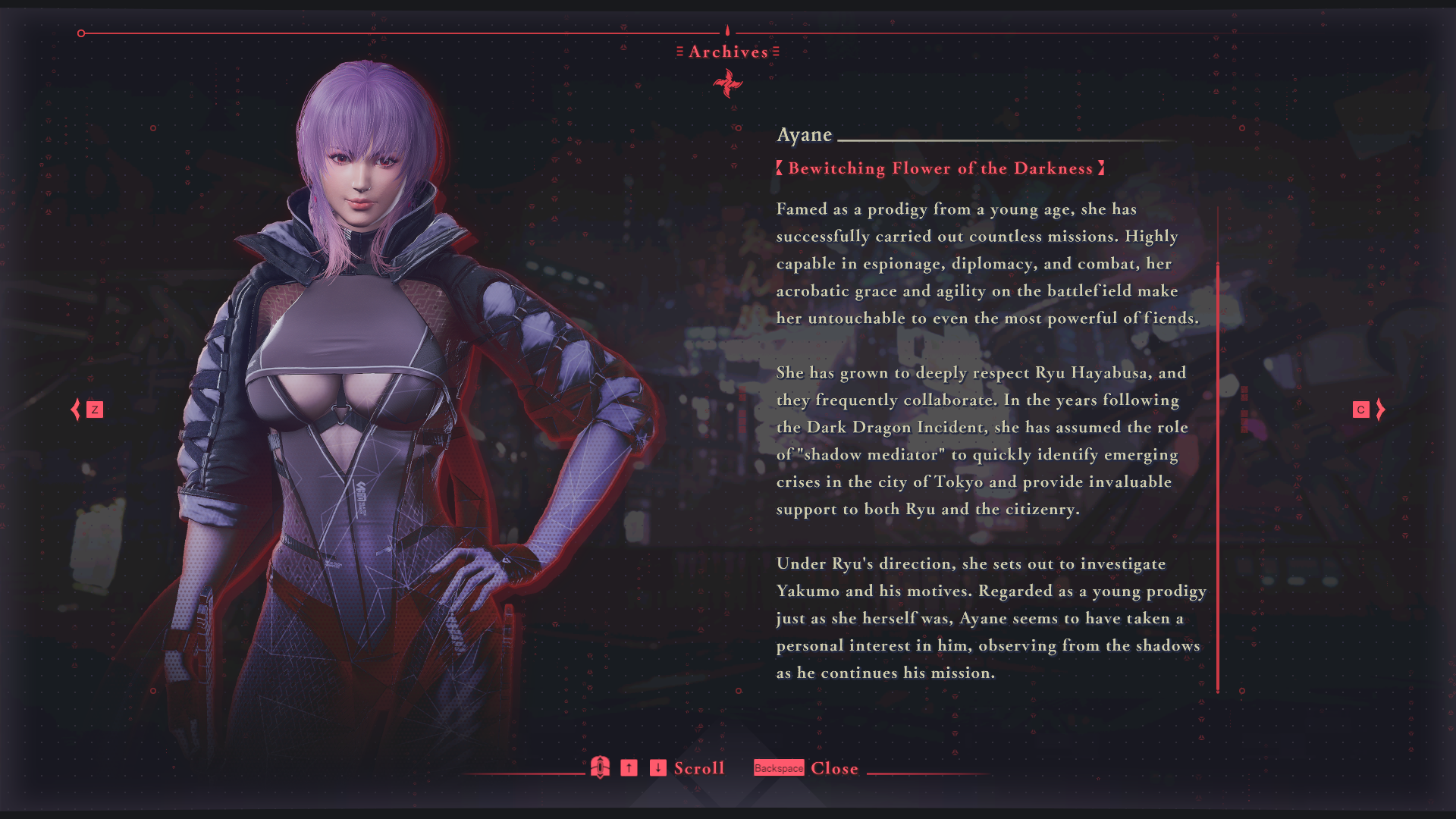
- Then there’s Ryu Hayabusa and Ayane! Honestly, it’s just cool that they’re here, but they also doesn’t really do all that much. Ryu’s here being cool and doing Ryu stuff, which is fine I guess for what is basically an extended cameo appearance. Ayane, on the other hand, is clearly only here for a bit of fan service, because her entire screentime amounts to three short scenes of her walking around, squaring up to fight Yakumo before being interrupted, and throwing a kunai to help Yakumo one time. I’m just excited to see my girl again, so I’m satisfied enough, but it would have been nice if she got a bit more screentime.
Hate
- Level Designs – If there’s one universally-agreed upon criticism of this game, it’s that the level designs are incredibly uninspired. They’re basically just a bunch of massive rooms strung together with nonsense architectural design, reused assets, and lots of linear corridors. The levels clearly aren’t supposed to be thought of as anything more than basic window-dressing, and there isn’t much variety between them.
- Also… Sky City Tokyo just doesn’t make sense? The city has been abandoned and depopulated for decades, but the entire city still looks like a well-maintained, cyberpunk metropolis, and there are still flying cars going about and trains running constantly…? You could handwave it by saying that the Divine Dragon Order are running all this stuff, but that really strains credulity.
- While level design is by far Ninja Gaiden 4‘s biggest issue, I’ll give the game a bit of credit though – the actual combat arenas occasionally present some interesting twists. Most rooms will have points that you can grapple yourself up to by pressing R1, potentially getting away from a swarm of enemies, or repositioning you for an aerial attack. There’s also occasionally a cool twist, such as an area where there are lasers that you either need to dodge, or temporarily disable by damaging a generator. You can also have demon maws spawn in during a fight, which will cause more enemies to spawn infinitely until the maw is defeated.
- Ryu’s Reused Levels – The game gets to a point where it’s becomes obvious that Platinum either had a very tight budget, or nowhere near enough time to finish the game, because the last few levels are rough. For one thing, this is the part of the game where you get to play as Ryu… and they’re damn lucky he’s so fun to play, because it barely masks the fact that his four levels are all lifted straight from Yakumo’s campaign, similar to how the girls’ chapters were handled in Ninja Gaiden (2004) and Ninja Gaiden II. However, at least the girls’ chapters had some unique bosses; nearly every boss Ryu fights here are unaltered rematches of bosses you fought earlier in the game. To make it even worse, three of the four levels are flashbacks where you run through a condensed rehash of Yakumo’s storyline. As fun as Ryu is to play as, the lack of love put into his levels just screams of a lack of care and blatant runtime padding.
- Mindless QTE Platforming Sections – Ugh, if there was one aspect of Yaiba I never thought I’d have to play again in a Ninja Gaiden game, it was the fucking QTE platforming sections… Platinum will often break up combat encounters by having you traverse some brief section where you need to press R1 to jump to the next platform or dodge incoming objects, and occasionally do a short jump/slide. They’re incredibly dull, and you barely lose any health if you fail to dodge, so they’re not even meant to be skill-testing. They’re clearly thrown in to shake-up the gameplay a bit, but Team Ninja never needed to resort to this kind of superfluous guff to make their games engaging.
- The Story – This game left me wondering if its story might be worse than Ninja Gaiden 3‘s. I ultimately decided that “no, of course it isn’t”, but the fact that I had to wonder this at all really speaks ill to Ninja Gaiden 4‘s narrative. The narrative starts off kind of interesting: Raven clan ninja Yakumo is a descendant of the mythical Dark Dragon (like how Ryu’s the descendant of the Dragon Lineage). A couple decades prior, the Dark Dragon was unleashed in Tokyo by Ryu Hayabusa, but he couldn’t be slain, so Ryu and the Divine Dragon Order had to work together to seal away his soul, leaving the city corrupted and depopulated. Yakumo breaks into the city to free Seori, a priestess of the Dark Dragon, in order to awaken the Dark Dragon and then slay him forever, ending his curse upon the Raven clan. With Ryu Hayabusa and the Divine Dragon Order standing in his way, it seems like there are lots of opportunities for twists and developments, but Ninja Gaiden 4 has absolutely zero interest in story beyond the initial setup. Like, say what you will about Ninja Gaiden 3‘s story, but at least they tried to do something. Ninja Gaiden 4 doesn’t give a fuck: after that setup, you spend the next three levels making your way to a shrine to kill a boss and then break that area’s seal. Then you do the exact same thing for the next three levels. And then you do the exact same thing again. With the final seal broken, there’s finally a big narrative development and it seems like Ninja Gaiden 4 might start getting exciting for the finale (after all, Ninja Gaiden II had a similar “defeat the bosses” setup at first, but then it goes into the finale with an incredibly hyped-up march through hell). Then the game lets you play as Ryu Hayabusa and you… have to go fight your way through the same levels to beat the same bosses and get to their shrines again. And then, when that’s done, you play as Yakumo again and immediately go through the final boss gauntlet. You can see why this bothered me so much when I was talking about Ryu’s levels, right? It leaves the last couple hours with a very sour taste in your mouth, as they fail to capitalize on their narrative potential. Since Platinum care so little about the game’s storyline, why should I?
- FUCKING POISON KETTLE FISH – FUCK THIS BASTARD OF AN ENEMY, POISON SPEWING MOTHERFUCKER.
- Izuna Nerf – The Izuna drop is back! Hooray! It’s been heavily nerfed… What the fuck. It’s still a reasonably strong technique overall, but when basic enemies in this game can survive an Izuna drop and keep fighting, it’s concerning. Hell, there are several enemies here that can survive two Izuna drops, which is absolutely unacceptable.
- The Camera – Look, I’ve heard people complain about the cameras in previous Ninja Gaiden games, but I very rarely had any issues with them. However, in my opinion, Ninja Gaiden 4 has the worst camera in the entire franchise. This largely comes down to how how Yakumo plays: between his speed and how he throws himself all over the place, the camera struggles to keep up with you and keep things coherent. In addition, the camera would get stuck on level geometry on occasion, making it difficult to see what’s going on.
Ninja Gaiden 4 turned out better than I was expecting. PlatinumGames brought their own spin to the franchise’s formula, but the combat is well-designed and fun to play. However, there are a ton of gripes which really drag it down in my estimation. I genuinely believe that PlatinumGames had a very short amount of time to develop this game, because the corners cut are unmissable. Still, they put 100% into the area of the game that matters above all else, the gameplay, and that was ultimately the most important call. It’s easily the weakest game of the Year of the Ninja, but it turned out about as well as I had hoped it would.
…it would have been nice if Momiji made a cameo though. I’m just greedy and want to know what my fictional friends are up to, goddammit.
If you liked this article…
I hate ads. You hate ads. In order to stop polluting my site with obtrusive and annoying ads, I’ve elected to turn them off on IC2S. That said, writing still takes time and effort. If you enjoyed what you read here today and want to give a token of appreciation, I’ve set up a tip jar. Feel free to donate if you feel compelled to and I hope you enjoyed the article! 🙂
About the Author
