
Welcome back to the Final Fantasy Love/Hate series! I was being very intentional when I stated that this Love/Hate series would consider anything with the Final Fantasy name to be fair game: when I wrote that, I was 100% planning on covering Final Fantasy VII: Advent Children at some point.
Like I said in the article about Final Fantasy VII, I first got interested in this series thanks to the hype surrounding the Compilation of Final Fantasy VII. This multimedia project would expand the world of FFVII through brand new games, movies, and books. Of all of these initial projects, Advent Children was arguably the most important and interesting, since it would effectively be the direct sequel to Final Fantasy VII, picking up the story two years after the game’s events. This was an exciting prospect: a chance to see how our cast of characters has grown, and how our actions in the game shaped the course of the planet. Considering the overwhelming sense of doom throughout that game, were we able to avert the seemingly-inevitable end of the world? Would Advent Children be a worthy follow-up to its legendary forebear, or would it end up being a disappointment? Read on to find out…
Before we get into the article properly, you need to be aware that there are two versions of Advent Children: the original release, and the extended cut, Advent Children Complete. By most measures, Complete is the definitive version of the film, featuring some improved animation, some tweaked scenes, and about half an hour of new scenes which flesh out the narrative. Suffice to say, Complete is the version I chose to watch, so any analysis is being done based off of that.

Love
- The Fight Scenes – Look, if there’s one thing that Advent Children does right, it’s that it delivers plenty of ridiculously entertaining, over-the-top fight sequences. The fight sequences feel like something directly out of a battle anime, with lightning fast, high-intensity strikes, a complete disregard for physics and the limits of the human body, and an overriding “rule of cool” philosophy. While this isn’t exactly “faithful” to the feel of the original game, you’ll be way too entertained to notice.
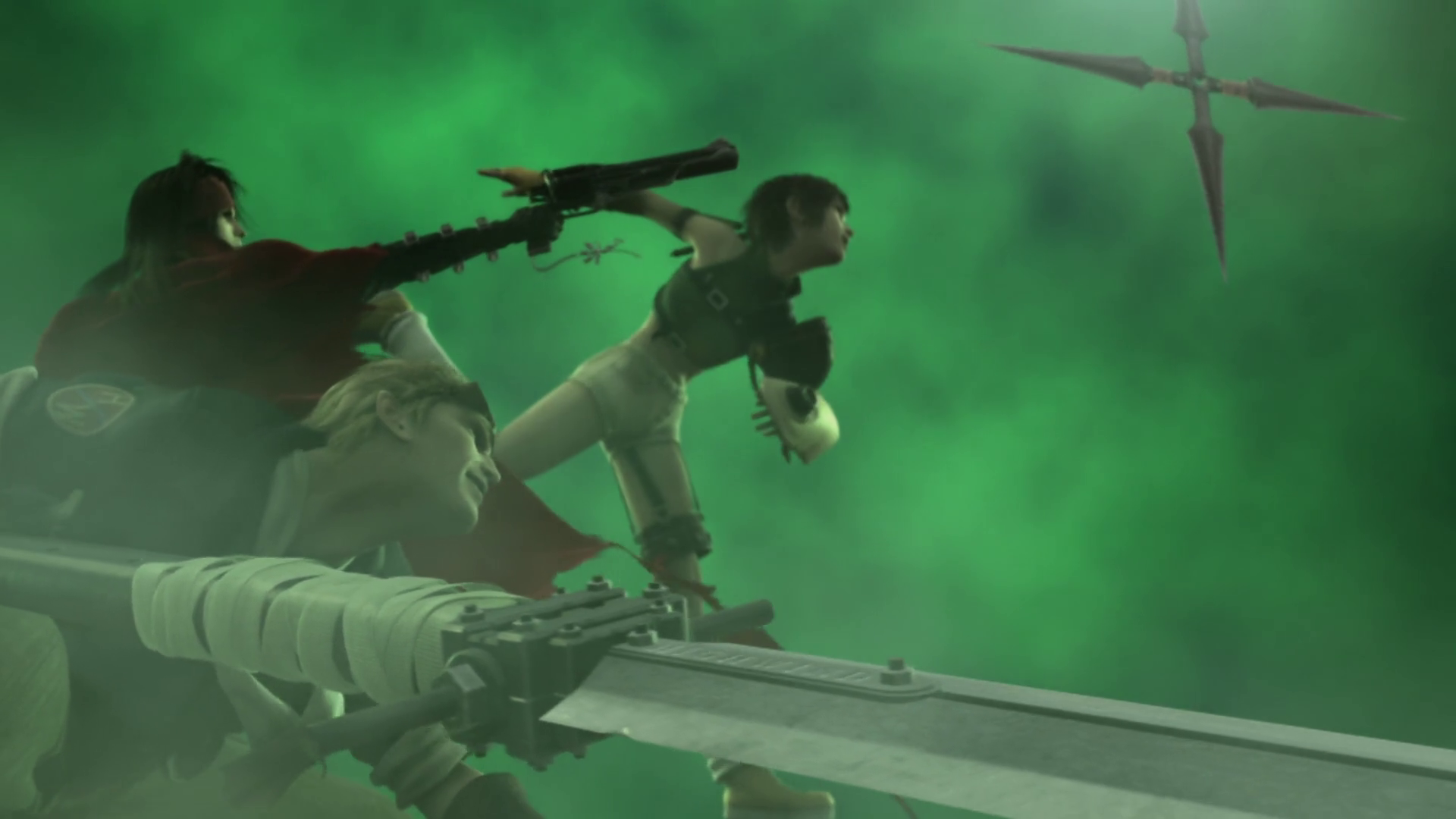
- The absolute best part is when Bahamut flies high in the sky to do its mouth laser attack and Cloud jumps up to catch it. Meanwhile, the each party member jumps off a skyscraper to grab Cloud and then “throw” him higher until he reaches Bahamut and slashes him with the buster sword. That sentence probably sounds like mad gibberish, but it’s exactly what happens in this movie. It’s so stupid, I love it.
- It’s also worth noting how much of this film is fight scenes. The entire second half of the film is a series of action sequences which go on for forty-five minutes straight! Considering that the film’s at its best when there’s a fight going on, at least it’s putting its best foot forward.
- Tifa – I’m a simp, what can I say? I’ve always thought that Tifa’s black outfit in this film was her best look. She also continues to just be a sweetheart, supporting Cloud through his struggles, and kicking absolute ass when needed. Maybe it’s because I’m a simp, but every time Tifa was on-screen, it made the movie ten times more exciting.
- Animation/Graphics – Considering that FFVII was barely a decade old by this point, it’s insane how much technology had progressed. Getting to see FFVII‘s blocky world get brought to life in crisp HD is a treat all on its own, and Square-Enix clearly know it as they recreate entire areas and scenes from the game for little more reason than to get fans excited.
- It’s also worth pointing out that the film looks more impressive than Square’s infamous cinematic bomb, Final Fantasy: The Spirits Within, while costing significantly less, which also shows how technology had improved rapidly in a handful of years.

Mixed
- The Gang’s All Here – By far the best part of the movie is the moment in the third act when the entire FFVII party is reunited in order to battle Bahamut. I literally went “OH SHIT!” when Barrett showed up, and it only got better as each new character arrived and got a cool hero momrnt. Getting to see them all kick ass again was super exciting, but it also underscores an issue: why couldn’t we have had the party together this whole time? A couple party members drop in and out of the story in the first two acts, but for the most part, this is a story about Cloud fighting a battle alone. It also does not help that the screentime for each party member is wildly imbalanced. After Cloud, Tifa gets the most screentime, then Vincent… and then Barrett, Yuffie, Red XIII, Cid, and Cait Sith barely appear at all. I get that a full-party narrative isn’t the story that they wanted to tell, but it really makes you wish that they could have had the whole party together for longer. As-is, it just feels like empty fanservice, since more than half the cast are completely worthless to the narrative.
- Cloud – I’m a bit disappointed by the direction Square-Enix went with Cloud for this film. He’s regressed back to being a mopey loner who runs away from his problems, which just makes his actions and decisions throughout the film annoying. Tifa, Vincent, Marlene… everyone’s calling him out for being a dumbass. I thought that he had learned to have some emotional vulnerability by the end of FFVII, but here he is back to shutting everyone out of his life. The only reason this isn’t a “Hate” for me is because the film does provide some reasonable explanation for it. You see, Cloud still feels immense guilt over Aerith’s death, so you can infer that he’s put himself into self-imposed exile as penance. He says that he does this to try to find ways to protect people, but I think he’s just keeping the people important to him at arm’s length because he’s afraid of losing them (while inadvertently alienating himself in the process, like a numpty). I guess that makes sense, but it is ultimately just a return to status quo.
- The Turks – My God, Square-Enix clearly love Reno and Rude, because they shove their cartoonish antics into the film at every opportunity. After Cloud and the villainous trio, they may have the most screentime of any other character. In spite of this, they do basically nothing for the entire film. You could cut all of their scenes and the story would play out identically. That said, this isn’t a “Hate”, because they’re at least entertaining, so I wasn’t actively annoyed when they were clowning around.
- That said… I know exactly why Square-Enix were pushing Reno and Rude so hard with this film. They were the protagonists of the Compilation of Final Fantasy VII game “Before Crisis“, so Square-Enix were hoping to cross-promote their games. This is also probably why Vincent, who was getting his own spin-off game called Dirge of Cerberus, has more screentime than most other party members and gets a lot of cool moments.


Hate
- The Narrative – FFVII was renowned for having a pretty great narrative by the standards of its day. Even if you want to argue about its presentation being outdated or its story being confusing, FFVII clearly has iconic narrative beats and enduring characters who have captured the imaginations of people worldwide; clearly they were doing something right. Anyway, all this to say, that you expect a certain level of quality from a FFVII story, and Advent Children just does not deliver anything satisfying.
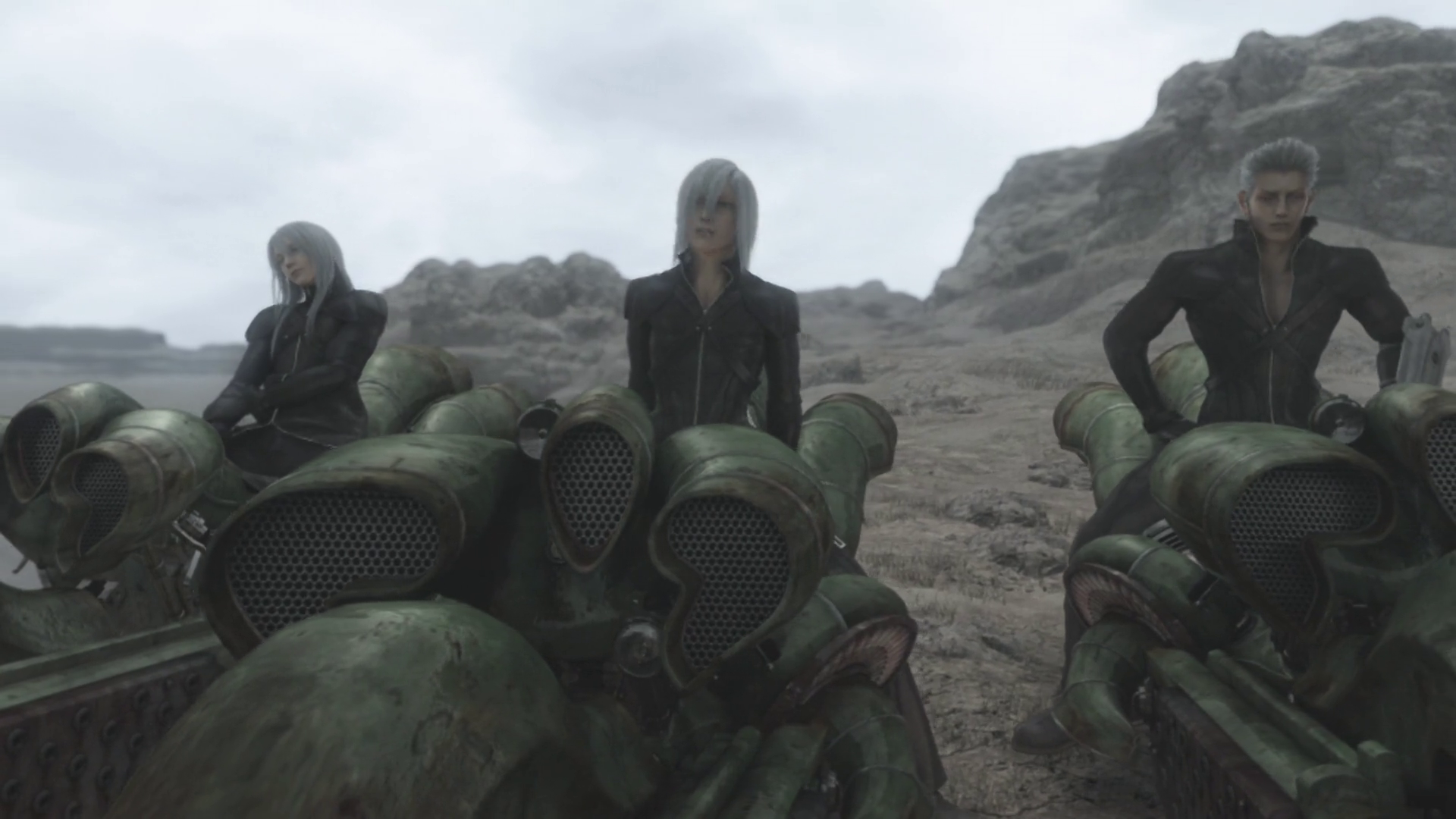
- For one thing, the film is dead-simple: three figures infected by Sephiroth’s genes are trying to acquire Jenova’s body in order to resurrect Sephiroth; Cloud encounters them and they fight. In spite of this, the film somehow manages to be very confusing, throwing around all sorts of gobbledygook and having characters speak to one another aloofly to leave the audience intentionally in the dark about what’s going on. It’s just not that great a narrative at the end of the day.
- The film does a terrible job of establishing important information. Probably the most important of these is “Geostigma”, a deadly disease which has broken out following the events of FFVII. We find out that this has something to do with Sephiroth infecting the Lifestream, but we don’t really learn a whole lot about how geostigma works, which kills the tension when multiple characters start contracting it. Is it contagious? How long does it take to kill you? Does it have any side-effects that might come up? None of this is established, so Geostigma as a whole ends up being basically an irrelevant plot point.
- The villains are also just not very compelling. For one thing, they’re basically demi-Sephiroths, and we kicked his ass already, so they never really feel like a true threat. The fact that they’re just Sephiroth clones really limits their ability to leave an impression on you.
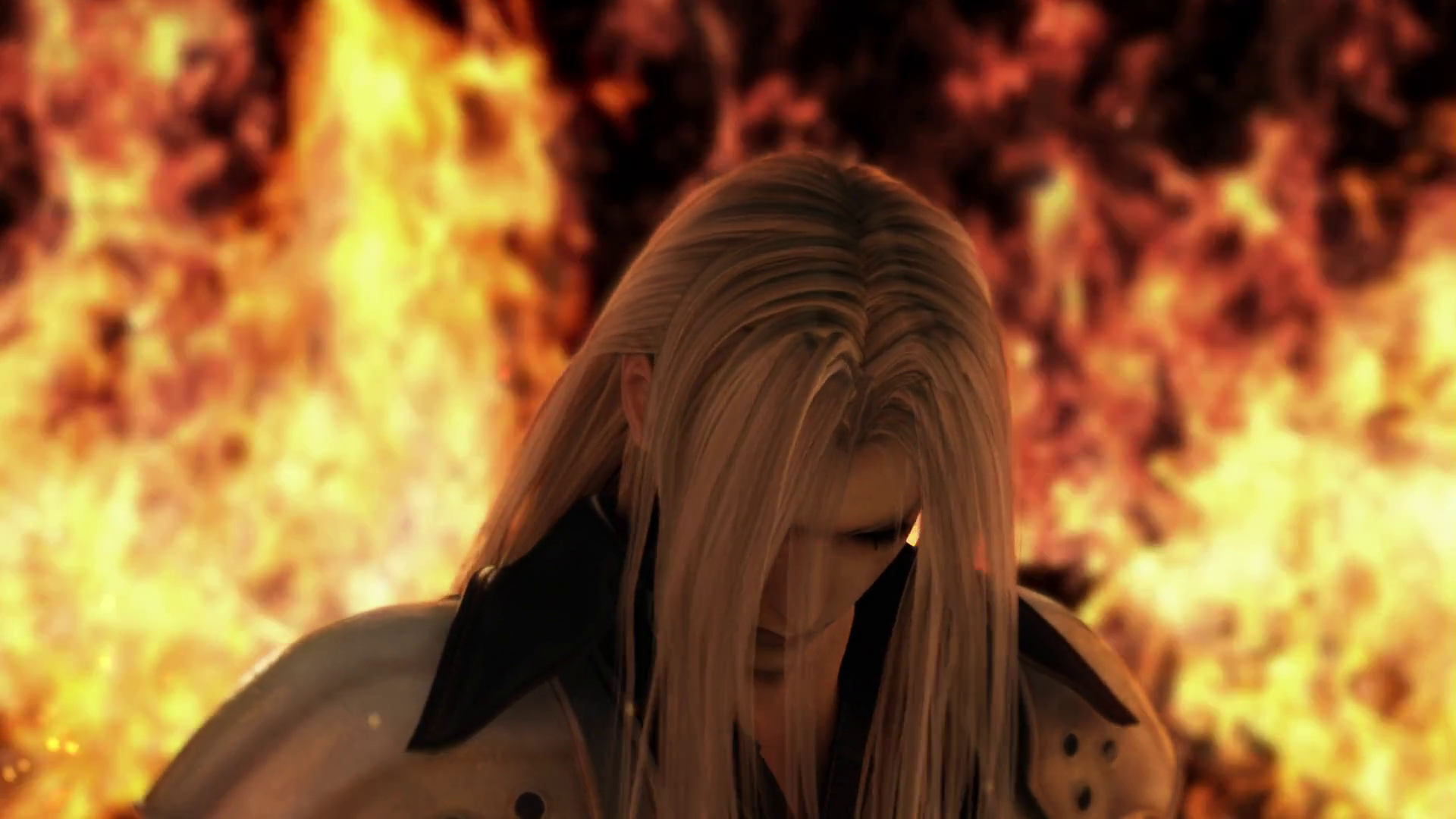
- It’s a Poor Follow-Up to FFVII – Further to my point about the narrative being poor, part of this comes down to Advent Children feeling far too familiar. It doesn’t really build upon FFVII‘s ending beyond showing us Midgar abandoned for a new settlement. For the most part, this game’s story is just an elaborate excuse to make Cloud fight Sephiroth again. It’s just rehashed beats and fanservice, with barely anything new that builds upon the foundation set by FFVII.
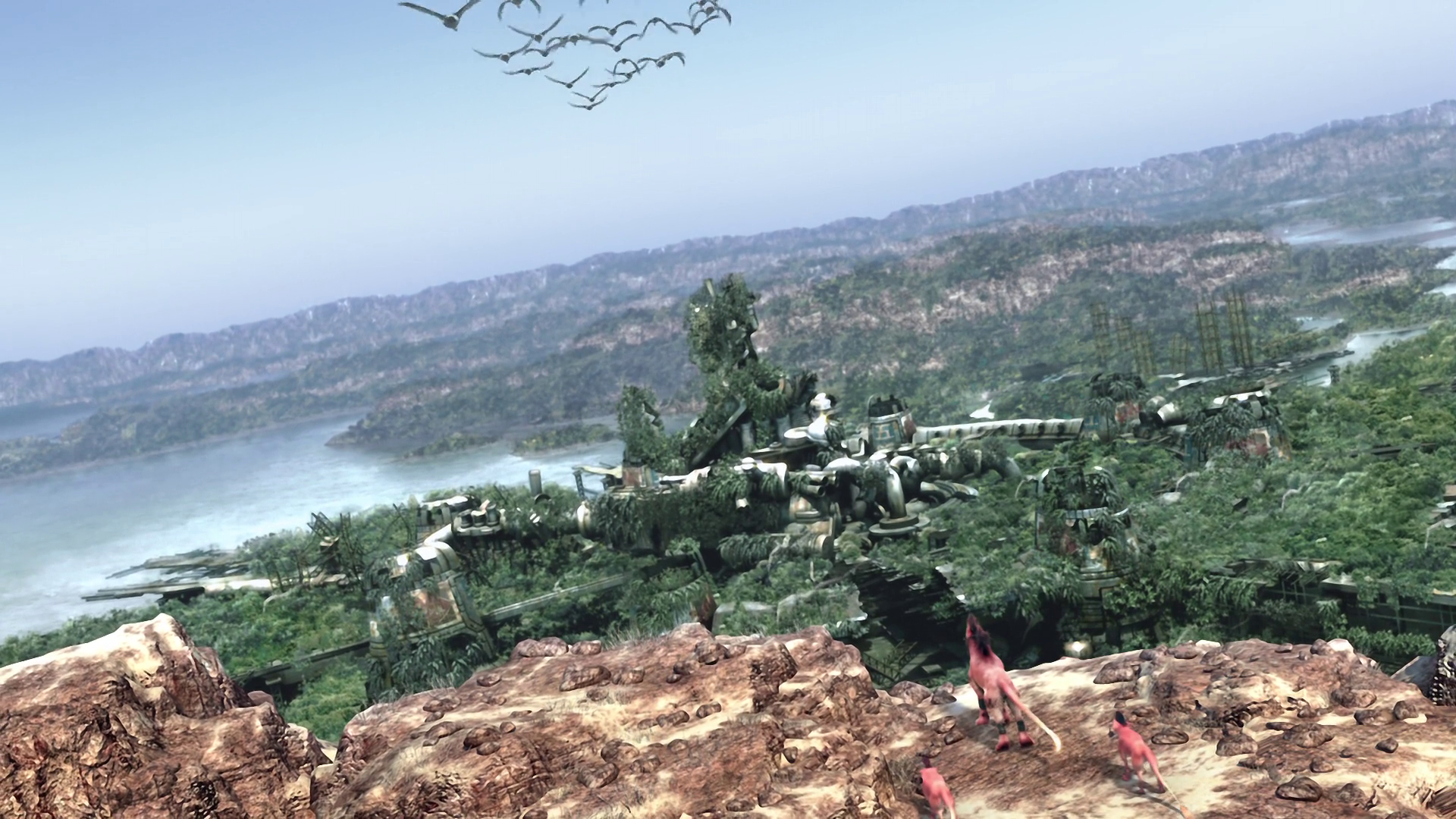
- Incoherent Editing – To be fair to Advent Children‘s narrative, some of my confusion can be chalked up to the film’s incoherent editing. Like, just read how the first seven minutes play out: we open with a shot in the future of Red XIII and his kids overlooking the overgrown ruins of Midgar (this ends up having no bearing on anything else in the movie). Then we cut to a scene of two people we do not know talking mysteriously (this ends up being part of a scene later in the movie, so I have no fucking clue why they put it here as well). Then there’s an extended sequence where we watch Reno and Rude fly a helicopter into the northern crater, but the camera does not track the helicopter in, so we sit waiting for a long time listening to radio messages of something bad happening off-screen (this is sort of neat bit of direction, but feels like it drags on way too long). AND THEN the film transitions into a recap of the events of Final Fantasy VII, before FINALLY starting the movie for real. Advent Children Complete‘s additional scenes can take the blame for some of this choppiness, but there’s enough incoherent editing throughout this movie that you’re probably going to lose the plot plenty, no matter which version you watch.
- Bad English Voice Acting – Despite how good Advent Children looks, the film ends up feeling like a fan film at times, and that’s entirely down to its voice acting. Some of the voice acting, with Rufus Shinra being a particularly egregious case, is just terrible, which makes this seem more like a highschool Youtube production than a major studio release.
Advent Children was an entertaining enough film, but man, what a disappointing follow-up to the events of Final Fantasy VII. Maybe I shouldn’t have gotten my hopes up – after all, if they had a good idea for a FFVII sequel, they’d just make it into a game, right? You can’t realistically fit an entire JRPG-worth of plot into a two-hour film, so it was always going to feel “lesser” than its predecessor. Even then, I wish that it had been a bit more daring, instead of reheating the same leftovers that we’ve already seen. Is it not “Final Fantasy VII” if Cloud does not fight Sephiroth again? If reheated leftovers are indeed all that FFVII is, then would it be so much to ask that the rest of the party get some more screentime? Advent Children is a disappointment, no matter how you slice it. Oh well, at least the gravity-defying fight sequences are entertaining enough that the movie’s at least a lot of fun.
If you liked this article…
I hate ads. You hate ads. In order to stop polluting my site with obtrusive and annoying ads, I’ve elected to turn them off on IC2S. That said, writing still takes time and effort. If you enjoyed what you read here today and want to give a token of appreciation, I’ve set up a tip jar. Feel free to donate if you feel compelled to and I hope you enjoyed the article! 🙂
About the Author
