
So I was trolling through Reddit recently when I came across a post alleging that there was an obscure Dead or Alive Xtreme knock-off that released on PS2 back in the day. When I saw the headline, I was pretty sure I’d already played this game for a previous article, until I saw the box art:
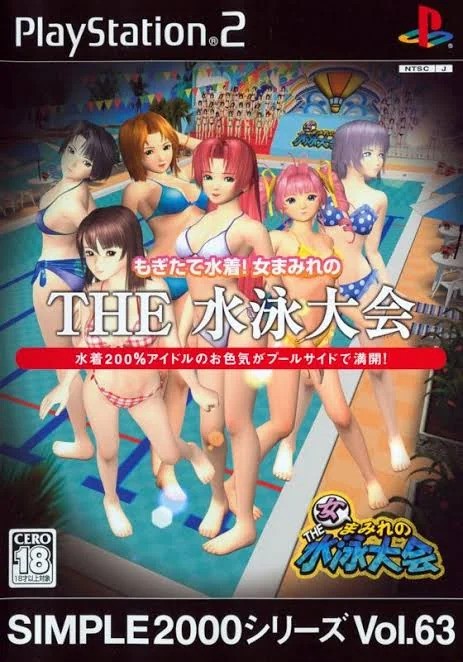
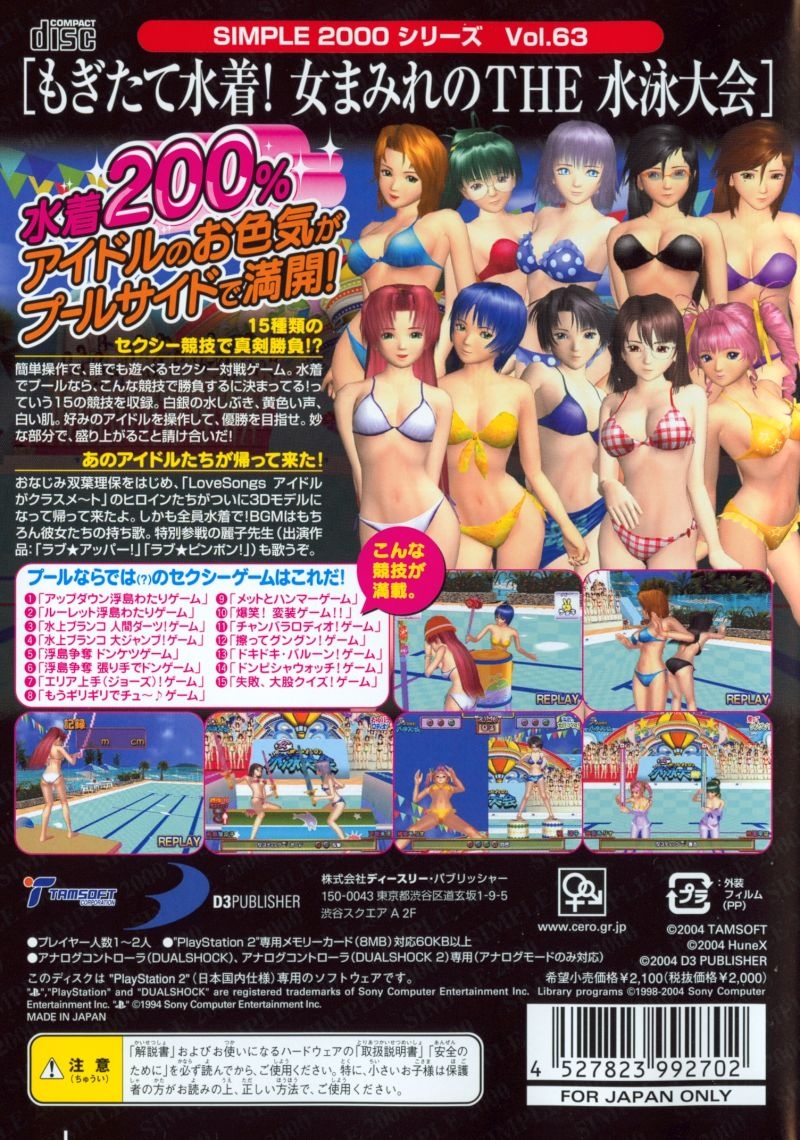
Okay… I needed to check this out, pronto.
Party Girls (aka Fresh-Picked Swimsuits! The Swim Meet of Covered Woman) (2004)
| Console: PS2 |
| Release Date: September 30, 2004 |
| Developer: Tamsoft Corporation & HuneX Co., Ltd. |
| Publisher: D3 Publisher Inc. (in Japan) & 505 GameStreet (in Europe) |
What is it?
It’s a weird, obscure, low-budget game that looks suspiciously like Dead or Alive Xtreme. What raised my suspicions even more is that this game was released on the PS2 about a year and a half after Xtreme Beach Volleyball. I suspect that the developers wanted to capitalize on that game’s Xbox exclusivity, considering how it dominated the public conscious for a year after release.
So what is Party Girls, then? Well, it’s a game where you compete against other bikini-clad beauties in a series of pool-themed mini-games. Sounds simple enough!
How does it play?
Okay, so my initial impression was that Party Girls was a Dead or Alive Xtreme knock-off, but I’m not sure that that’s actually the truth here. At its core, Dead or Alive Xtreme Beach Volleyball is a vacation and sports simulator; Party Girls is more akin to one of those goofy, Japanese gameshows, which gives it an entirely different feel. DOAX is relaxing, chill, and slow-paced, whereas Party Girls is manic and energetic. Hell, if anything, Dead or Alive may have been the one who ripped Party Girls off, because this game had its own version of butt battle two years before it was introduced in Dead or Alive Xtreme 2 (with nearly-identical mechanics to booty!!!).
There are fifteen mini-games total, but several of these mini-games are just slight remixes of other mini-games (eg, pool hopping has a mode where you have to identify and jump onto the more stable float, and another where you have to jump onto the float with the correct symbol). These mini-games often very brief, sometimes taking literal seconds to complete.* However, there are others (such as Hammer Helmet) which take comparatively forever to complete because the game just won’t let you end it. These turn into endurance matches where you have to have test your reflexes over and over again as you wait for the game to hand you the win, or for you to screw up and lose. Granted, while these sorts of mini-games suck, I’d say that the rest are pretty enjoyable.
The game is split into three courses of five mini-games. Unfortunately, there’s no randomization – the three courses will play out in the same order every time. These courses can each be completed in about ten minutes (maybe fifteen if you don’t skip any of the cutscenes), meaning you’ll see everything the game has to offer in less than an hour. Sure, there’s some replayability here: you can unlock new swimsuits, and each course you complete perfectly unlocks a new character you can oogle. However, this is a game that’s going to struggle to hold your attention for long… especially since it’s a party game that can only support a maximum of two players! Just… why would you do this?
*Sound familiar?
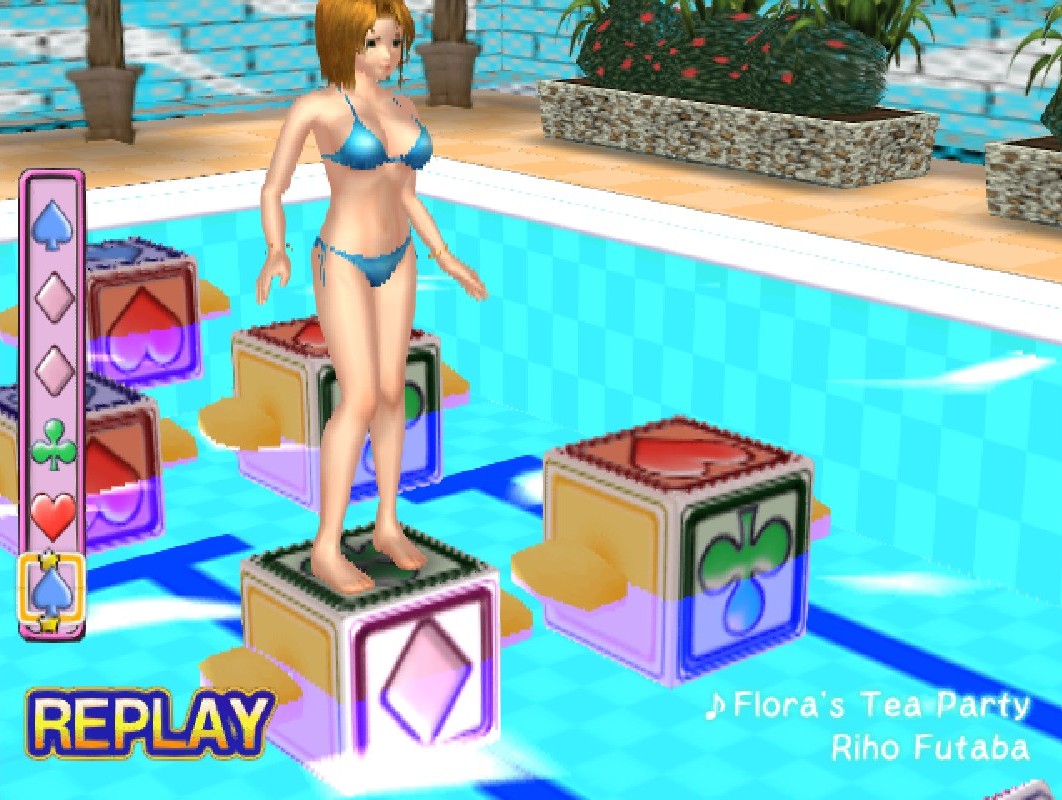
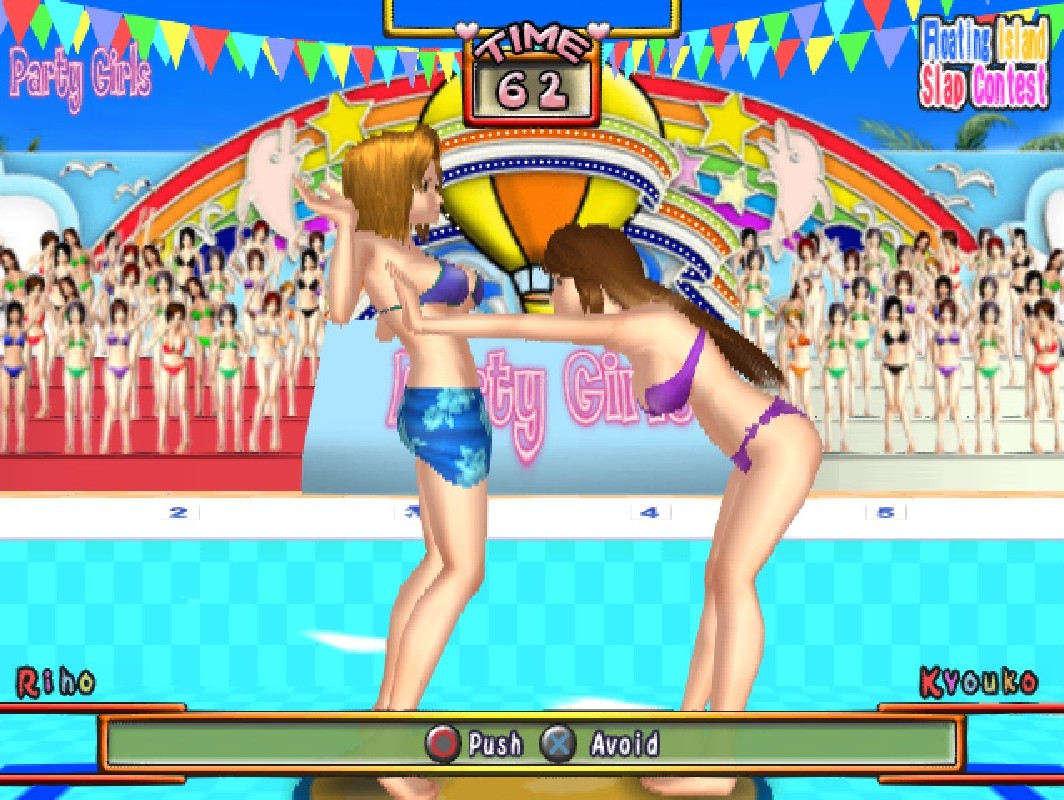
How does it look?
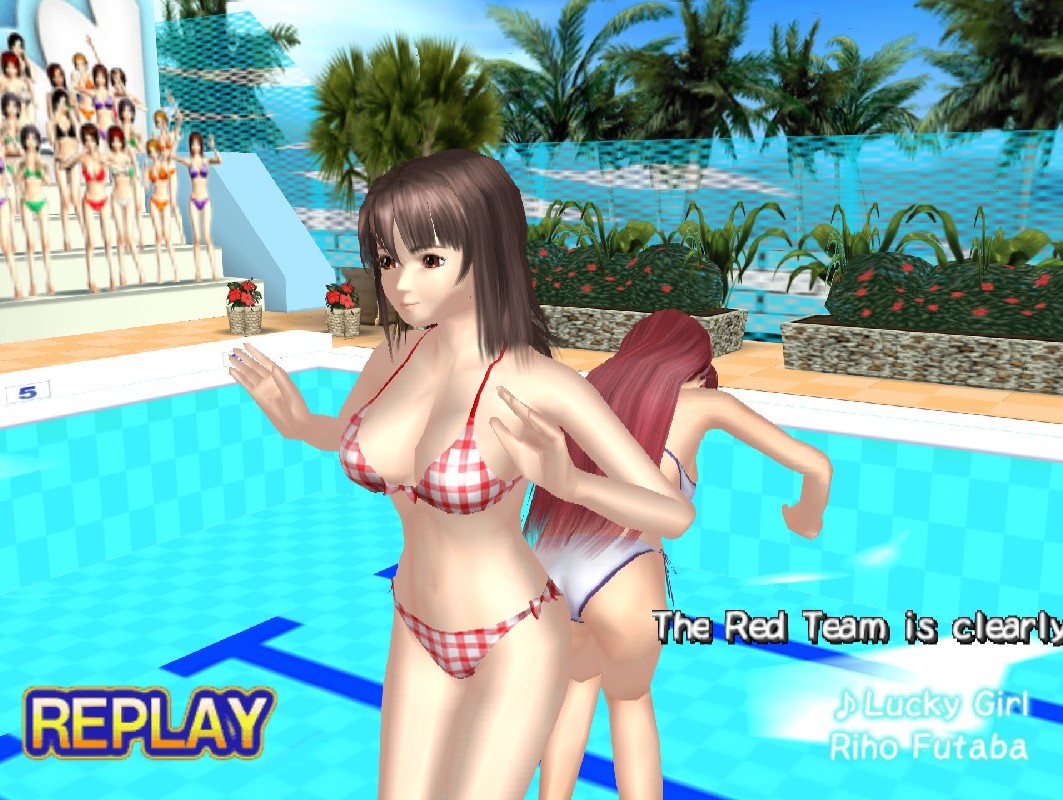
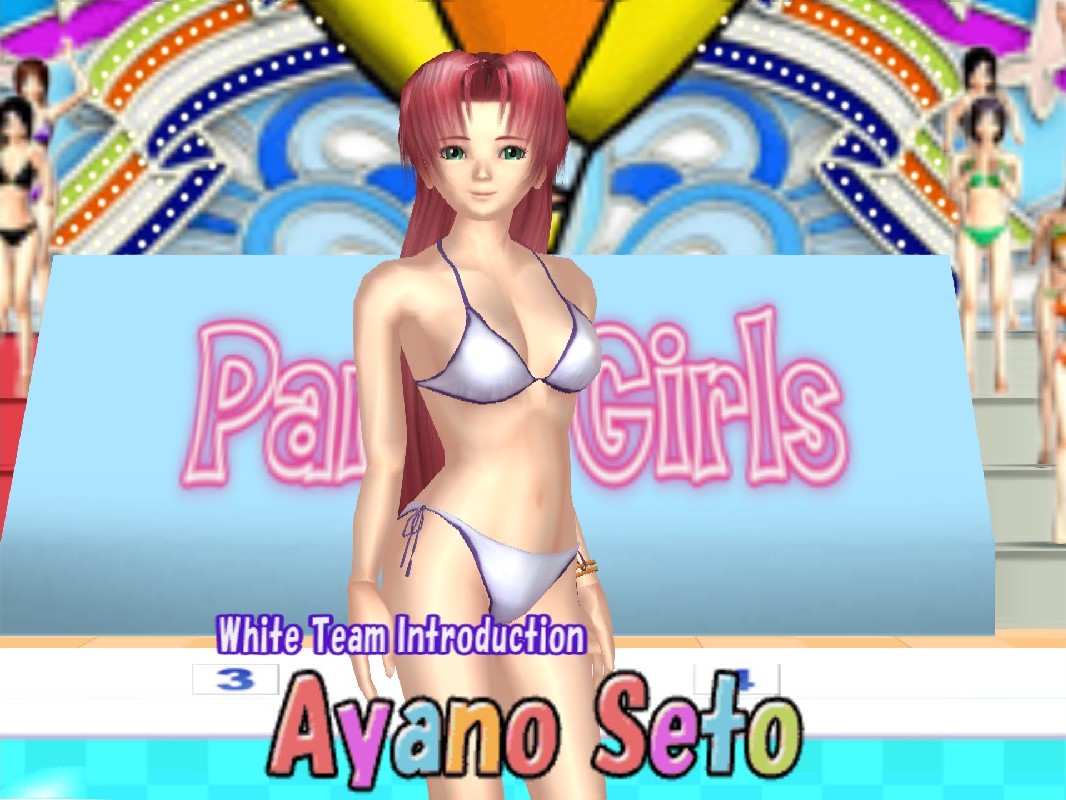
Party Girls looks rough. You can tell that it was made on a tight budget, with low-detail models and environments. The crowds of bikini-clad onlookers have to be the worst example of this, as they are clearly a bunch of flat, low-res animated gifs looping in the background. The game’s character models are also not particularly detailed either, with blocky bodies and really stiff animations. The game doesn’t look outright terrible, but it isn’t particularly appealing either.
How’s the soundtrack?
Every character has their own cutesy, pop tracks that they’ll perform in-game and over the credits:
Honestly… it’s not bad!
How sexy is it?
Party Girls has about as much fanservice as you’d expect from a game of this nature, but the quality of that fanservice is going to be a mixed bag. Like I said earlier, the graphics and character models aren’t really up to snuff, so it makes the sexy content less-arousing than you’d like, especially when a character’s face is frozen in an eternal pucker, or when their breasts look “off” due to blocky polygons or weird lighting.
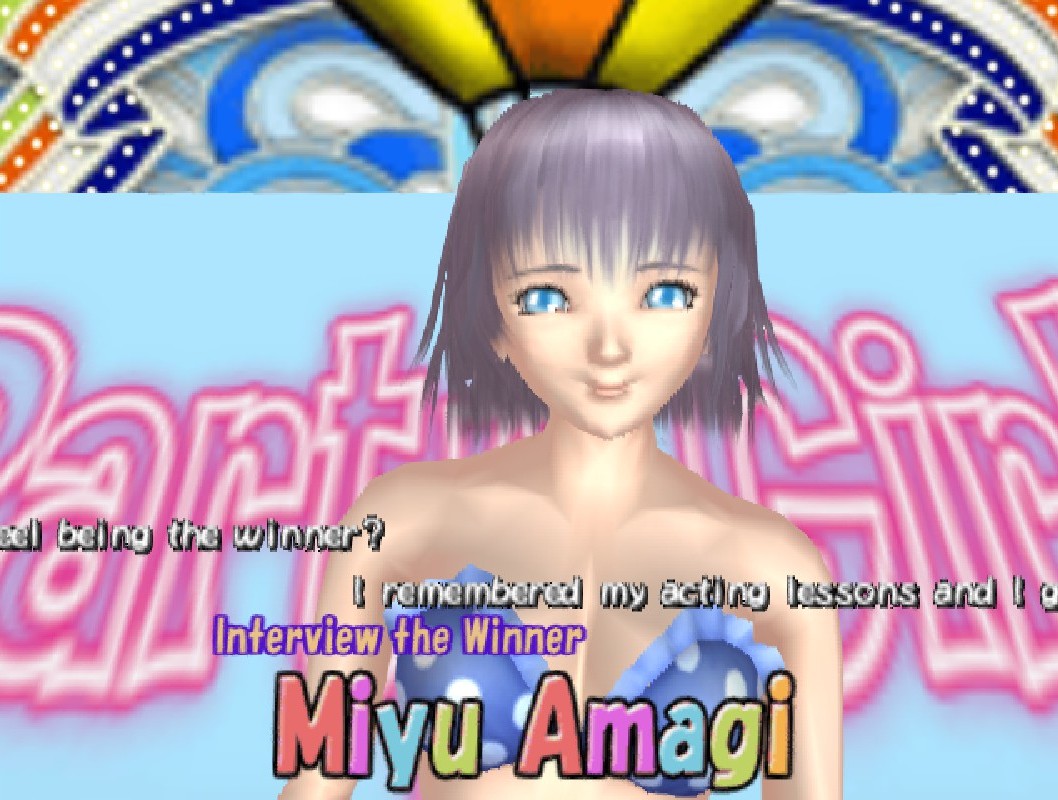
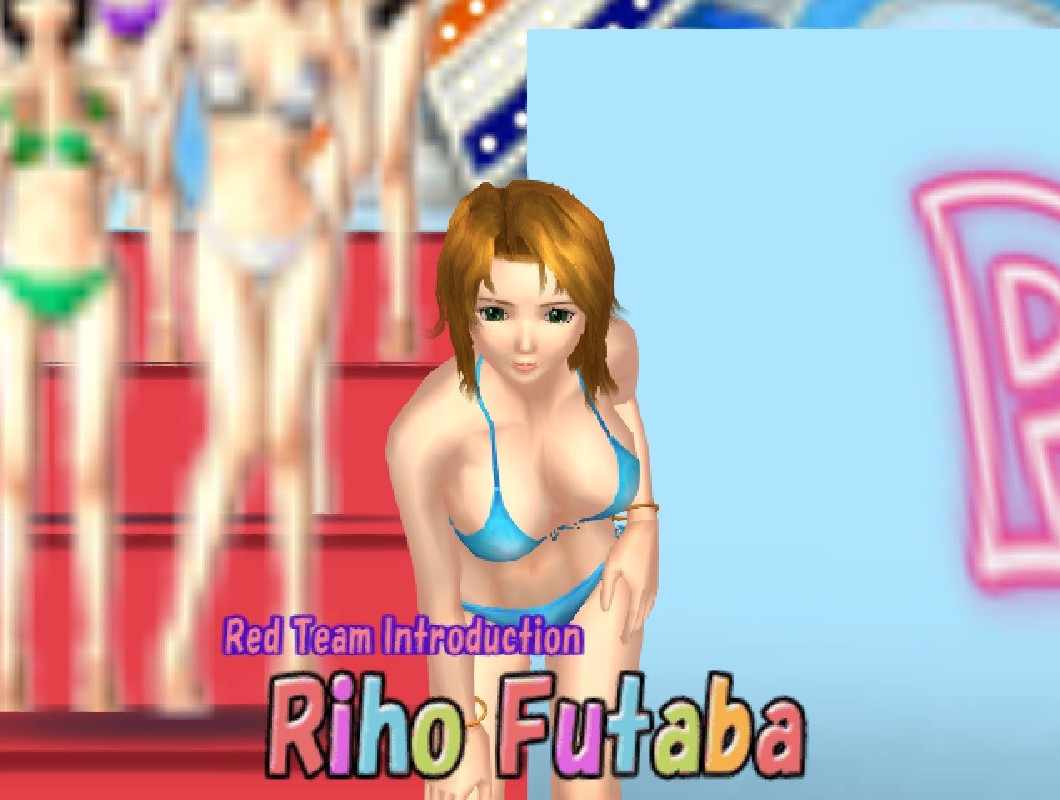
Of course, art style can make a big difference on limited hardware such as this (that’s a big reason why Dead or Alive Xtreme Beach Volleyball still looks so damn good). In this regard, your mileage will vary. Party Girls has a very heavy-handed Moè aesthetic. All of the girls are cute, demure, unthreatening… and kinda boring, in my opinion. Some people really love this cutesy look, and while it can have its place, I don’t find it particularly attractive… certainly not to the point where I’d want the entire cast to have a Moè design.
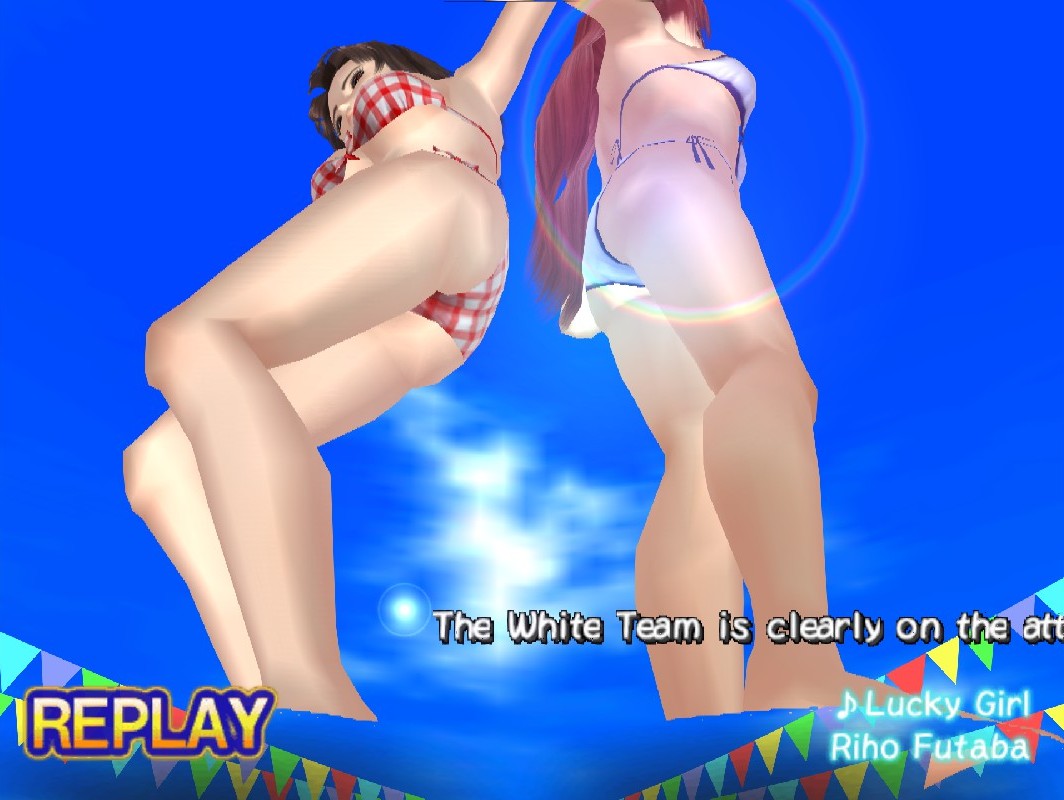
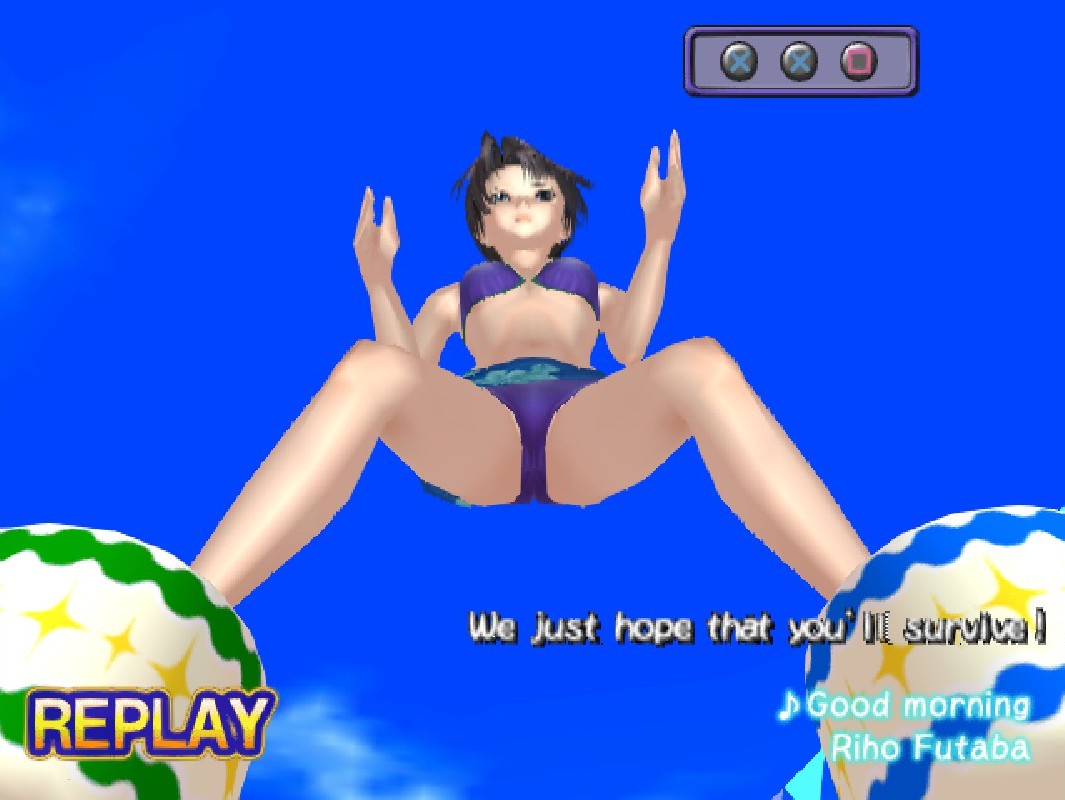
As you’d expect, Party Girls has jiggle physics, which can be set to “weak” or “strong” in the options menu (there is not a man alive who has played this game and had it set to the “weak” setting). A great deal of this game’s sex appeal is just watching buxom, bikini-clad girls performing standard pool games and watching the jiggle physics in action. The replay feature is also very much appreciated, with some highly suggestive zooms and camera angles that leave little to the imagination.
That said, there are a few mini-games which lean hard into the fanservice and deserve special mention. First of all, there’s “Floating Island Contest”, which is literally just the aforementioned “butt battle” mini-game we know and love from the Dead or Alive Xtreme series. Suffice to say, an entire mini-game which revolves around girls smashing their butts into each other is about as silly/sexy as you’d expect.
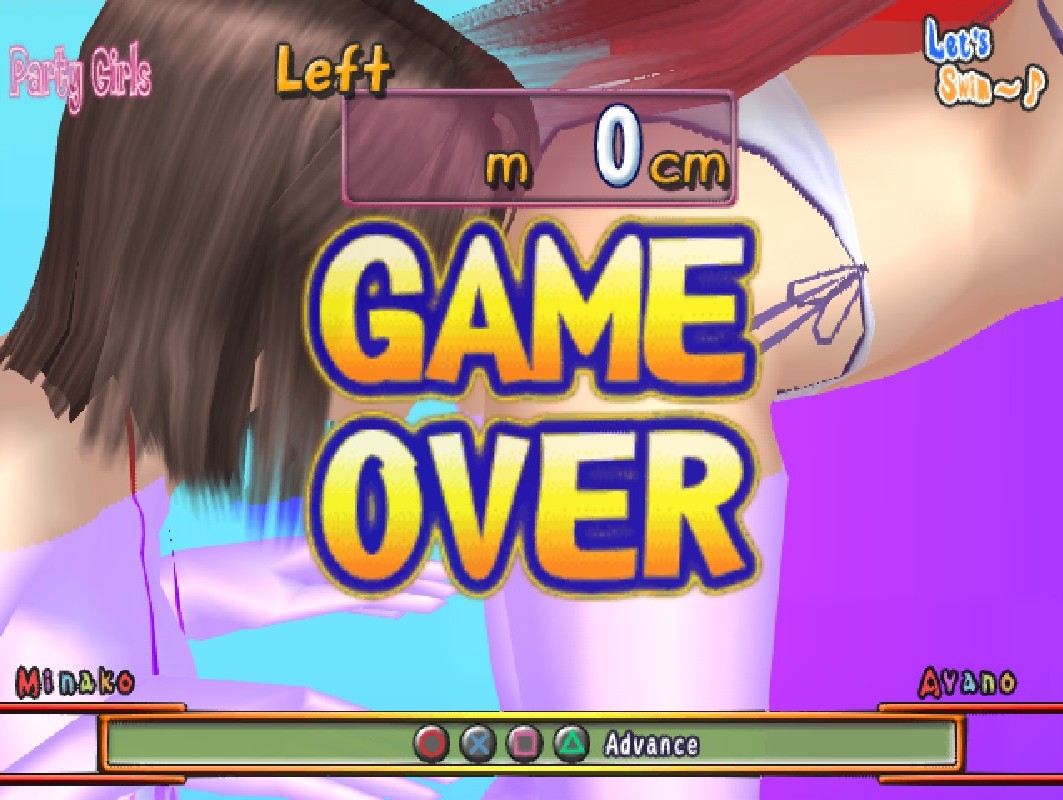
Then there’s “Let’s Swim”, which seems innocent enough at first: you need to press some button prompts to make your character swim forward, but you need to stop at a certain point because they maintain some forward momentum, and if you cross a line then you’ll lose the round: in other words, get as close to the line as possible without going over. What I was not expecting was that, if you cross the line, your character will accidentally ram their face into their opponent’s ass, motorboat their boobs, or go in for a kiss (depending on how they’ve been posed). I discovered this by pure accident the first time I played this mini-game and, my God, I don’t think a game has ever made me laugh this hysterically in surprise before.
Then there’s the mini-game called “Rub! Rub! Rub!” and… well, just watch it:
I don’t even have words, that’s about as blatant and shameless as you can get. Bravo, Party Girls, bravo.
Who are the characters?
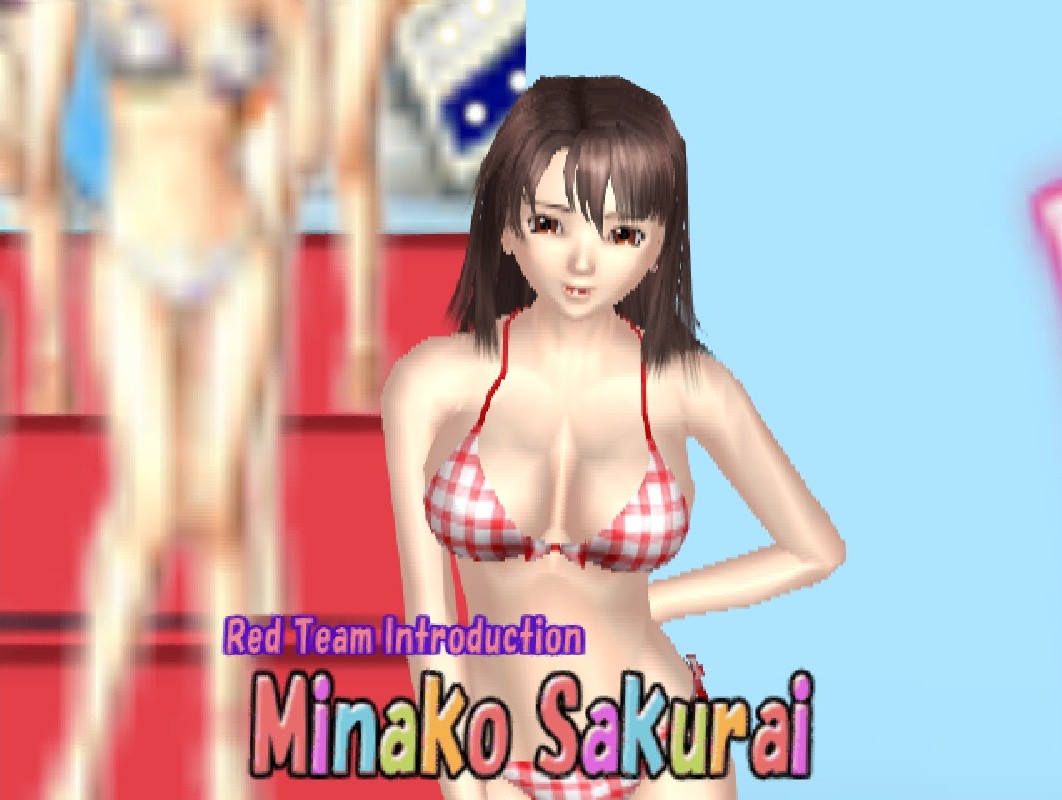
Party Girls‘ cast of idols don’t particularly stand out. While they all have differing hairstyles and faces to stand out visually, they all have the exact same cheerful personality. As a result, you’re only really able to appreciate the girls superficially; there’s no substance there to endear you towards a particular character.
By far the most notable cast member is Riho Futaba… although we’ll get to her soon enough. In this game, she’s only really notable because she has one of the largest pairs of breasts in the game, but otherwise blends into the rest of the idols on offer.
What’s the verdict?
Party Girls is, honestly, a decent time, but it comes with some really big drawbacks. The mini-games themselves are fun, especially if you have a friend to enjoy them with. However, the game is incredibly short and extremely limited in scope and replayability. It’s also way too rough-looking for its fanservice to be a truly compelling selling point.
That said, there’s been some clear care and ambition put into this project. Genuine effort has gone into earning your money (Combat Ace this game is not), but it’s still very much a budget title at the end of the day. It’s enjoyable, but far from being a genuinely “good” game.
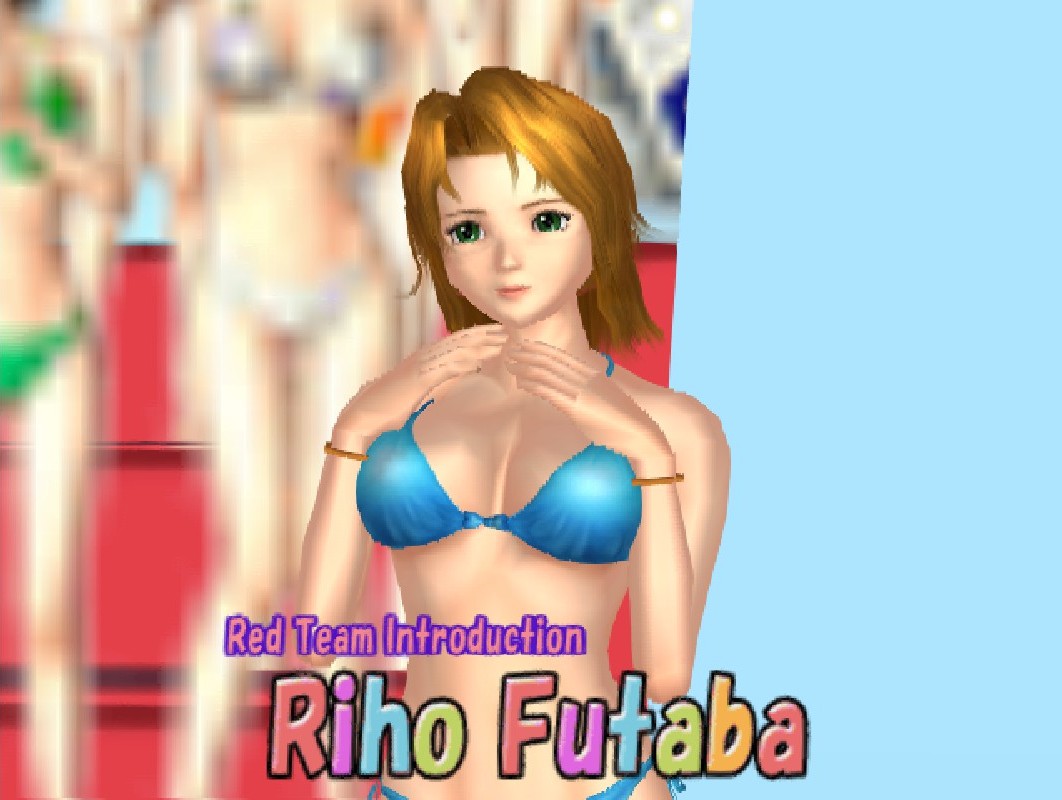
In the course of tracking down and playing Party Girls, I soon discovered that it was a part of the “Simple 2000” series, a budget line of games released by D3 Publisher. They’re the obscure, Japanese publisher behind some games you may actually have heard of before: cult classic franchises Onechanbara and Earth Defense Force are both owned and released by D3 Publisher. In fact, both of these franchise started out as part of the Simple 2000 series and then gained enough popularity to stand on their own into the present day.
During the 2000s, Riho Futaba went on to become the unofficial mascot of the Simple 2000 series, showing up in dozens of games which were primarily released onto the PS2. Hell, in the year Party Girls release, there were at least five other games featuring Riho Futaba which released before it: she was that prolific at the time!
So Riho clearly had to have some sort of appeal if she was considered worthy of becoming an entire publisher’s mascot… but I just don’t understand why this is. She doesn’t stand out within the cast of other bland, cutesy bimbos in Party Girls. She doesn’t even seem to have a particularly distinct personality. Is dirty-blonde hair, a blue bikini, a huge rack, and constant exposure (in more ways than one) all it takes to become an iconic brand mascot…?
There was only one way for me to know for sure. I needed to play every Riho Futaba game (with an English-localized release) I could get my hands on and see if I could unravel the mystery!
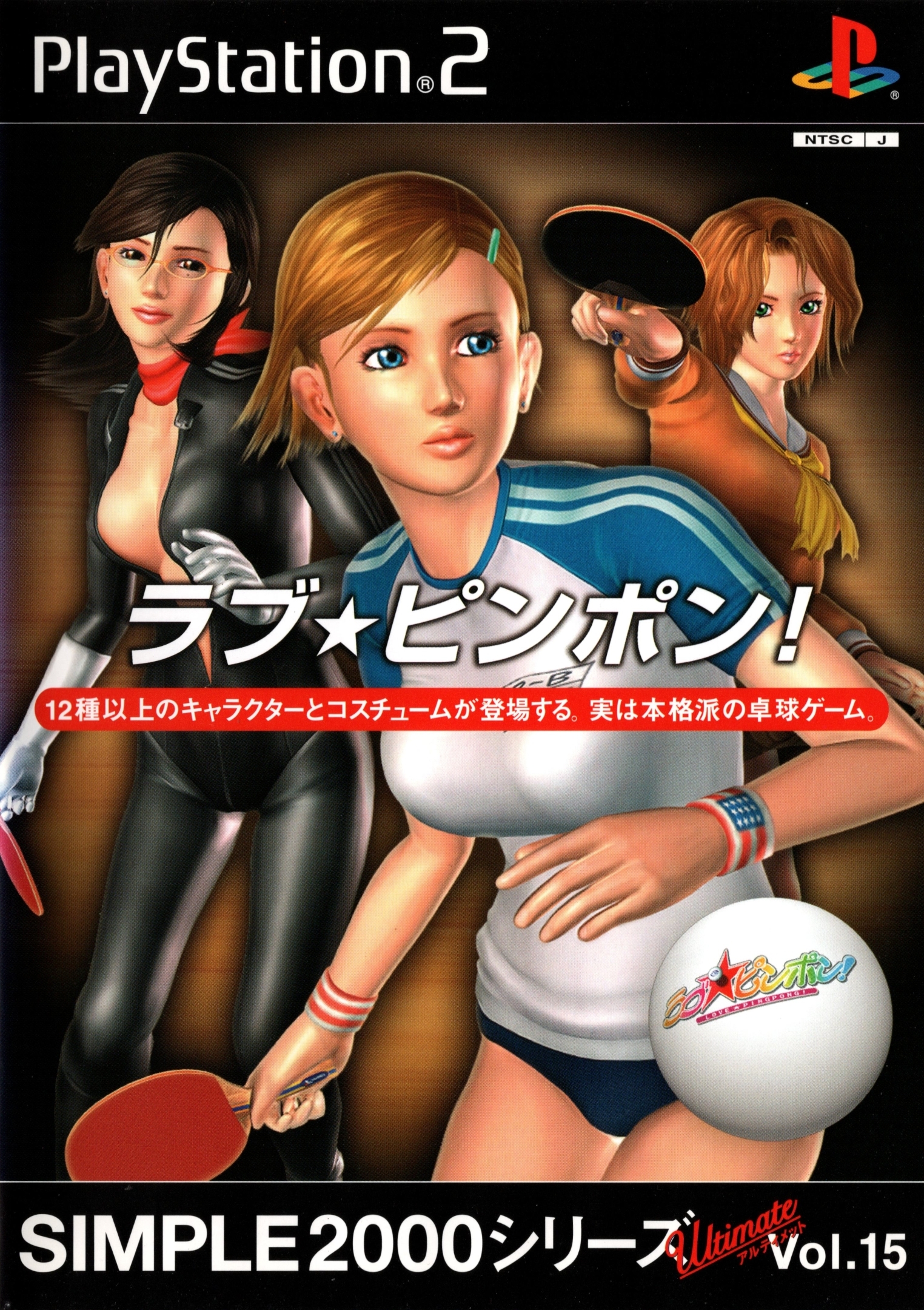
Pink Pong (aka Love ★ Ping Pong!) (2003)
| Console: PS2 |
| Release Date: December 11, 2003 |
| Developer: Tamsoft Corporation & HuneX Co., Ltd. |
| Publisher: D3 Publisher Inc. (in Japan) & 505 GameStreet (in Europe) |
What is it?
By the time Pink Pong released, Riho Futaba had already established herself as D3 Publisher’s unofficial mascot, having starred in a couple all-female tennis games, an all-female boxing game, a couple Mahjong titles, and the Love Song dating sim series. However, Pink Pong is, as far as I can tell, the first one to be released in English. Several Simple 2000 games were localized for release in Europe, which are the titles I’ll be looking at for this article (sorry, but I’m not going to waste everyone’s time reviewing games that are entirely in Japanese).
As for Pink Pong itself? It’s a table tennis (aka, ping-pong) game… but with an all-female cast whose default outfits are all bikinis. It’s is starting to sound like there are some patterns with the kinds of games D3 Publisher puts out…
Anyway, I don’t think that Pink Pong is ripping off any particular, pre-existing game. I think that this was just a genuine attempt to make a niche game for a niche audience at the time. We hadn’t even gotten more high-profile games like Wii Play or Rockstar Games Presents Table Tennis yet, so a game like Pink Pong would be filling an actual niche at the time… and then it also happens to have boobies to appeal to the gooner crowd.
How does it play?
Pink Pong is way more of a proper table tennis simulation than I was expecting. If you took away the girls in bikinis, the game would hold up as a solid-enough approximation of the real thing. It has some genuinely difficult AI, a tournament-style “story” mode, freeplay, versus modes, and a practice mode too. The only thing holding it back from being a “proper” sim is that each character has their own unique special moves which create magical, physics-defying effects, and which are very difficult to counter. Most of these special moves are so difficult to respond to that they almost certainly score a point when they’re activated.
All this said… it’s still just table tennis. I honestly could not care less about the core gameplay, which makes the fact that I fucking suck at Pink Pong all the more painful. The game does a terrible job of teaching you how to play properly. I imagine that most of that tutorializing was relegated to the game’s manual but there’s no manual or guides available online (which seems to commonly be the case with these sorts of obscure, unloved retro games). Consequently, I had to just wing it for this playthrough. I had no idea how to activate any special moves, which is a massive handicap when your opponents are throwing them out constantly. I had to resort to save-state scumming to even stand a chance of getting through the story mode, because I would have thrown in the towel about ten minutes in if I had to play this game legitimately.
…that said, I’m kind of glad I at least decided to stick through with it for the story mode, because it gets fucking insane. Like Rumble Roses, the story mode has this vague, overarching conspiracy with evil scientists, experiments, and robots… except that this made sense for Rumble Roses, since that was a wresting game. Pink Pong is a game about playing strip ping-pong at a high school gym, it couldn’t possibly be lower-stakes than that. In this game’s narrative, you’ve got some evil organization creating robots to… copy your table tennis techniques? Except that your character is a complete novice, so how would they even have known that you’d be so good that you needed to be studied? And what are they even going to do with your ping-pong skills anyway…? It’s even more stupid than if they hadn’t bothered with a story mode… but I kind of have to appreciate the unhinged insanity of this plot. I was not expecting to get any sort of entertainment out of this game’s story mode, but it hooked me enough that I did four playthroughs just to get to the true ending (which wasn’t really worth the effort… but, hey, they got me curious enough to check it out).
How does it look?
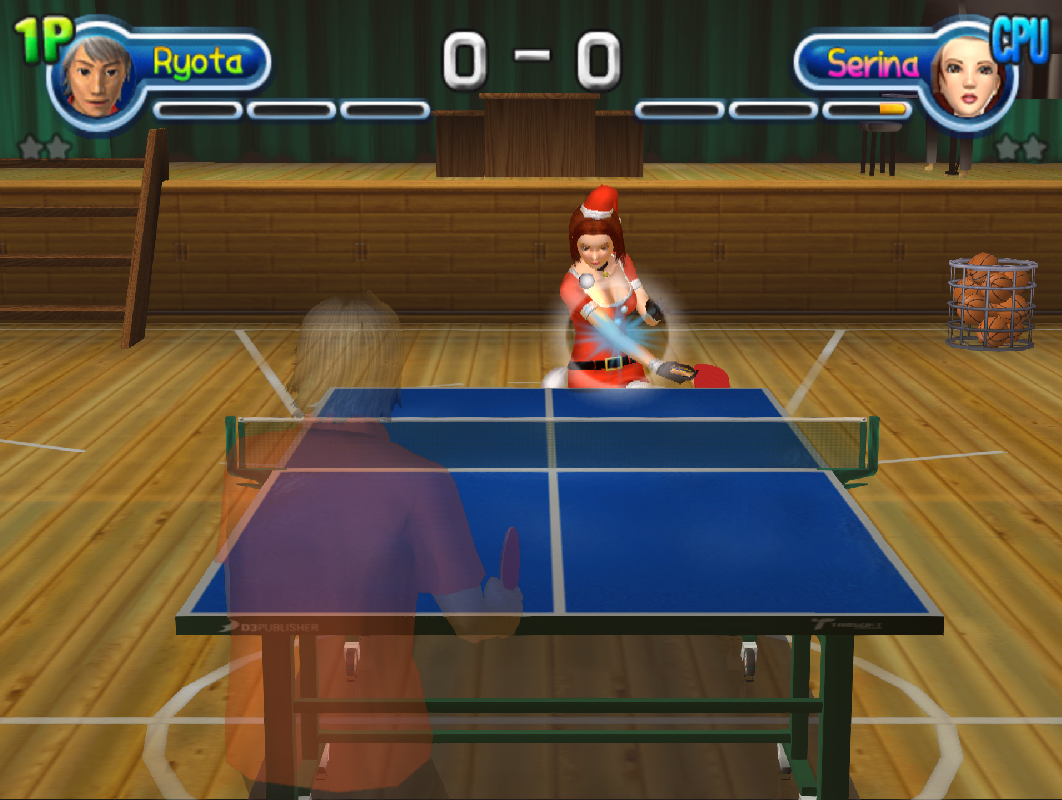
Surprisingly, Pink Pong‘s visuals really hold up. It’s a pretty good-looking game, especially considering the time it came out in and its low budget.
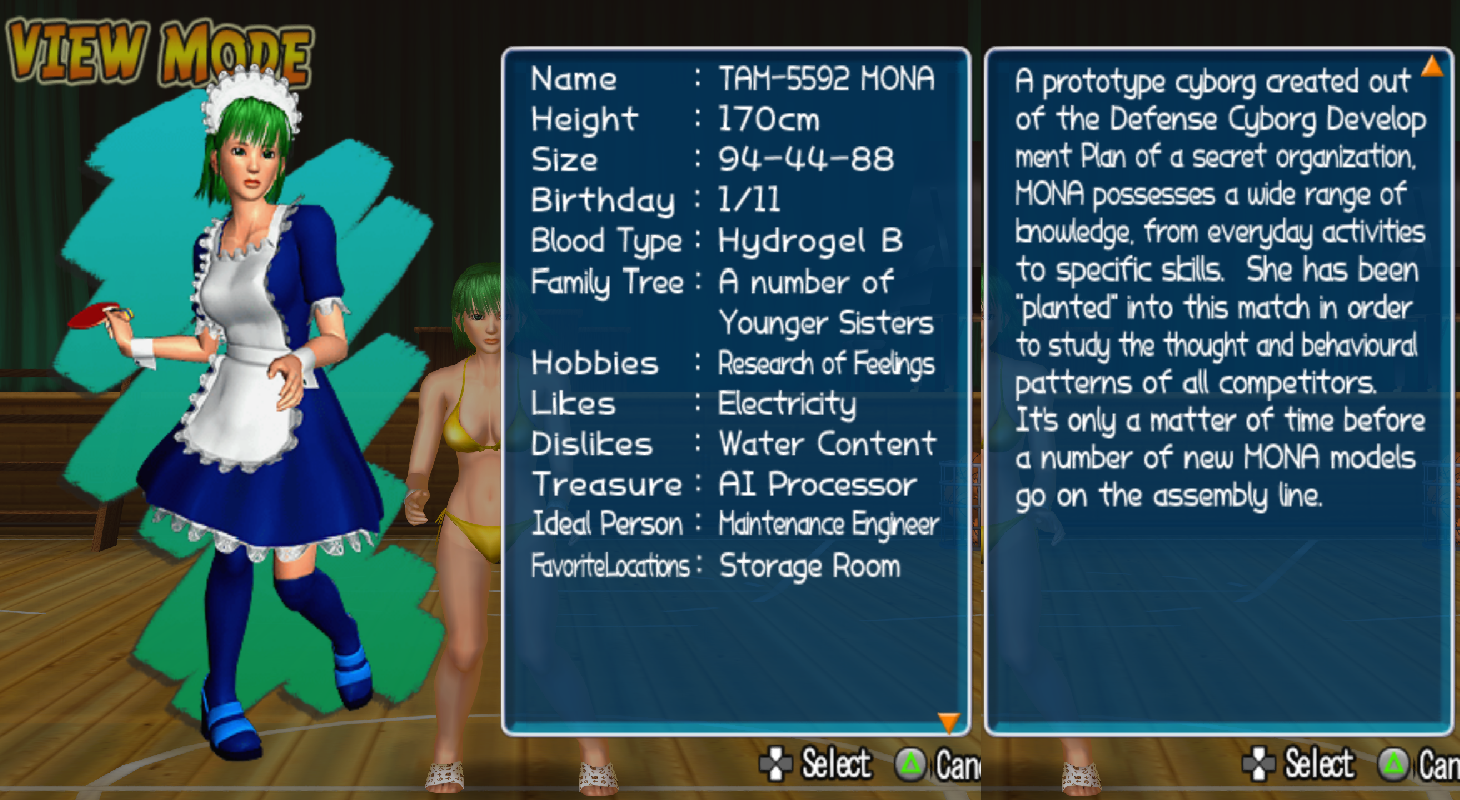
However, this comes with a bit of a caveat: there’s clearly been more effort put into some of the character models than others. Riho Futaba, Reiko, Lisa, and a few others look solid, but Misuzu, Natsumi, and Kaori have noticeably lower-detail character models. Hell, I’m fairly certain that Natsumi, MONA, and MOE all reuse the same base character model. Granted, the game justifies this within the narrative, but the real reason is obviously to cut some corners.
Still, the graphics and art style have just enough detail to look pretty good overall! Just compare this game’s screenshots to the ones from Party Girls: it’s a night-and-day difference in quality!
How’s the soundtrack?
The soundtrack in this game really reminded me of Ape Escape: they both have a similar sort of energetic, video gamey, turn-of-the-millennium sound to them. I’m not going to be listening to this by itself like, say, Doom Eternal, Ace Combat 04: Shattered Skies, or Clair Obscur: Expedition 33, but it’s “good enough” ambiance when I’m in the middle of a match of table tennis.
How sexy is it?
Pink Pong is in a weird, contradictory place. On the one hand, it’s definitely a gooner game: the entire premise is too horny and transparently exploitative to pass as anything else. However, in spite of this, the game really doesn’t have all that much sexy content at the end of the day to leave you coming away satisfied.
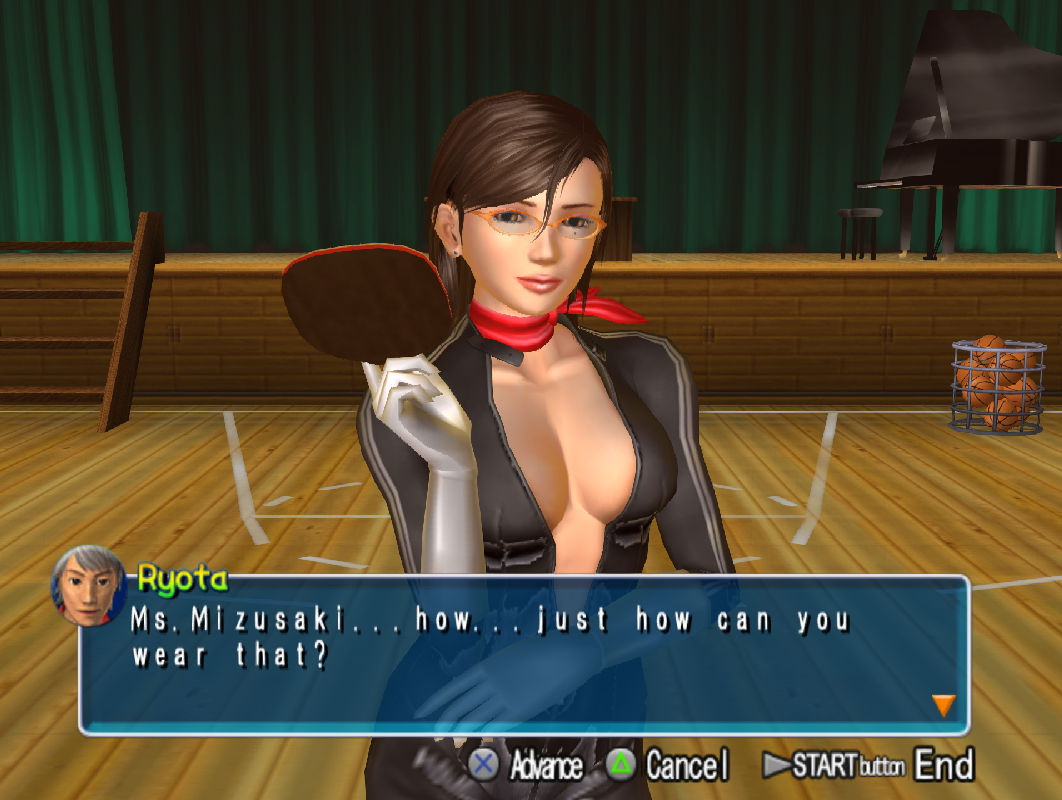
To demonstrate what I mean, for the most part you’re just… playing table tennis against attractive women. If you win against them in story mode, you get to keep their clothes as a reward and briefly see them in a bikini, but this only happens the first time you beat them. You start the game with the girls’ bikinis unlocked, but then when you unlock new costumes in story mode, they’re just the girls’ regular outfits (but now the other characters can try them on). That’s right, in this “sexy” table tennis game, you’re rewarded with more clothes when you win. Granted, some of these outfits feel like they were added purely to cater to some specific fetishes (particularly the Santa dress, unzipped biker outfit, and the Chinese dress), but this is still a step down from a goddamn bikini.
While you can play table tennis against women in bikinis as soon as you start the game, this is relegated to free play and versus modes only (no bikinis allowed in story mode, weirdly enough). The game also has jiggle physics (naturally), which bounce wildly every time the girls swing their rackets. There’s also a character viewer mode, which allows you to zoom in on all of the characters’ assets as closely as you’d like. Perhaps most importantly, the improved graphics and art style allow some of this game’s cast to be genuinely attractive: Riho, Reiko, Lisa, and Serina are all very easy on the eyes.
Oh, there’s also apparently an item you can unlock in practice mode which causes the girls to all get bigger boobs. Naturally, I had to see what this would look like (a repeat of Playboy: The Mansion‘s hilariously gargantuan boobs cheat, perhaps???), so I went about hitting one hundred balls in practice mode without missing once. While I did so successfully, the game bugged out and froze. I ended up trying this twice to see if I could get it to work, but unfortunately it bugged out again… so that’s got to be, what, negative sexiness? That’s straight-up blue balling on Pink Pong‘s part.
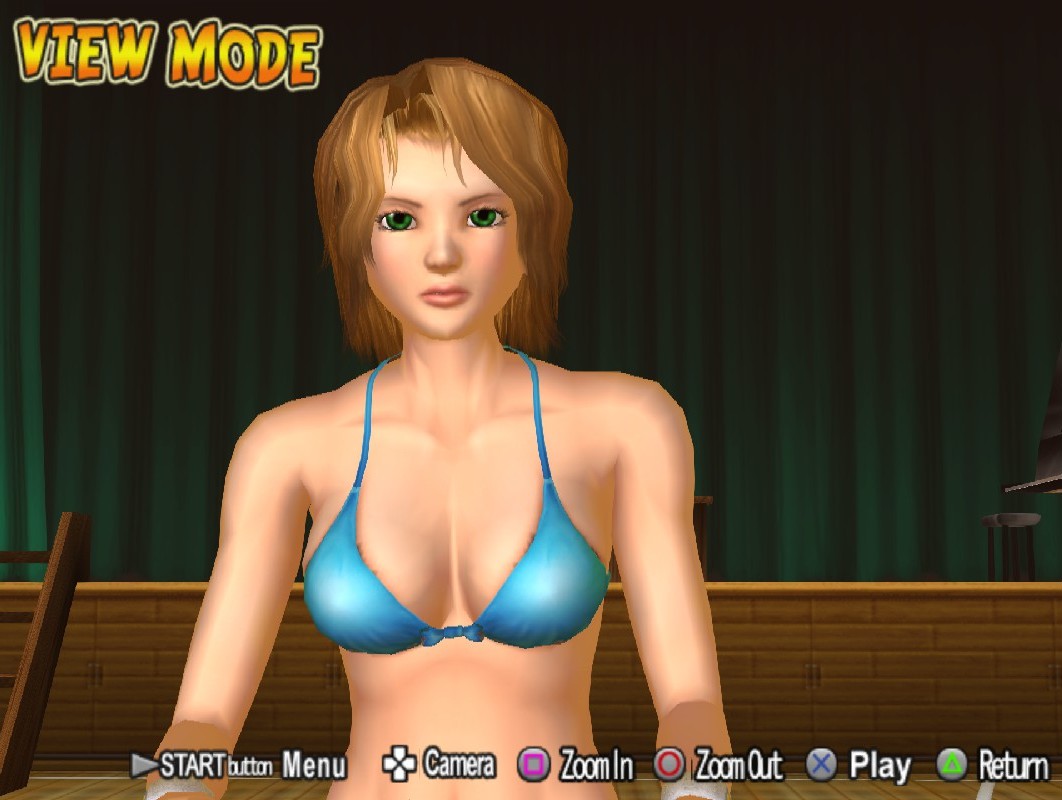
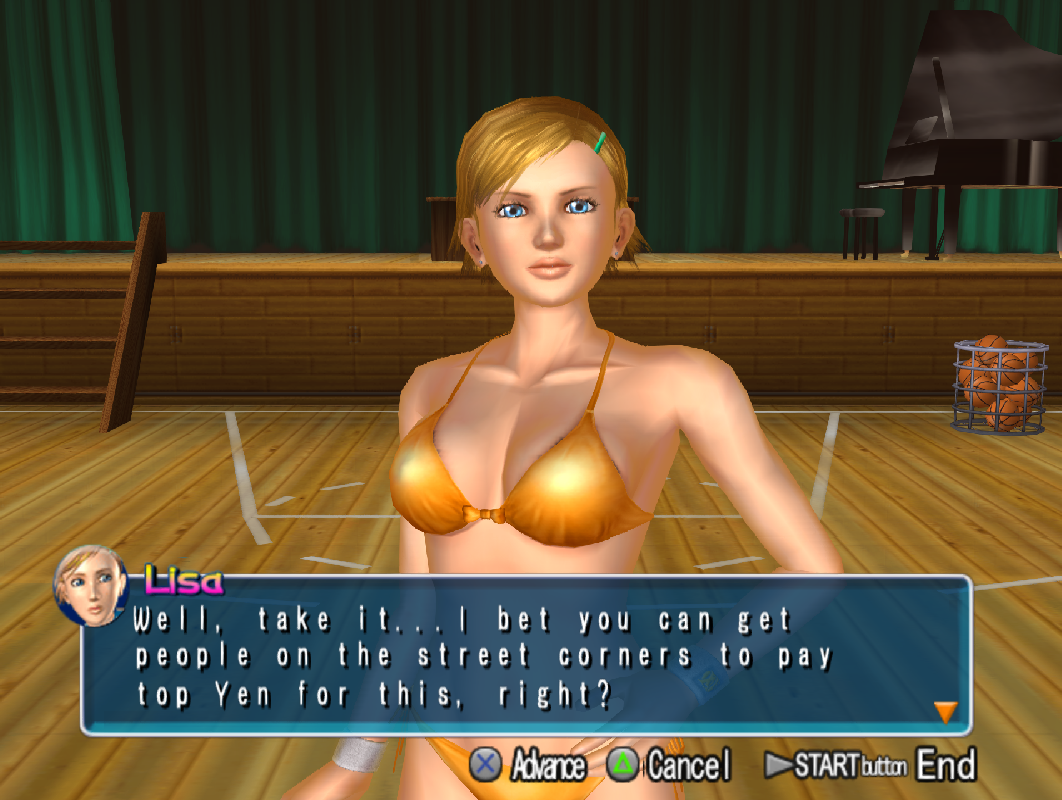
Who are the characters?
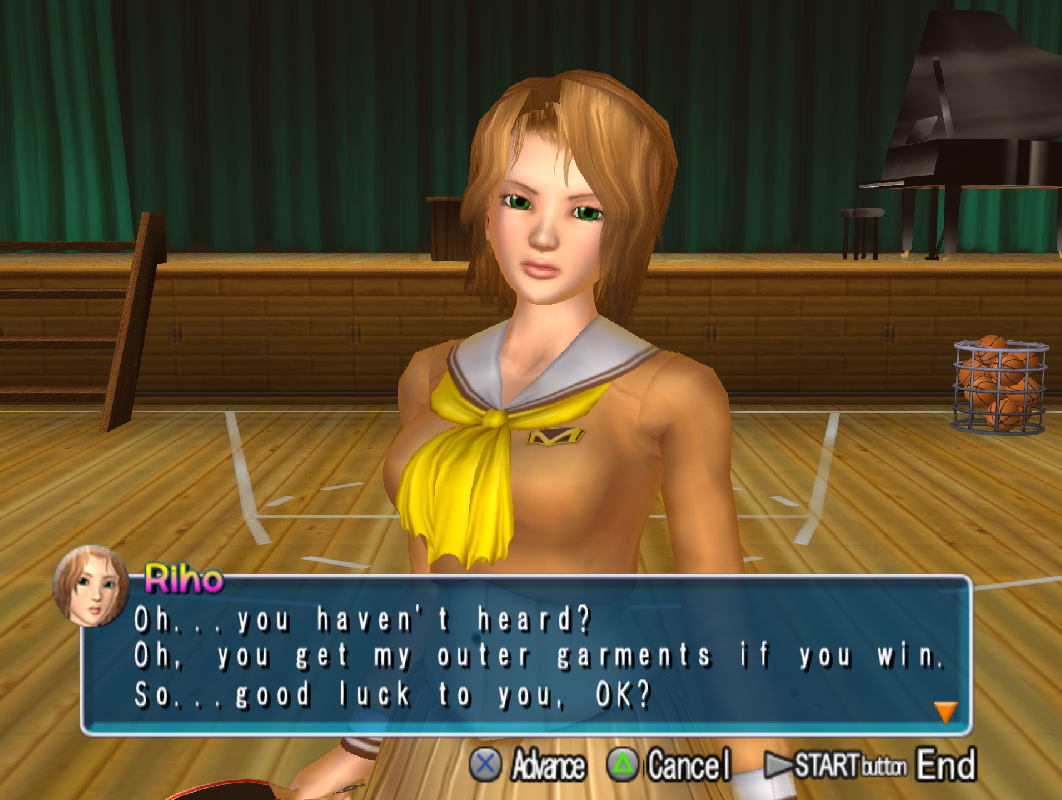
Pink Pong‘s cast are still not particularly great, but I’ll give them this: they at least have some personality and variety compared to Party Girls. It also helps that the game has a story mode, because this allows the characters to show a bit of characterization before and after each match. Granted, these sequences are often unhinged and strange, but it’s better than the fat lot of nothing we got from Party Girls.
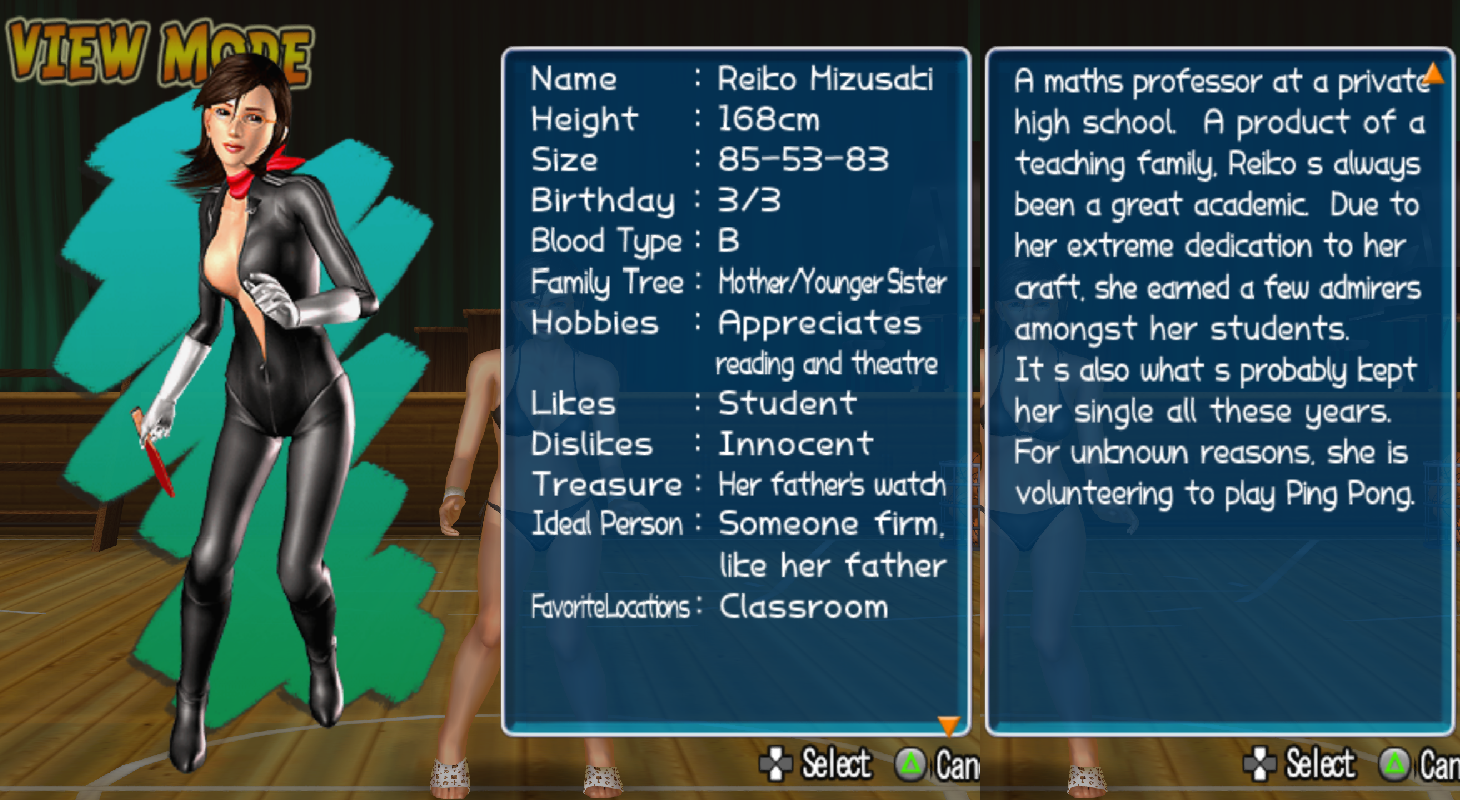
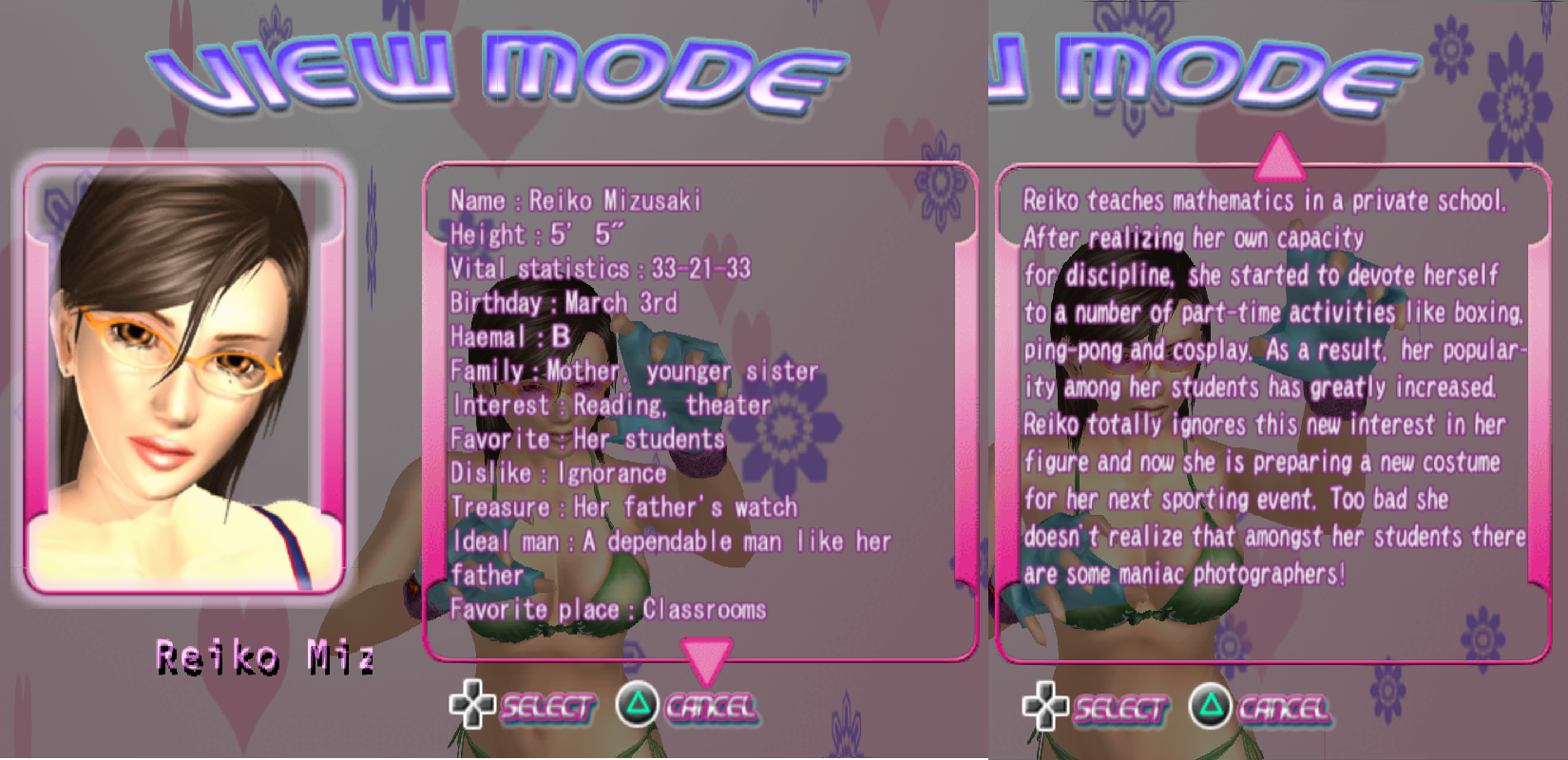
Perhaps the most intriguing member of the roster is Reiko. After playing this game, I realized that she was actually also in Party Girls as the final unlockable character (she’s the other character in the video I posted of the jerk-off mini-game)! She actually will end up being a recurring character throughout this article… so while she didn’t get mascot status at D3 Publisher, it’s still pretty wild that they would have several, random recurring characters across their games.
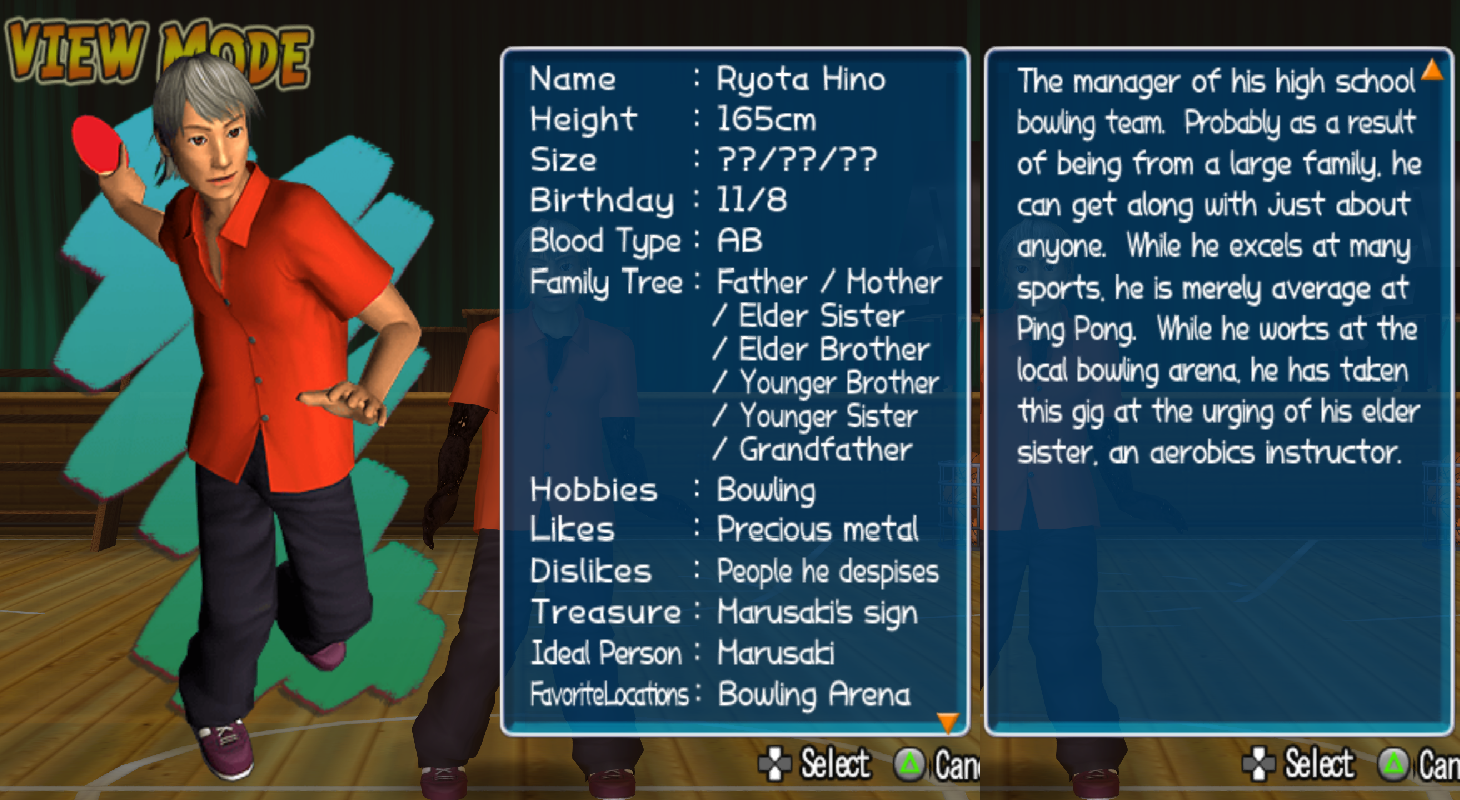
Also, it’s perhaps a misnomer to say that Pink Pong has an all-female cast, because there is one guy in the roster: Ryota, who you play as in the story mode. Unsurprisingly, he makes for a bland and very confused protagonist. When I first saw him I assumed that he must be fifty years old or something… no, this tired, grey-haired dude is supposed to be a high schooler (or recent graduate at the youngest). I mean, I guess he could be a fifty-year-old high schooler, but I don’t think that’s the intent.
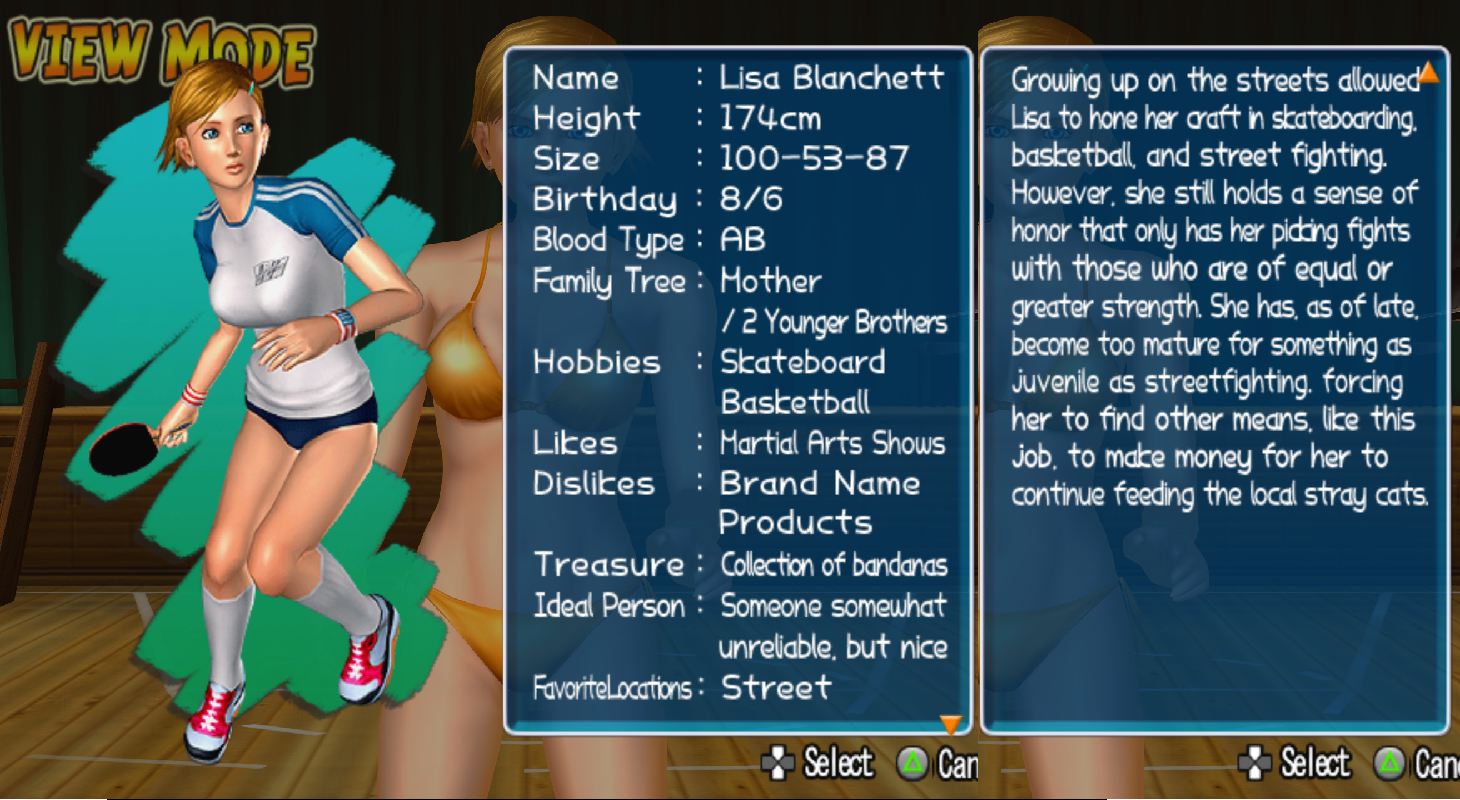
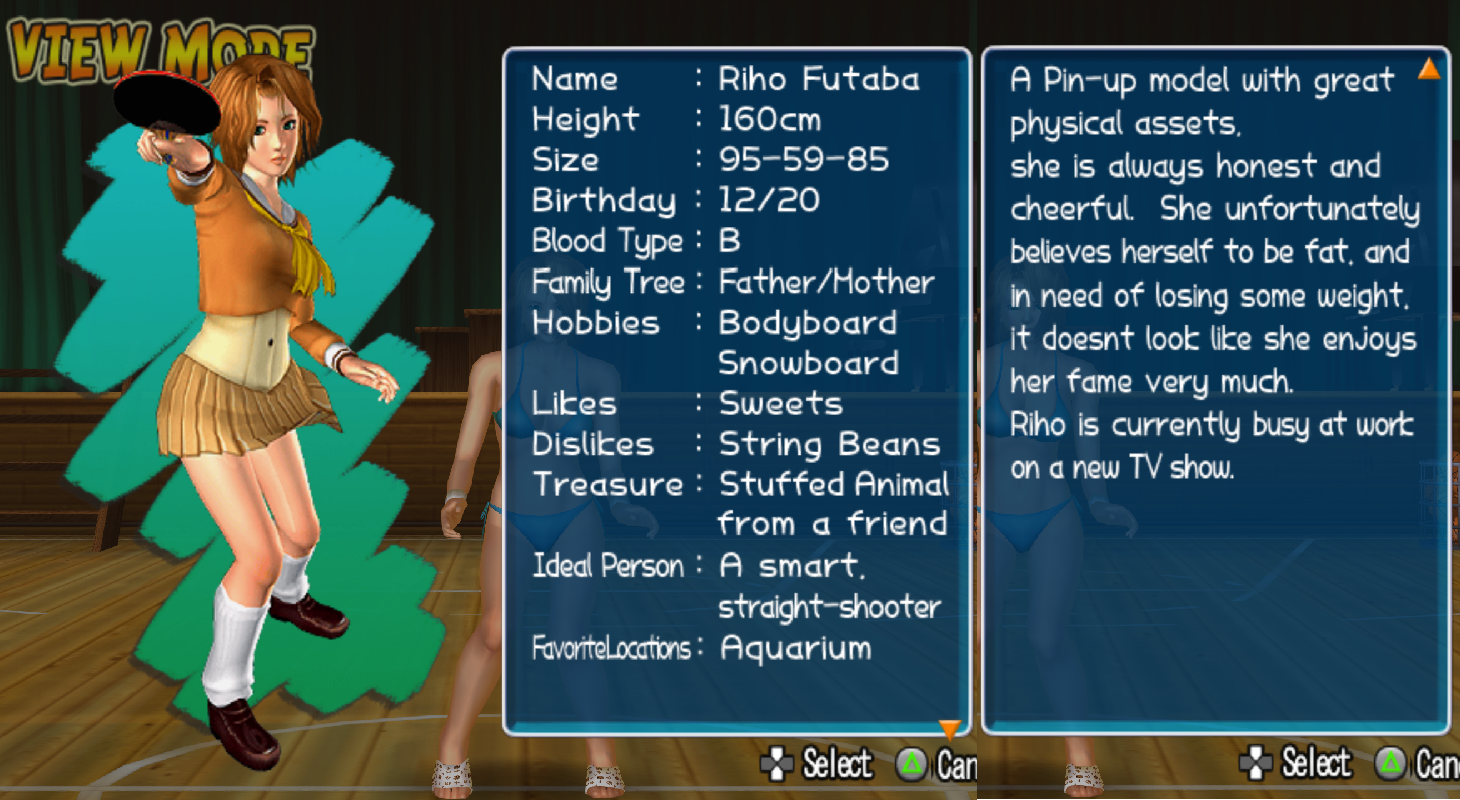
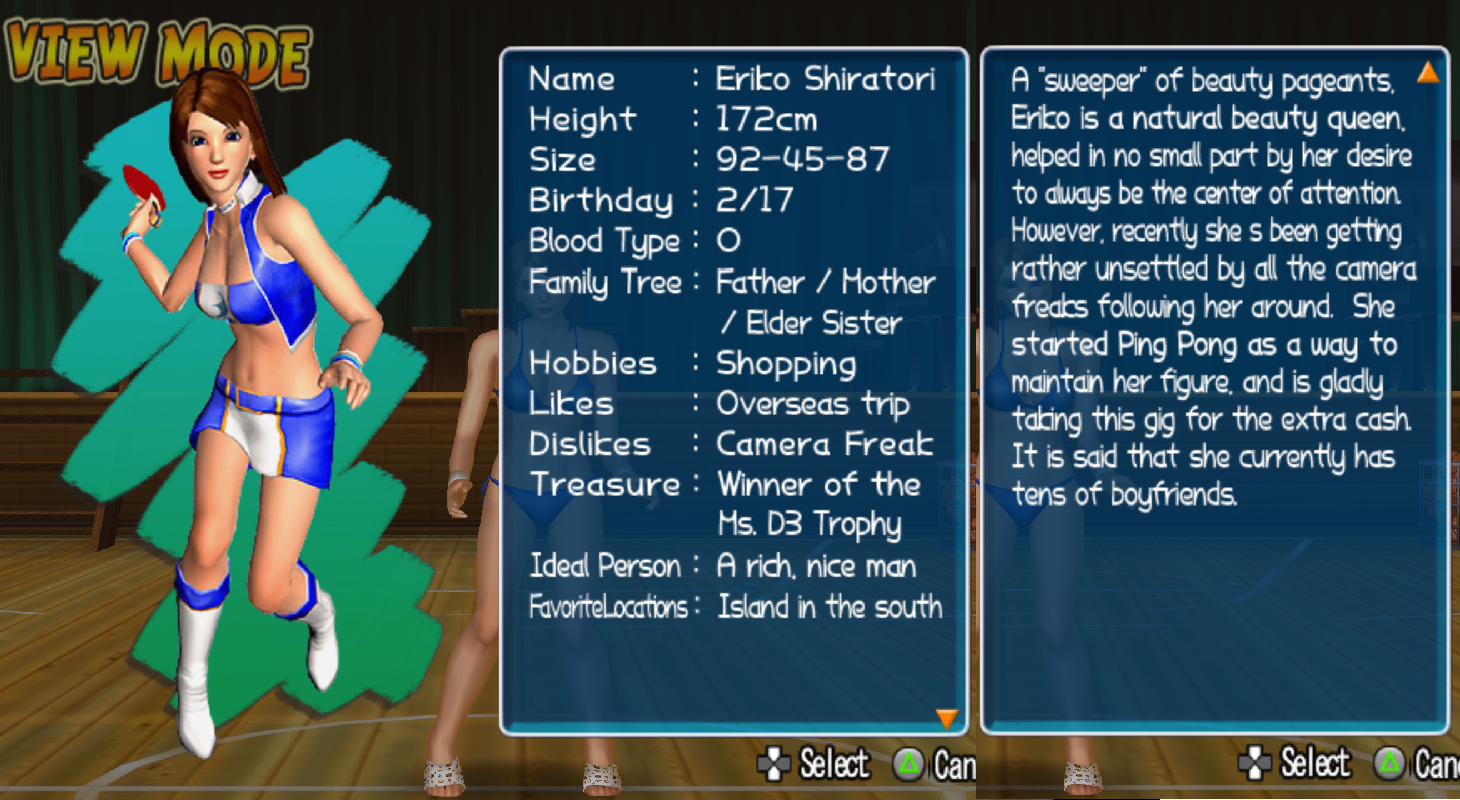
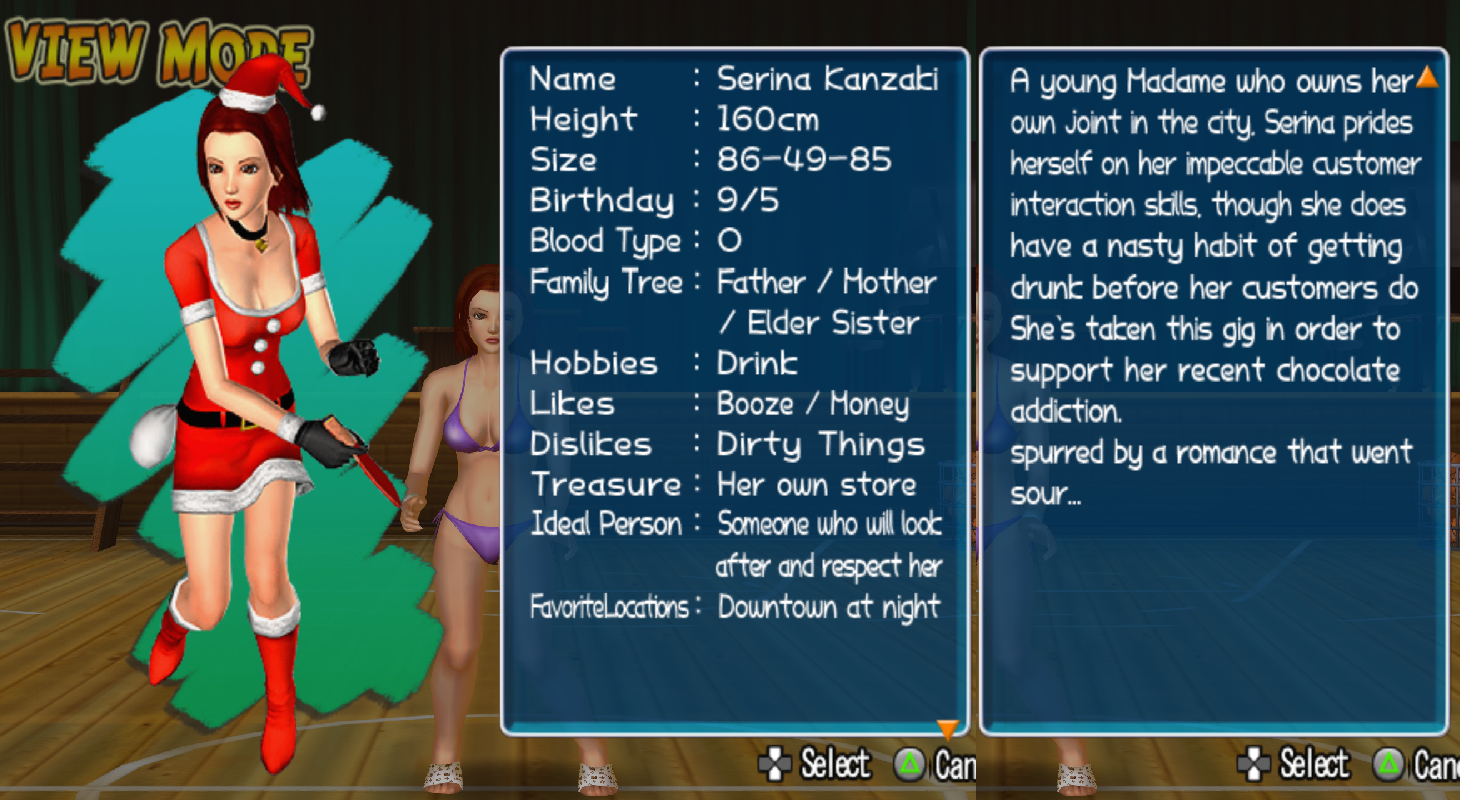
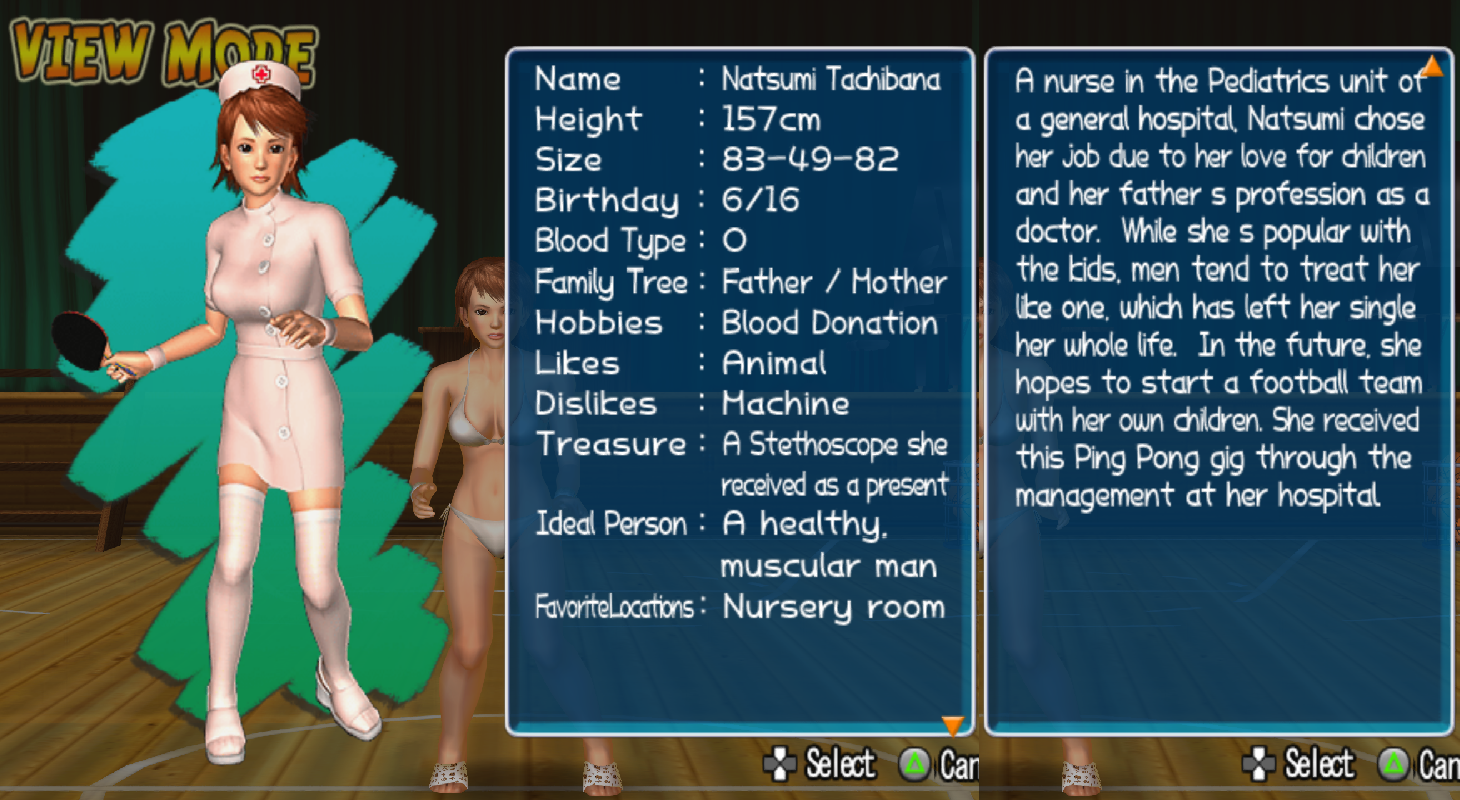
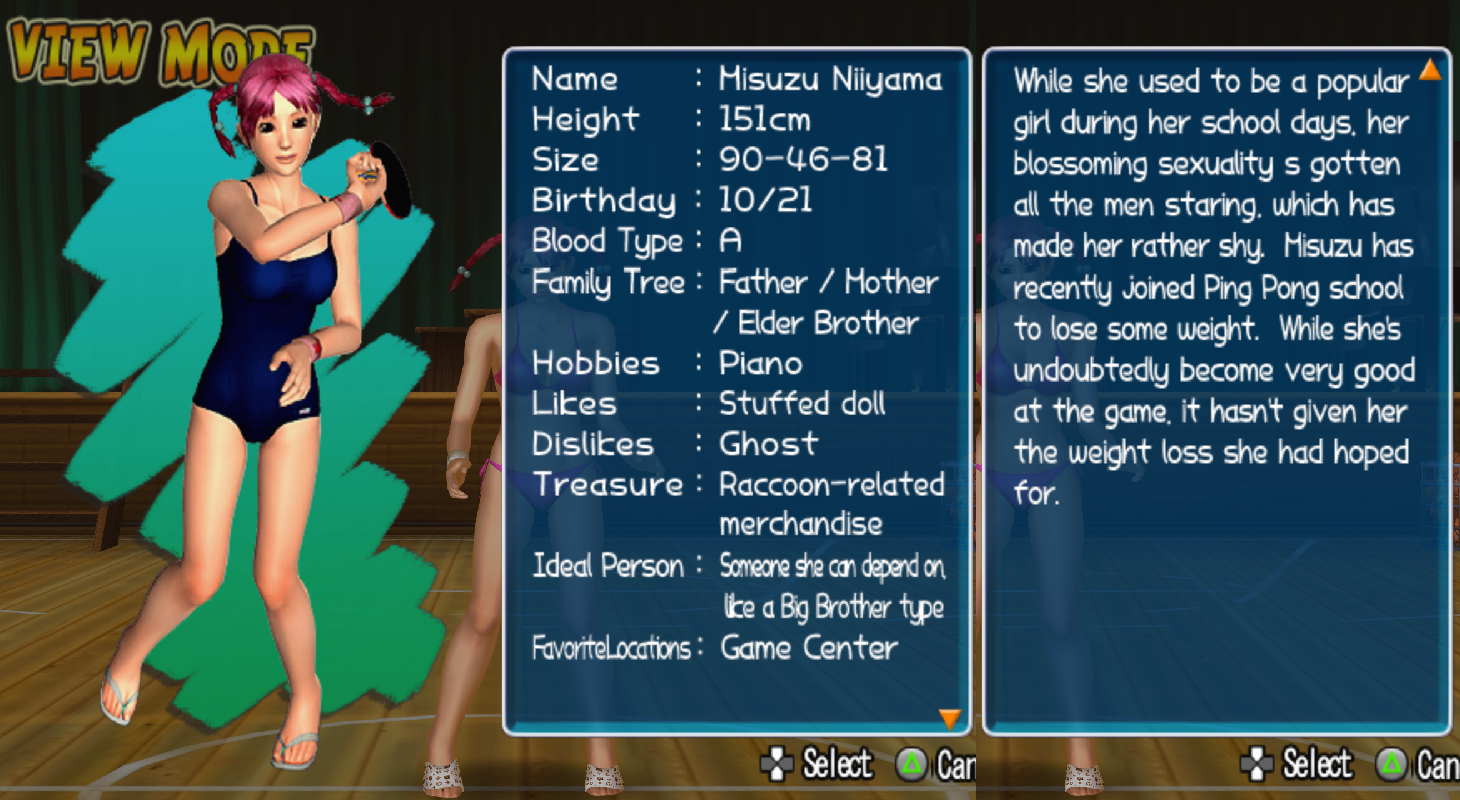
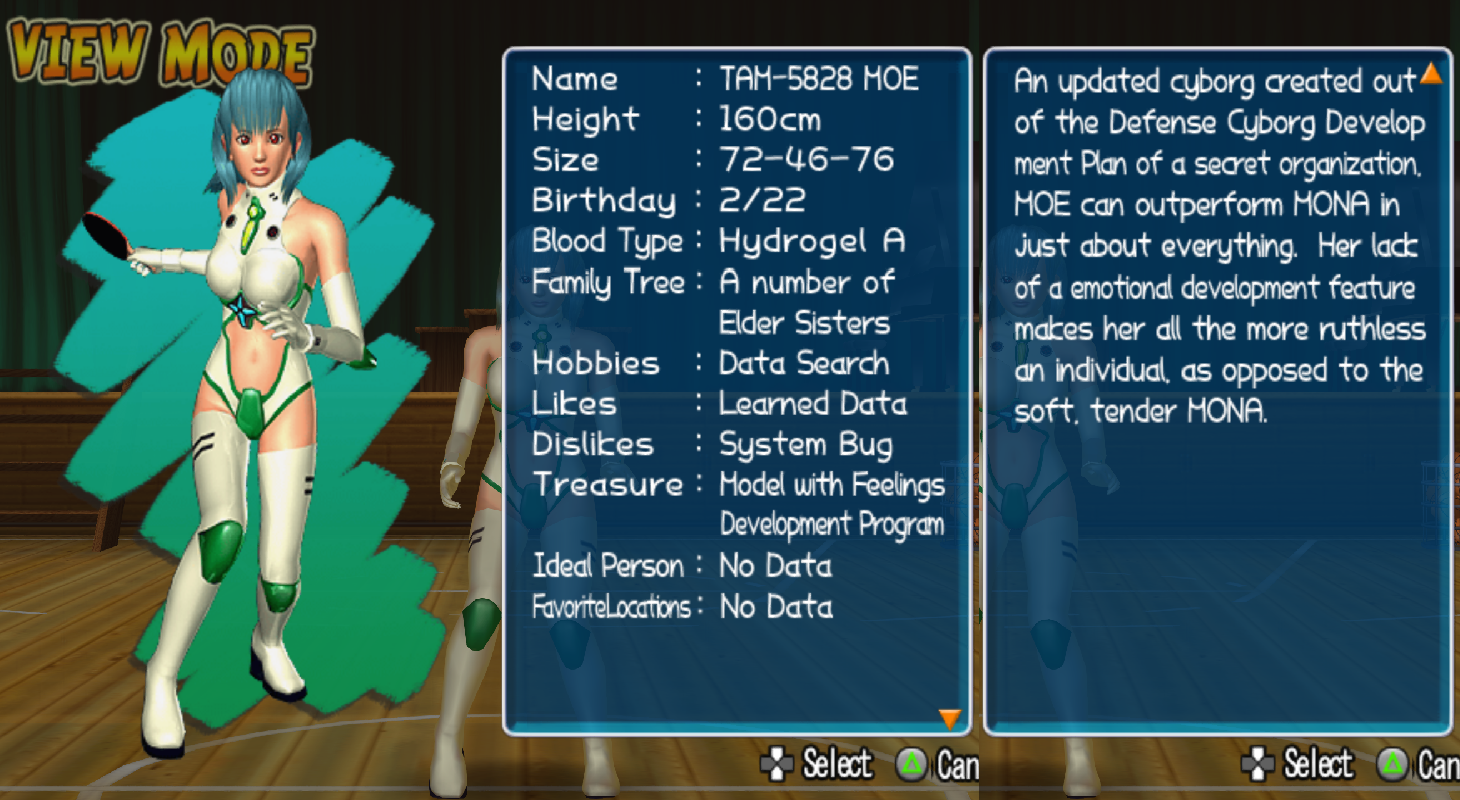
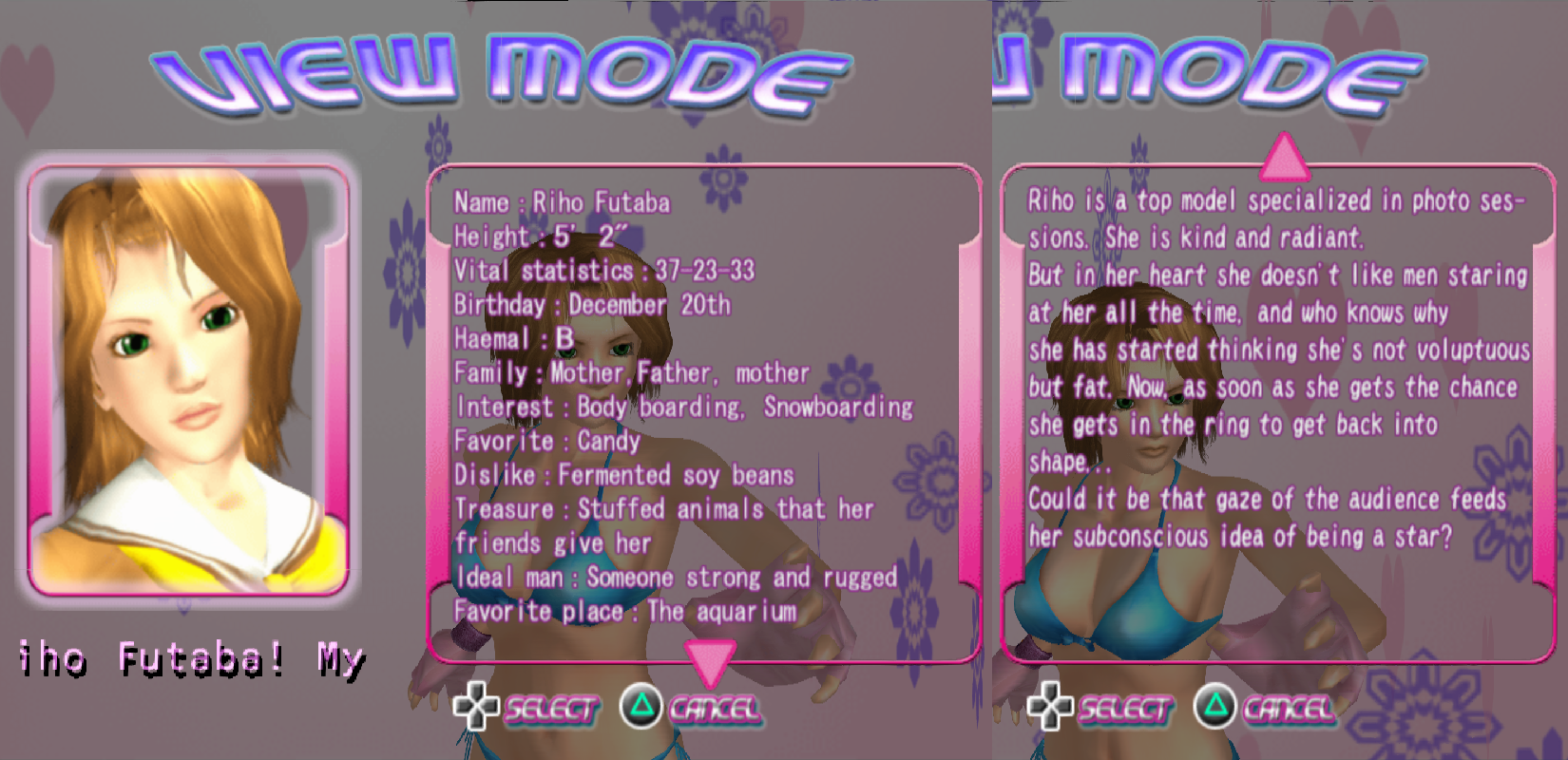
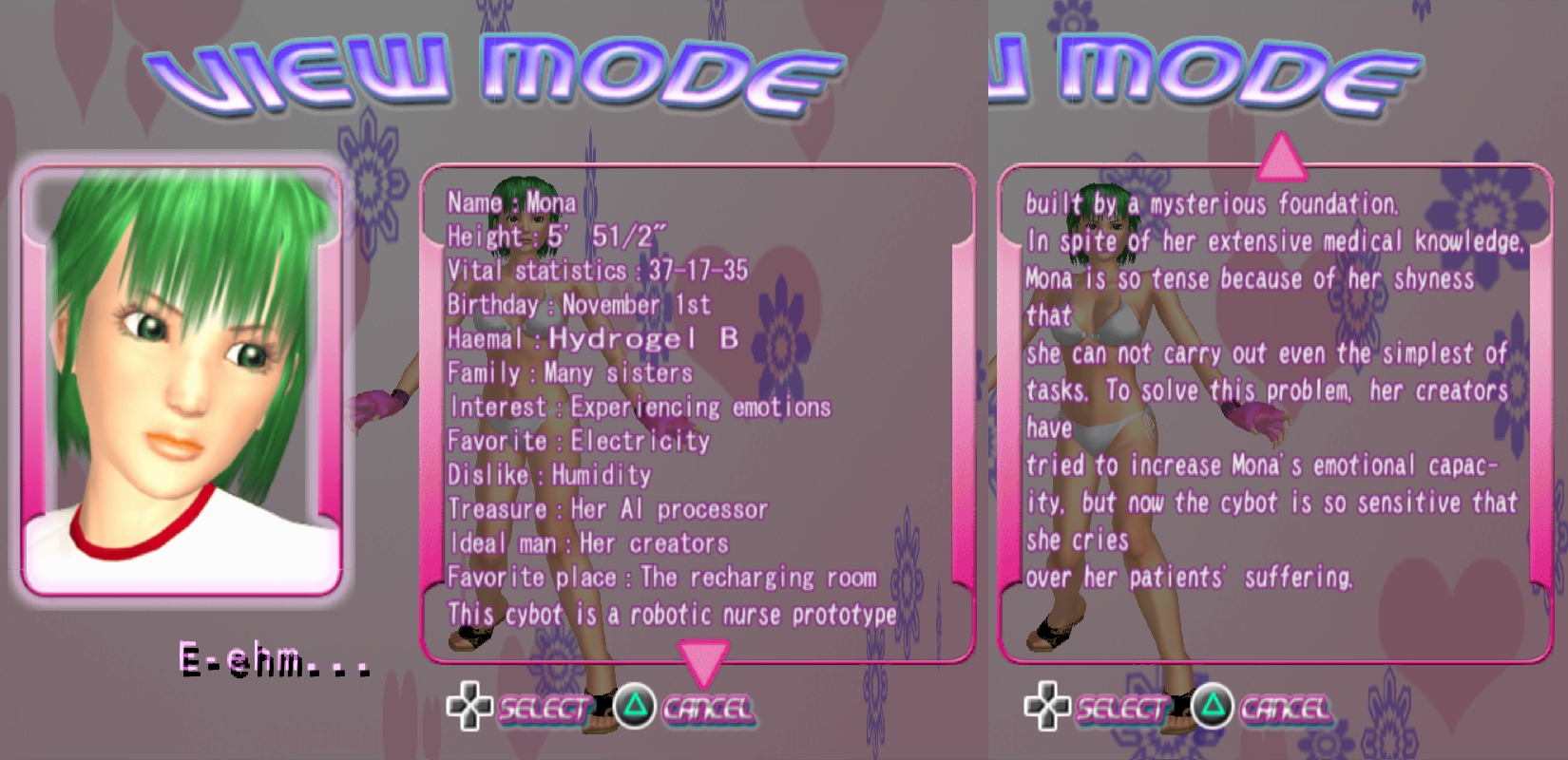
Best of all though, each character in Pink Pong has a profile page in the character viewer. These all have way more info than you’d expect, give each character an interesting/insane backstory and some motivation… there are also some hilarious bits of commentary about the characters. Seriously, I implore you to read these profile entries, they are incredible:
What’s the verdict?
Pink Pong is a bit of a weird case for me. I didn’t enjoy my time with it, but that’s because I don’t give a shit about table tennis. While the game plays decently enough, its gameplay is just too shallow and not to my tastes at all. I only stuck around as long as I did (around two whole hours) because I wanted to see how weird its story mode would get. Even the “sexy” content isn’t all that impressive. I definitely cannot recommend Pink Pong, but if you wanted to get high with the lads, I suppose there are worse games you could spend an hour with…?
Also, it has to be said… “Pink Pong“? What an awful title.
World Fighting (aka The Various Unarmed Fighting Disciplines: Boxing vs Kick vs Karate vs Pro Wrestling vs Jujitsu vs…) (2003)
| Console: PS2 |
| Release Date: December 18, 2003 |
| Developer: HuneX Co., Ltd. |
| Publisher: D3 Publisher Inc. (in Japan) & 505 GameStreet (in Europe) |
What is it?
So how long did it audiences have to wait for a new game with Riho Futaba? Literally one week. Yes, I was not kidding when I said that Riho Futaba was extremely prolific during the PS2 era.
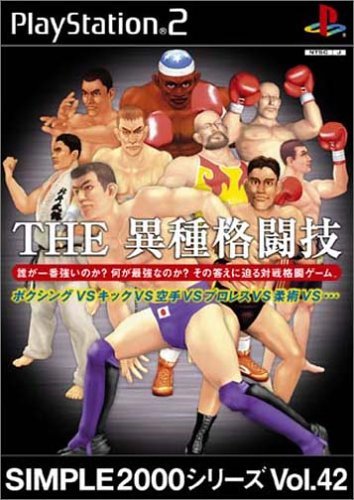
World Fighting is basically just a fighting game where every character represents one major, real-world fighting style… yes, that could describe pretty much any other fighting game as well, but that’s about all that World Fighting has going for it.
How does it play?
World Fighting feels more like a boxing or wrestling game than it does a traditional fighter. The fighting styles are, as you’d expect, wildly different, with fist-throwing boxers getting matched up with jiu jitsu grapplers, for example. There’s also a whole ground game, where you can continue to maneuver and fight while on your back. Some fighters get special attacks and grapples when they’re on the ground… they are very annoying to deal with if your fighter is not suited to deal with it.
World Fighting has a pretty simple and standard control scheme: four attack buttons, one each for punch, kick, throws, and special moves, with the option for a directional input to change the attack type. Unfortunately, the game is extremely sluggish and stiff. Your character moves around slowly, their animations are extremely basic and most of your attacks really lack any satisfying impact. Some characters also felt awful to play: I wanted to try out the karate expert, but he controlled terribly and felt like he couldn’t even land an attack reliably. Meanwhile, the boxer was out here mangling people with his heavy punches, literally getting instant K.O.s on opponents with his special attack after landing only a few hits to soften them up. I suspect that the game isn’t particularly balanced, but there is no way in hell I am going to play it thoroughly enough to state that with 100% certainty.
Oh, and as an extra “fuck you”, this game doesn’t even seem to support analog controls; movement is entirely relegated to the d-pad. The “fuck you”‘s extend further than that though, because grappling gameplay requires a ton of button mashing. Whether you’re on attack or defense, you are expected to mash buttons frequently and at a high rate any time you get into a grapple. If you’re playing as one of the grappling fighters, your hands are going to be destroyed within minutes, making them really annoying to play.
How does it look?
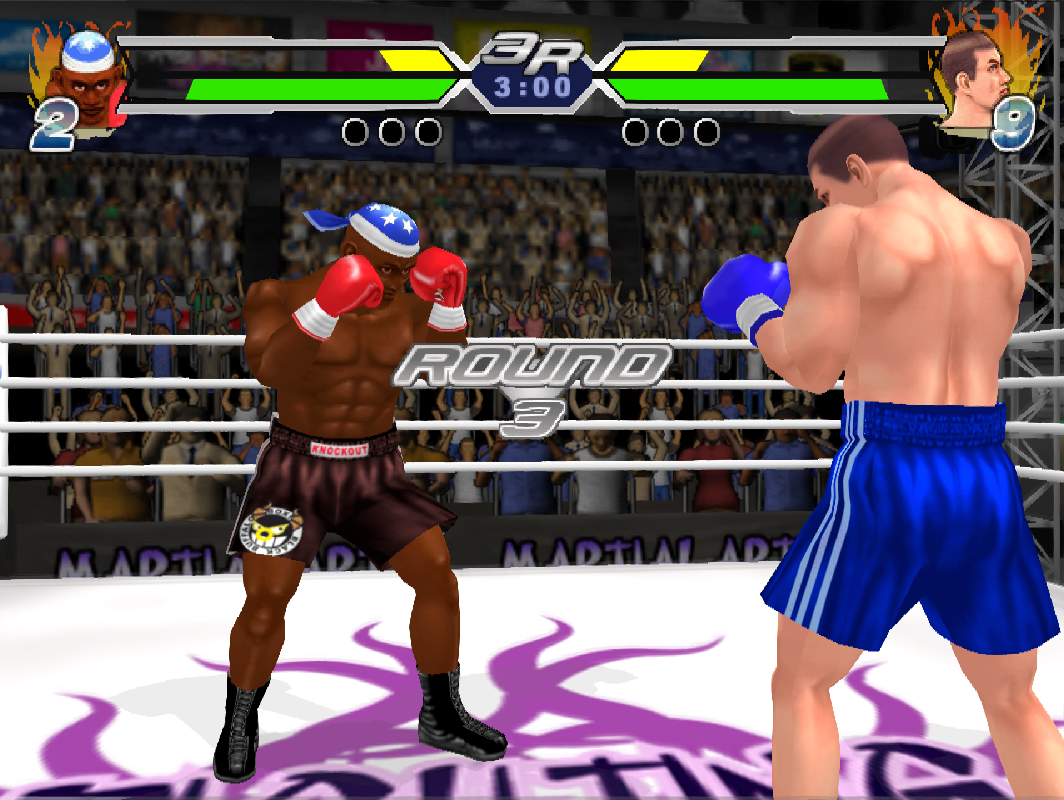
Man, what is it with D3 Publisher’s wildly varying visual quality? Pink Pong looked surprisingly good for its era, but World Fighting looks terrible. If you told me that World Fighting was a PS1 game, I would have believed you. It is, in fact, a PS2 game, and an extremely dated-looking one at that. Was this game originally planned for PS1, but they pivoted to next-gen later in development? I have no idea what other answer there could be for why this game looks so unimpressive.
How’s the soundtrack?
World Fighting has a pretty generic soundtrack, but what makes this game sound terrible is its other sound effects. Hits sound like stock clips, sound effects are very repetitive, and the characters voices sound like they were recorded on a tape deck. The game looks bad, but it sounds even worse.
How sexy is it?
So this was a big surprise considering the games we’ve looked at so far, but World Fighting? Not sexy at all. Well, that is, unless you’re into shirtless, muscle-bound dudes grappling each other. I am not, so I cannot verify if these guys would be considered “sexy”. Feel free to sound-off in the comments. That said, given the poor graphics, I imagine their appeal is pretty limited.
Who are the characters?
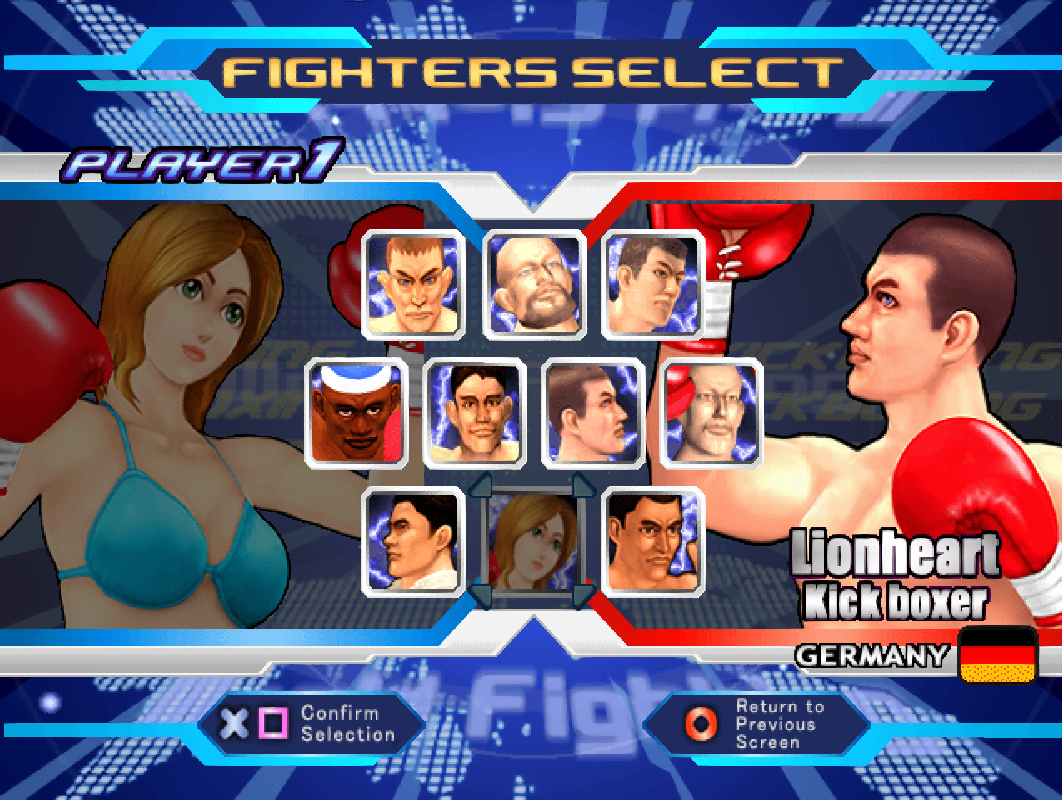
World Fighting‘s characters are, as I said in the intro, all based around one real-world fighting style. They have zero personality, outside of being vague ethnic stereotypes.
Irritatingly, Riho Futaba herself is locked at the start of the game, and you have to beat tournament mode with all nine characters in order to unlock her. Upon realizing this, I just said “nope”. I’d love to try playing as Riho, but it’s not worth the time investment this game would ask of you.
What’s the verdict?
World Fighting is a rough game. It’s not entirely unplayable, and you can see some glimmers of a good idea here, but it’s just so cheap, rushed, and bad to play that there was no way that this was going to be satisfying for anybody. “At least it’s better than The Simpsons Wrestling” is about the most damning praise you could give a game.

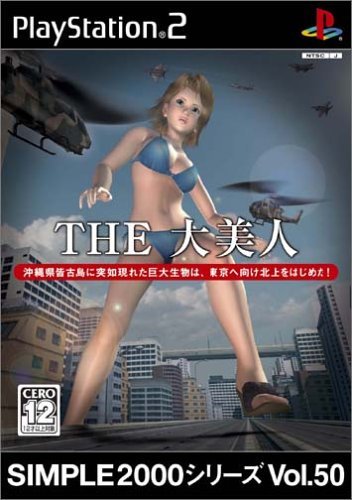
Demolition Girl (aka The Large Beautiful Woman) (2004)
| Console: PS2 |
| Release Date: May 20, 2004 |
| Developer: Tamsoft Corporation |
| Publisher: D3 Publisher Inc. (in Japan) & 505 GameStreet (in Europe) |
What is it?
Riho would have some cameos in a few more titles over the next half year: a jigsaw puzzle game, a bowling game, and a pinball game. This was all just a prelude though, because there was a big title looming on the horizon…
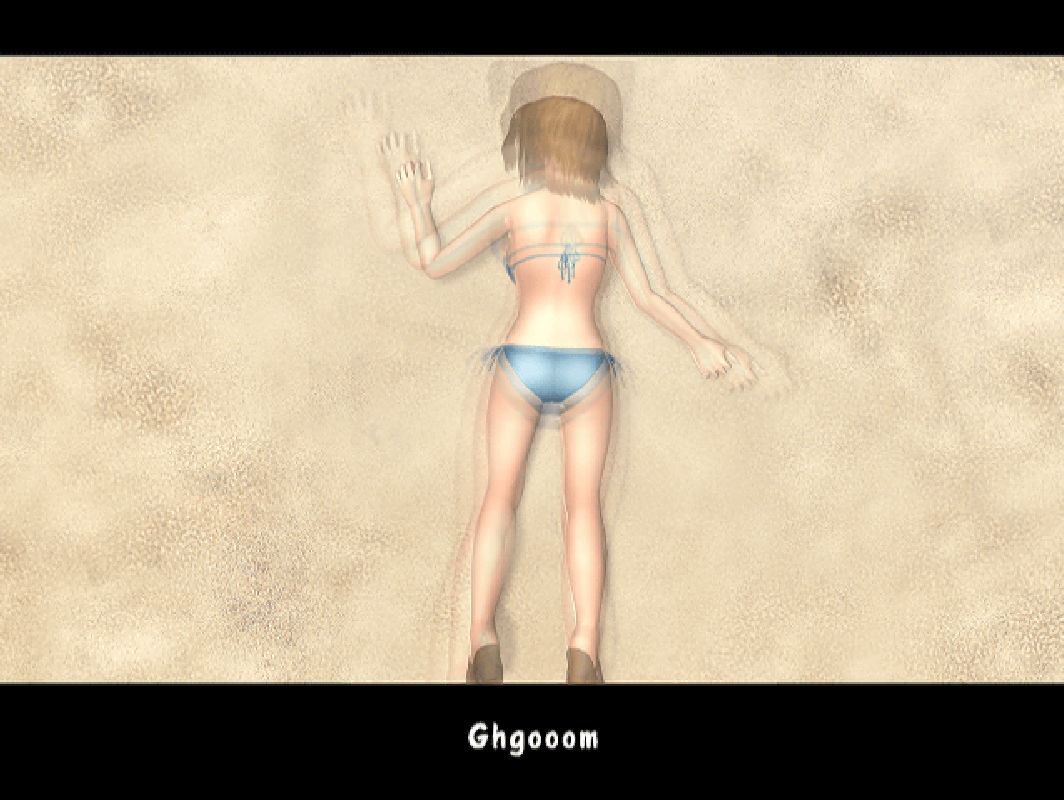
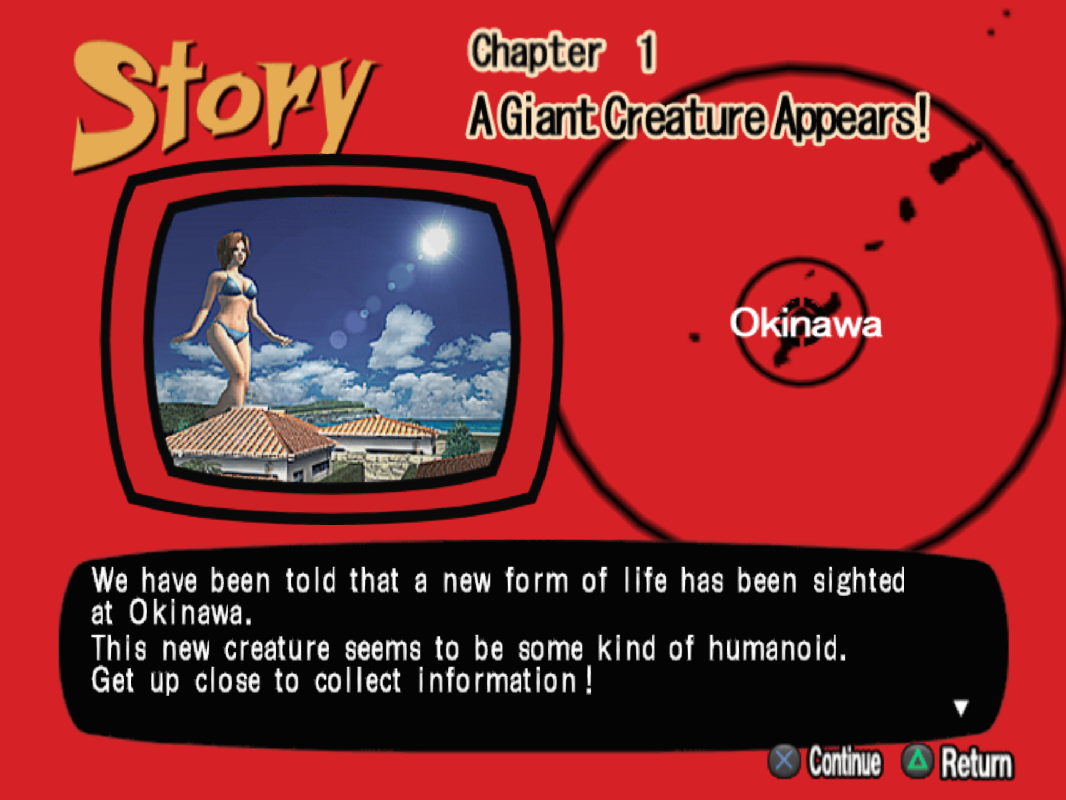
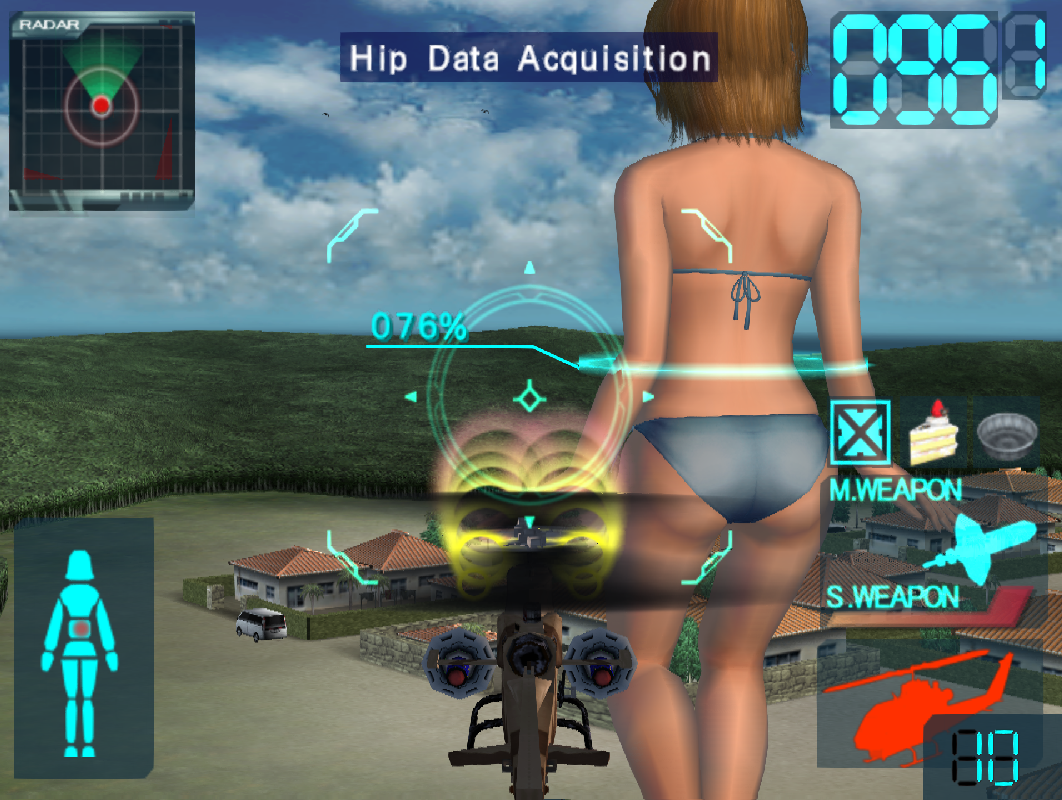
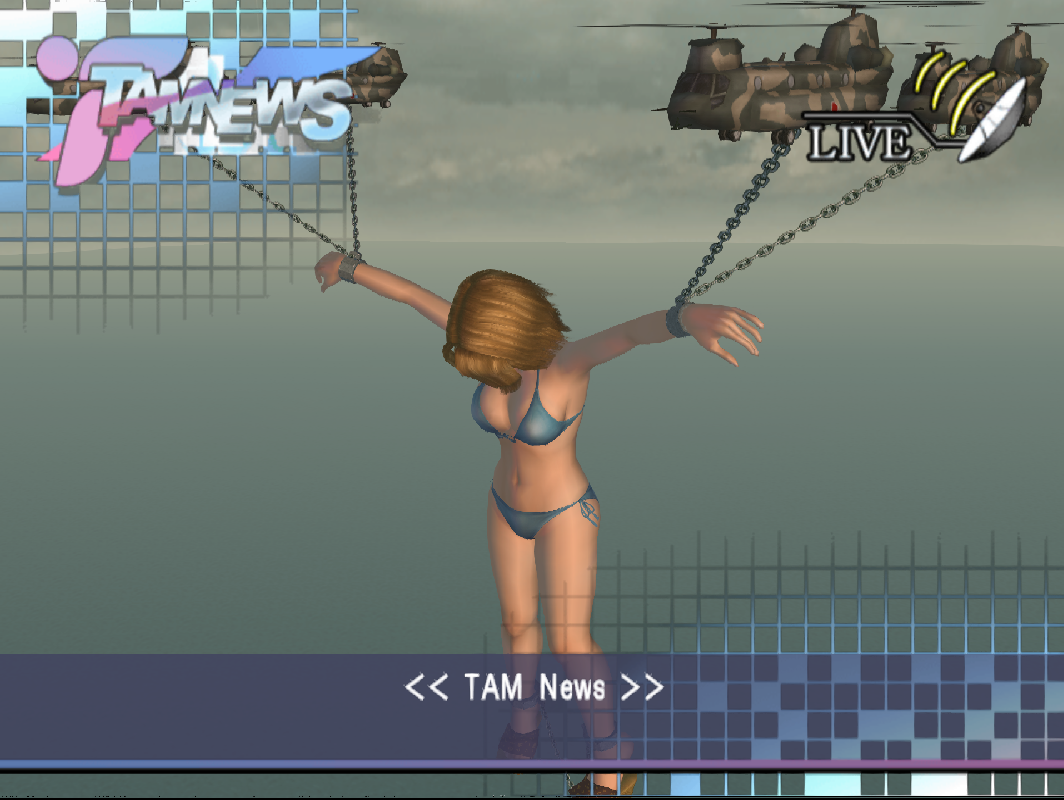
And so we arrive at perhaps the most notorious Riho Futaba game: Demolition Girl. This game has a very dedicated fanbase, due to its… peculiar premise. To put it simply: Riho Futaba gets bit by an alien, which turns her into a giant, bikini-clad woman. The military then have to get called in to deal with the situation as Riho and the aliens rampage across Japan.
How does it play?
Demolition Girl makes a really strong first impression. The menus have a ton of character to them, and the presentation and soundtrack is clearly an homage to classic Kaiju movies of the 60s and 70s. The game even has some cosmetic and weapon loadout options for your vehicles! There’s been some genuine effort put into this extremely stupid and campy premise, and it really makes you want to love this game.
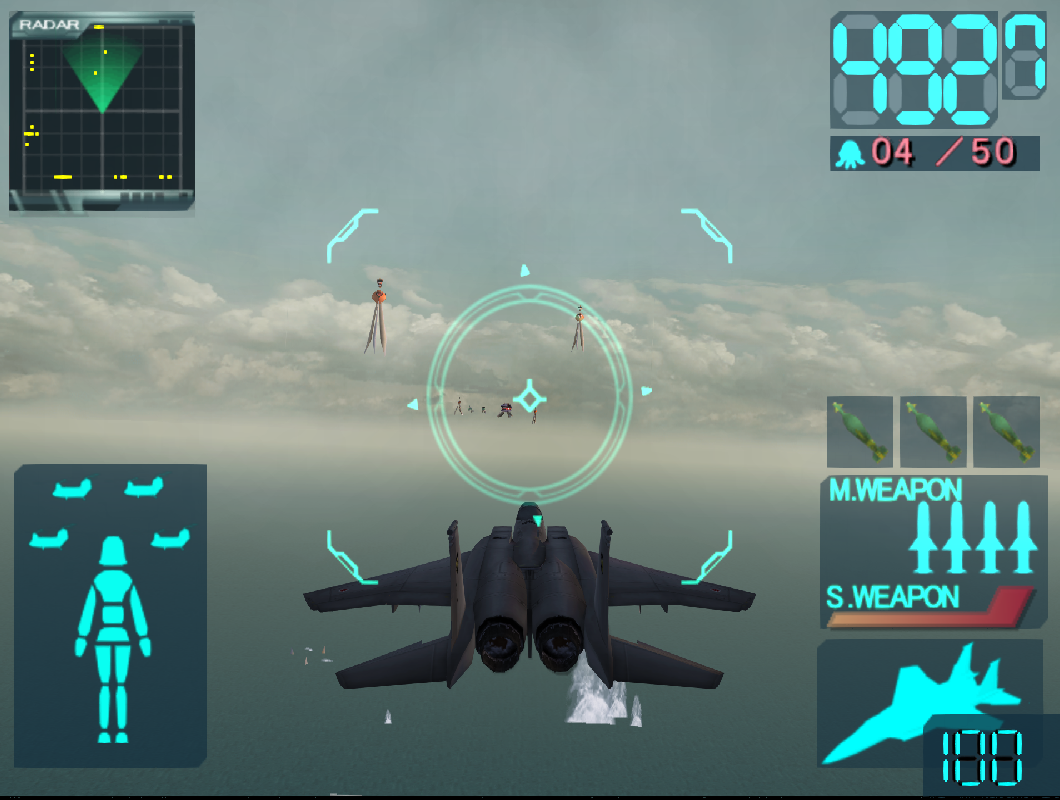
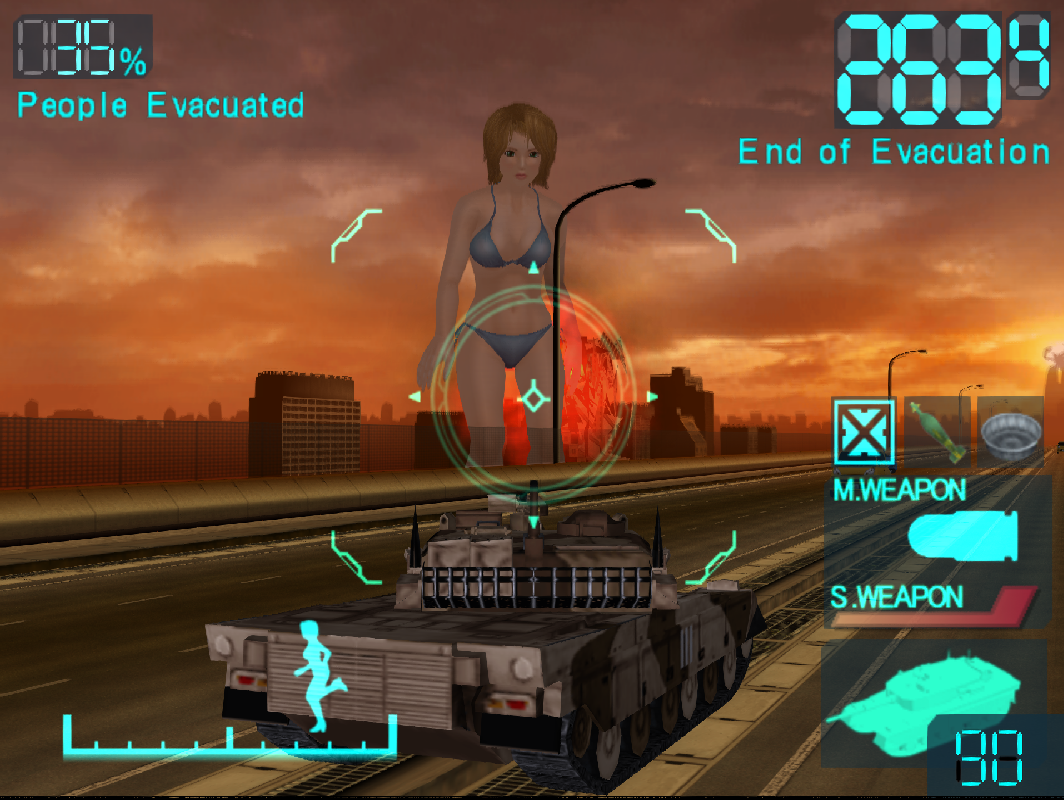
Unfortunately, actually playing Demolition Girl feels borderline-broken. You play as a helicopter for four levels, and as a tank and a jet for two others… unfortunately, all of these vehicles feel sluggish and janky. The jet was probably the most fun to play, almost feeling like a budget version of Ace Combat, but its mission is also by far the shortest in the entire game.
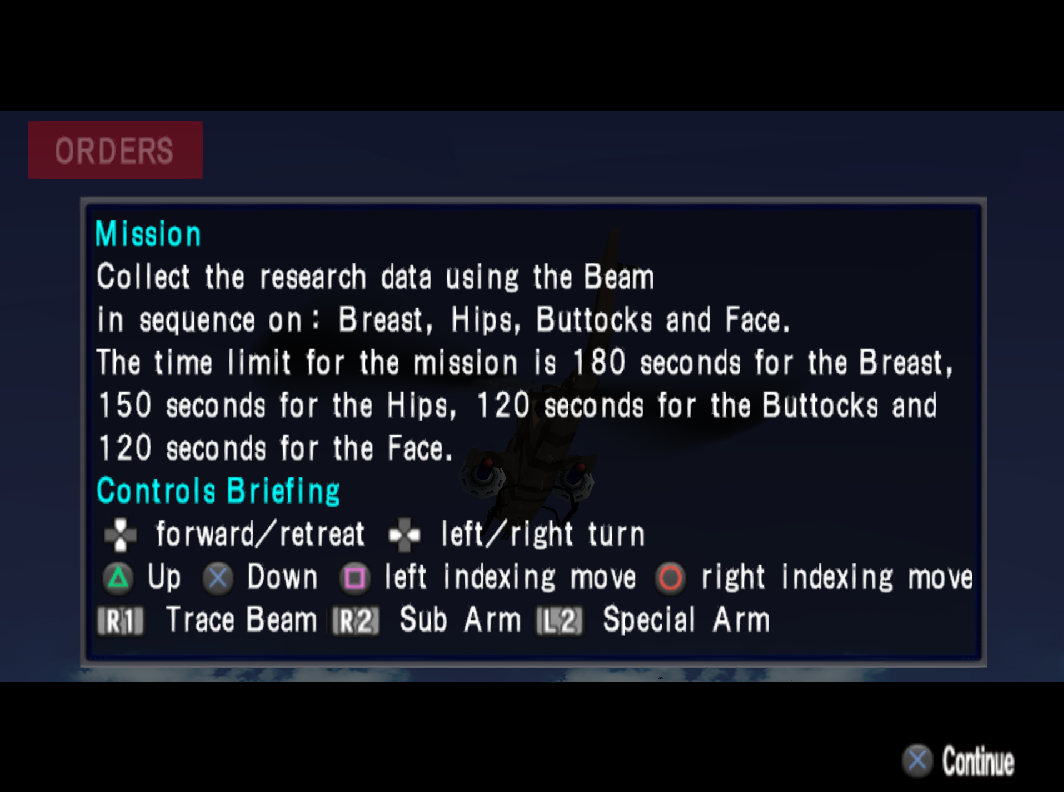
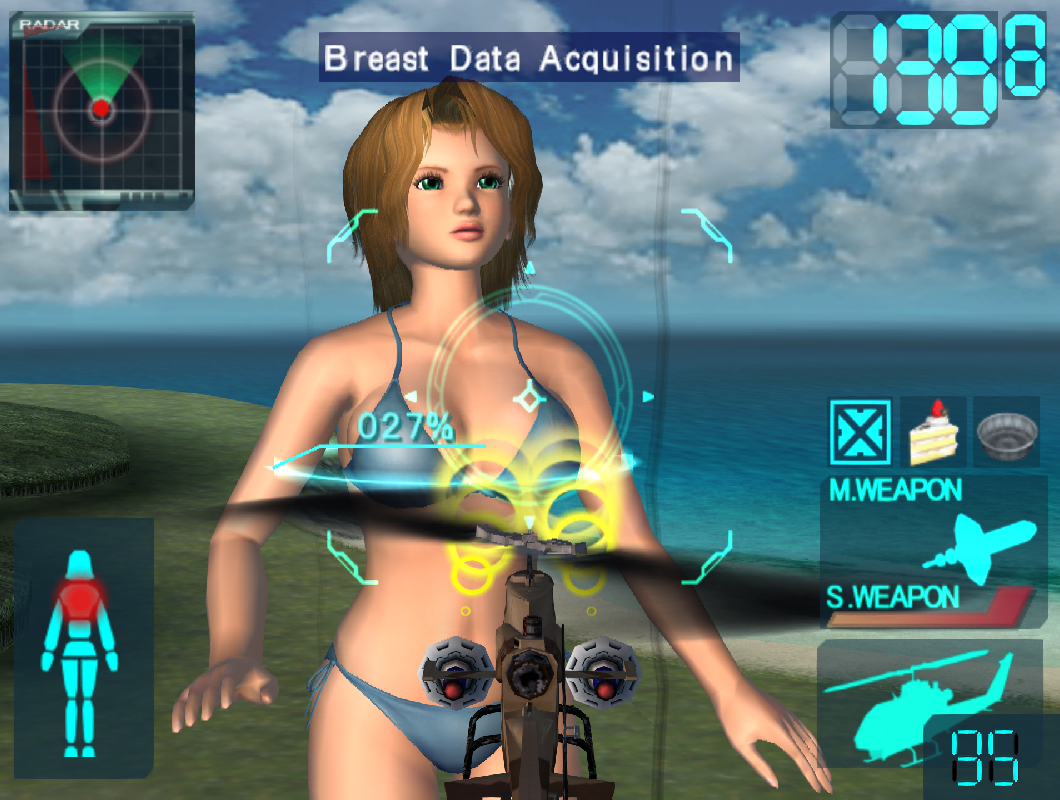
Each mission will give you a task to complete, which generally involves flying up close to Riho and scanning her, or shooting her with missiles and medicine, all while trying to dodge her frustratingly erratic movements. The missions are all around five-to-ten minutes long, but many of them will give you a very basic task, and then force you to do it over and over and over again for far too long (the tank mission and the two boss fights are especially egregious in this regard).
There are also a couple missions where you fight the alien invaders, and just go to town firing homing missiles at them. These are, unfortunately, the most frustrating missions in the entire game, as the aliens have their own homing missiles which are difficult to dodge. Most of my deaths in this game were due to these missiles, and you have to just kind of hope that the game has mercy on you whenever they’re incoming. Still, if you can dodge a couple attacks, you can brute force your way through without too much trouble: even with several deaths, it only took me about an hour to complete the game from start to finish.
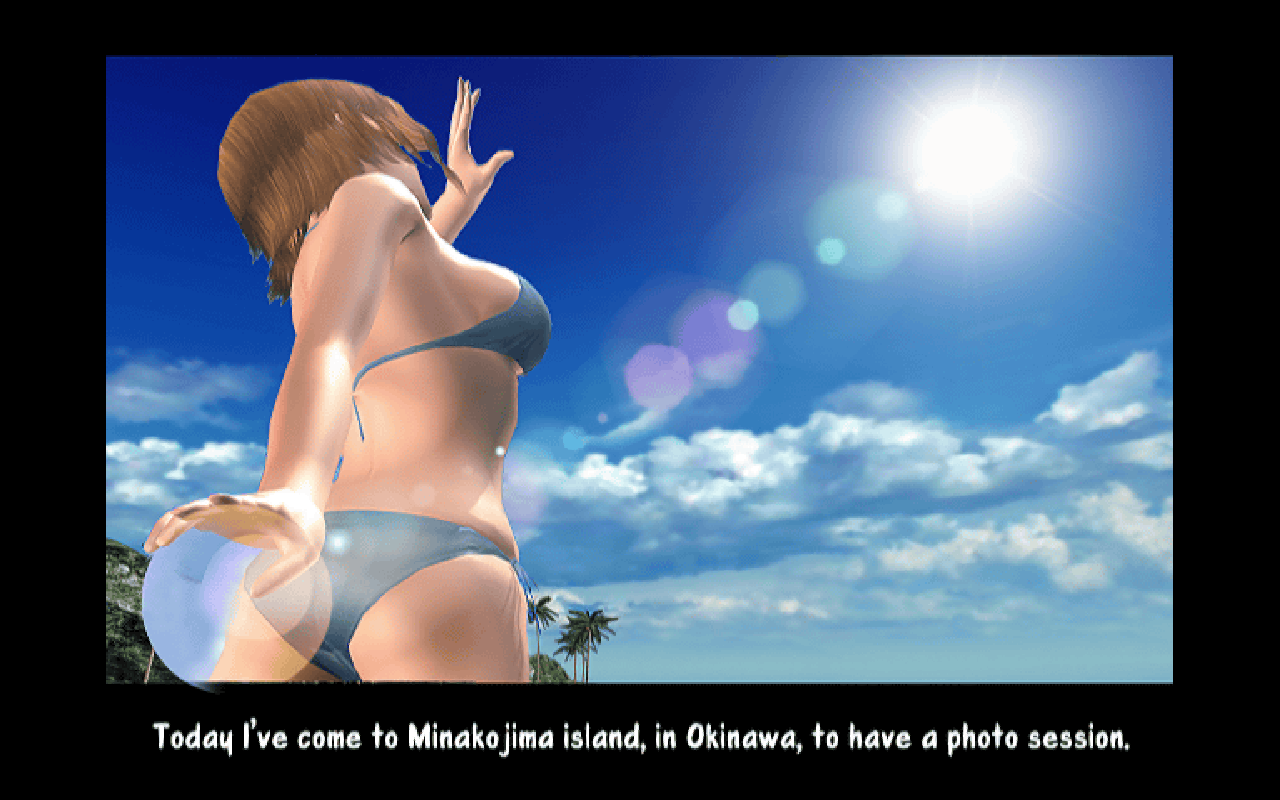
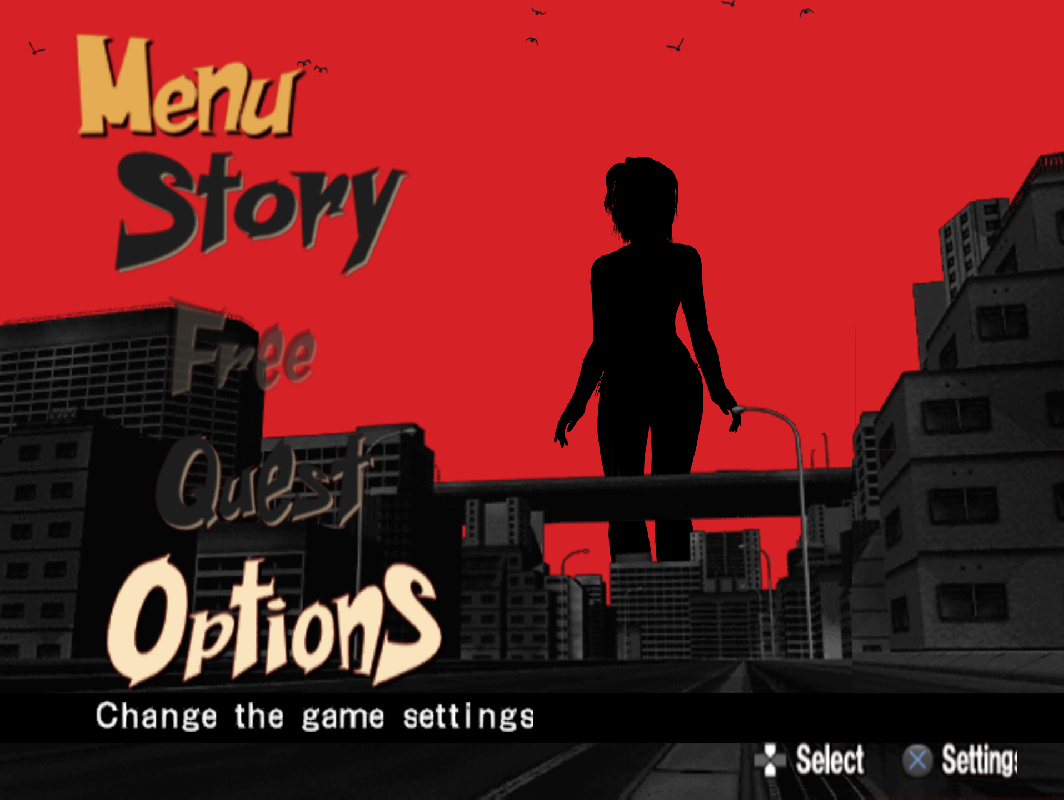
How does it look?
Demolition Girl looks… decent, I guess. It’s clearly been cobbled together from random assets (including Riho’s character model, which is lifted directly from Pink Pong), but it looks more impressive than World Fighting, at least.
How’s the soundtrack?
The in-game soundtrack is pretty unremarkable, but the menu soundtrack feels like it’s straight out of a Showa-era Godzilla film, I love it!
However, the game also has zero voice acting, which makes cutscenes very drawn out and awkward as you sit there reading dialogue and watching characters silently move their lips. I would have been fine with Japanese voices, but anything would be less-awkward than what we’ve got here.
How sexy is it?
The very first mission in this game tasks you with flying up close and using a scanner to obtain Riho Futaba’s enlarged breast/waist/hip measurements. Remember, you’re operating a military helicopter to do this. It’s so stupid that I love it.
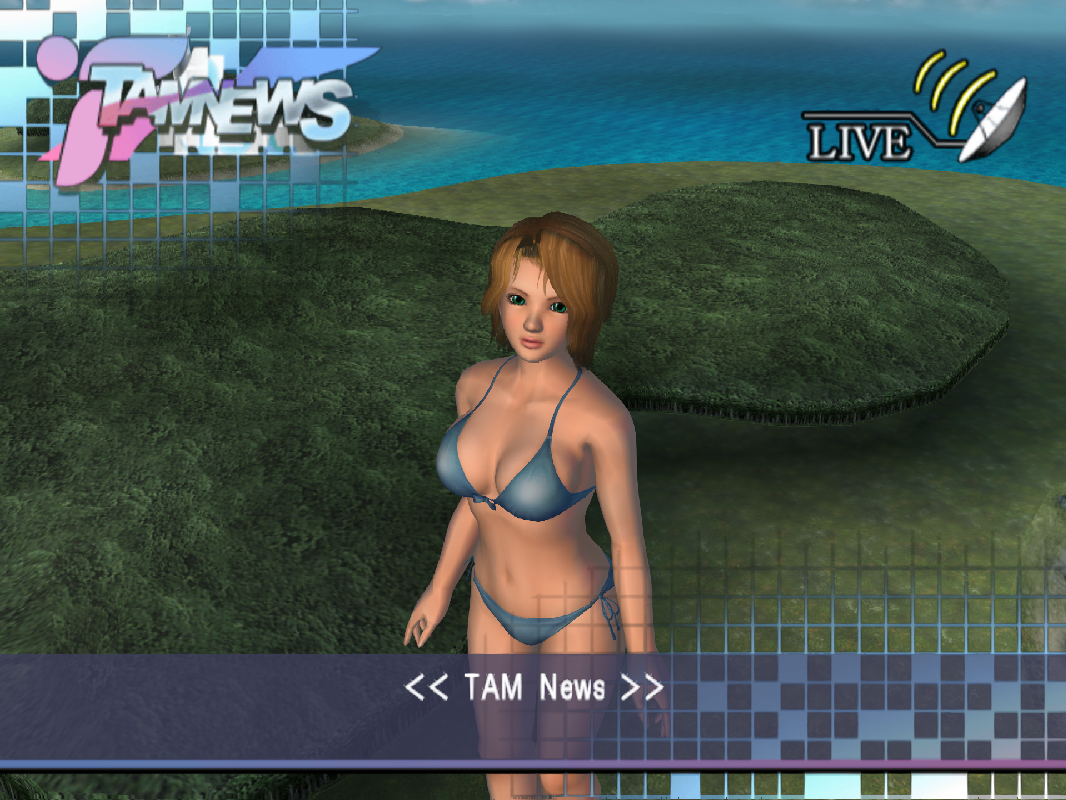
Obviously, this game is catering to a very particular fetish, so your mileage will vary on how much that appeals to you. Worst case scenario though, you’ve got a buxom blonde in a blue bikini running around. Granted, she isn’t doing anything particularly sexy either, but we all know that this game has a cult fanbase for a reason.

Who are the characters?
The only real character here (aside from the aliens, if you count them???) is Riho Futaba herself… and boy, she’s larger than life. She’s not really much of a character if we’re being honest: she seems dumb and confused, even before she gets turned into a giantess, and then spend the whole game milling about or getting mind-controlled by the aliens. She’s certainly memorable, but not for her characterization.
What’s the verdict?
Demolition Girl is one of those rare video games that I think qualifies for the moniker “so bad it’s good”. There’s just enough intentionality to the presentation and premise to make it feel deliciously campy, which helps to mitigate the terrible gameplay. The fact that it’s only about an hour long also helps – if the game was any longer, the frustration would probably tip the scales, but when I’m moving onto some stupid, new shenanigan every ten minutes, it makes me just want to see what batshit insanity the game’s gonna throw at me next. So yeah, I have a healthy dose of respect for this game, take an edible and enjoy the stupidity!
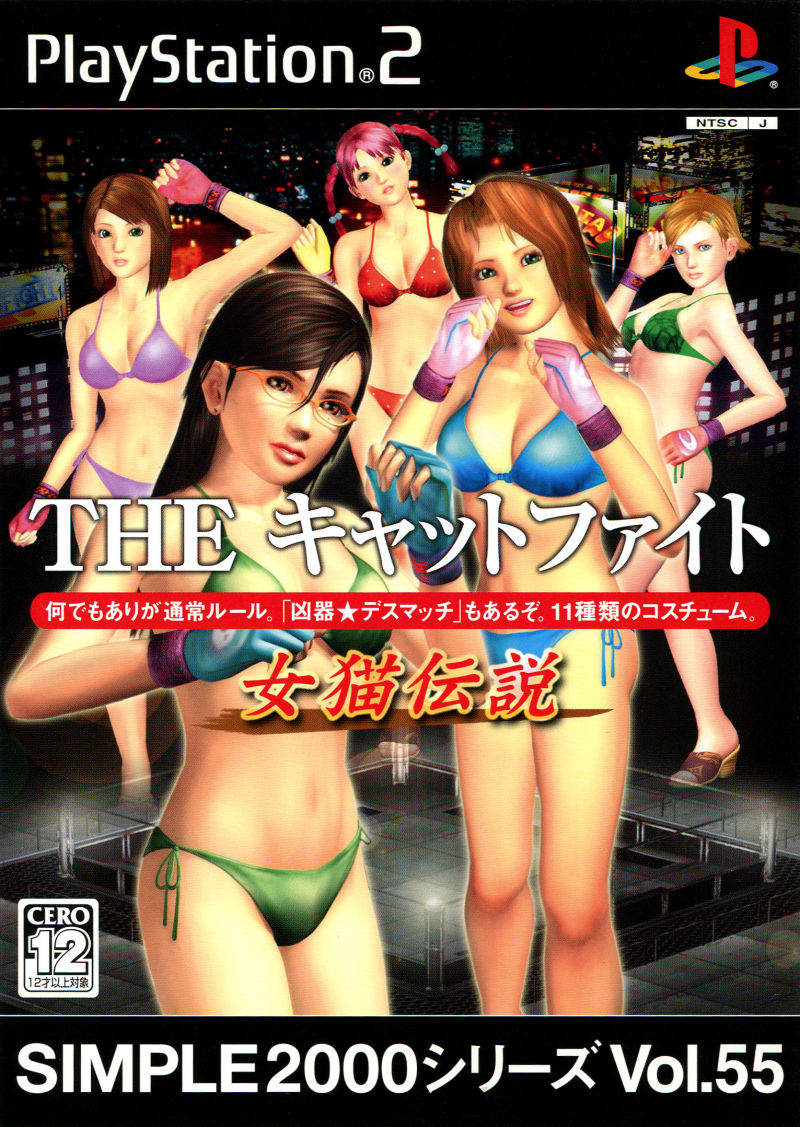
Fighting Angels (aka The Catfight: Woman Cat Legend) (2004)
| Console: PS2 |
| Release Date: June 24, 2004 |
| Developer: Tamsoft Corporation |
| Publisher: D3 Publisher Inc. (in Japan) & 505 GameStreet (in Europe) |
What is it?
Less than a month after Demolition Girl, Riho Futaba’s next game came out: Fighting Angels. That’s right, we’ve got another low-budget fighting game from D3 Publisher, but this time it’s got a bunch of women in bikinis beating each other up! Finally, the extra bit of spice that World Fighting was missing!
Perhaps most interestingly, Fighting Angels is a semi-sequel to Pink Pong: all of the female characters from that game return here and it even picks up the storyline about experimental robots… granted, the game provides zero in-game story context for any of this, but it’s pretty interesting to see a sequel developed in a matter of months, which retains all of the same characters, but completely changes genres. How many game series can you say that about?
How does it play?
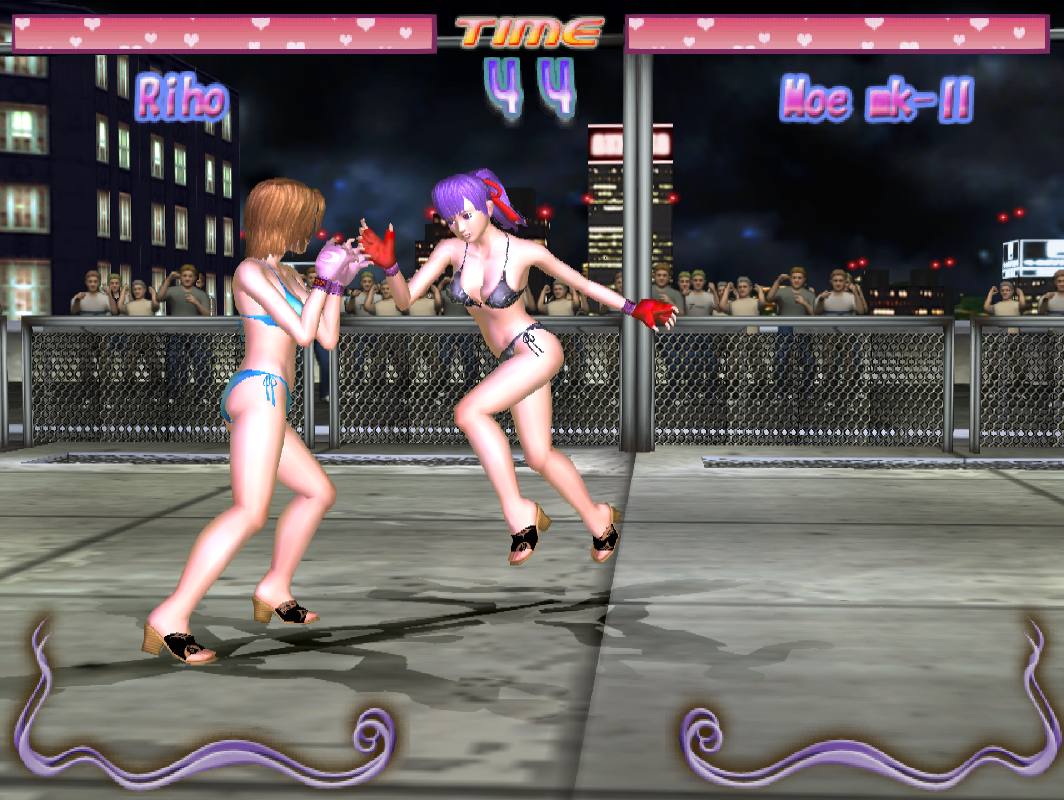
Fighting Angels is a more akin to a traditional 3D fighting game than World Fighting was: knockouts occur at zero HP, and it’s generally very fast-paced, with very short round times. However, the game is incredibly janky: like, say what you will about World Fighting‘s shortcomings, but the game felt deliberate and very playable. With Fighting Angels, I never feel like I was in control of my character or their actions. Movement is very jittery and imprecise, and attacks have strange, often overly-long wind-ups before they connect. Blocking is also strange – you can block most punches, but kicks appear to be entirely unavoidable.
This actually brings me to a very important thing to consider about this game: Fighting Angels is fucking broken. Like… just watch this clip:
When I realized I could just win every battle without even trying via stunlock, I breezed through this game’s campaign. This isn’t even the only way to break the game either though – the winner is the one with the most HP when the timer hits zero, so if you get enough of a lead, you can just run away from your opponent in the very large arena and they won’t be able to do jack shit about it due to the aforementioned long wind-up times. The game also occasionally allows you to pick up weapons, which can be a sword, nail bat, or a fucking M-16, which you can use to stunlock your opponent and you chew off about half their health bar in one burst.
That said, Fighting Angels is arguably more fun when you’re being a shithead like this. When you actually engage with it “fairly”, it’s just super boring and janky. There’s basically no combo potential, as every attack has lengthy recovery frames which make it hard to follow-up. Even then, most attacks will knock your opponent prone, turning this into a game where you and your opponent poke each other until someone runs out of HP. There aren’t even any endings when you complete the campaign mode! This is easily the worst fighting game I’ve ever played, and it’s not even close.
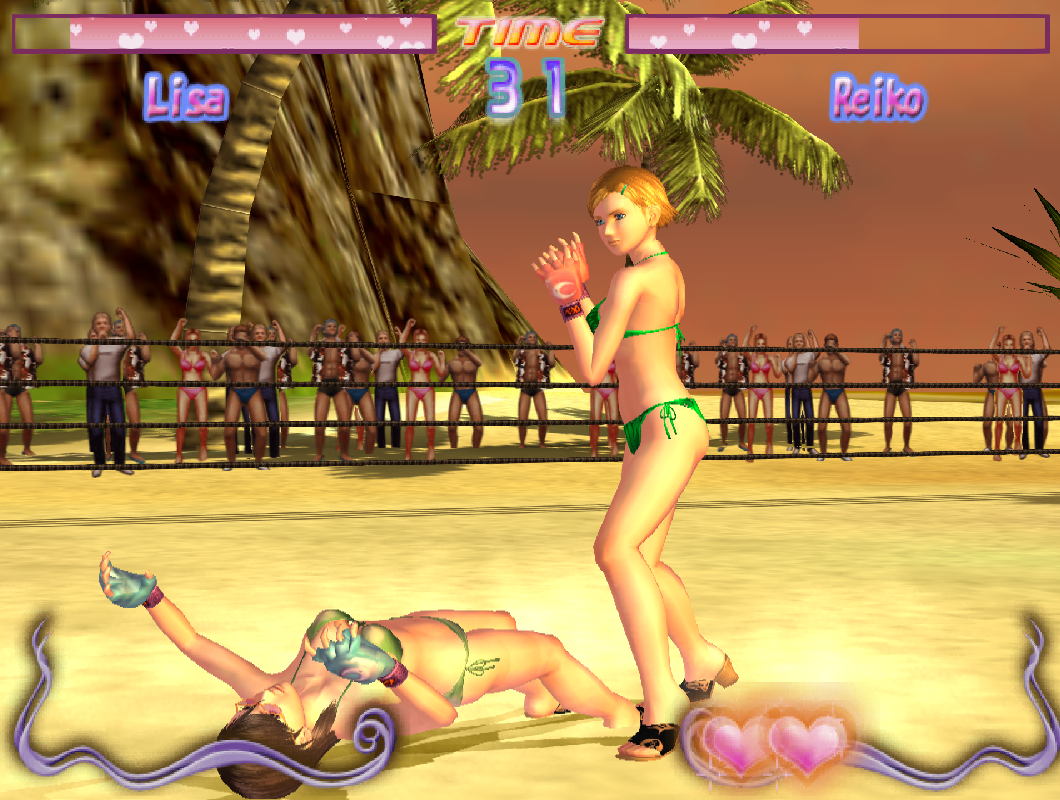
How does it look?
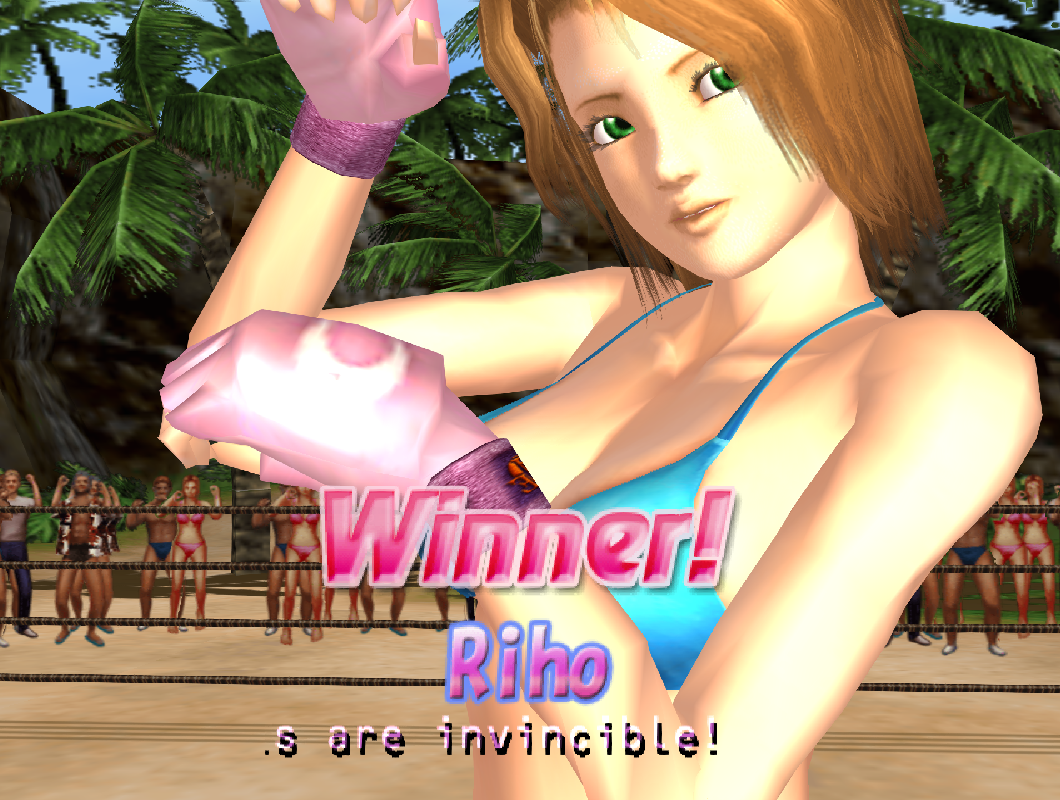
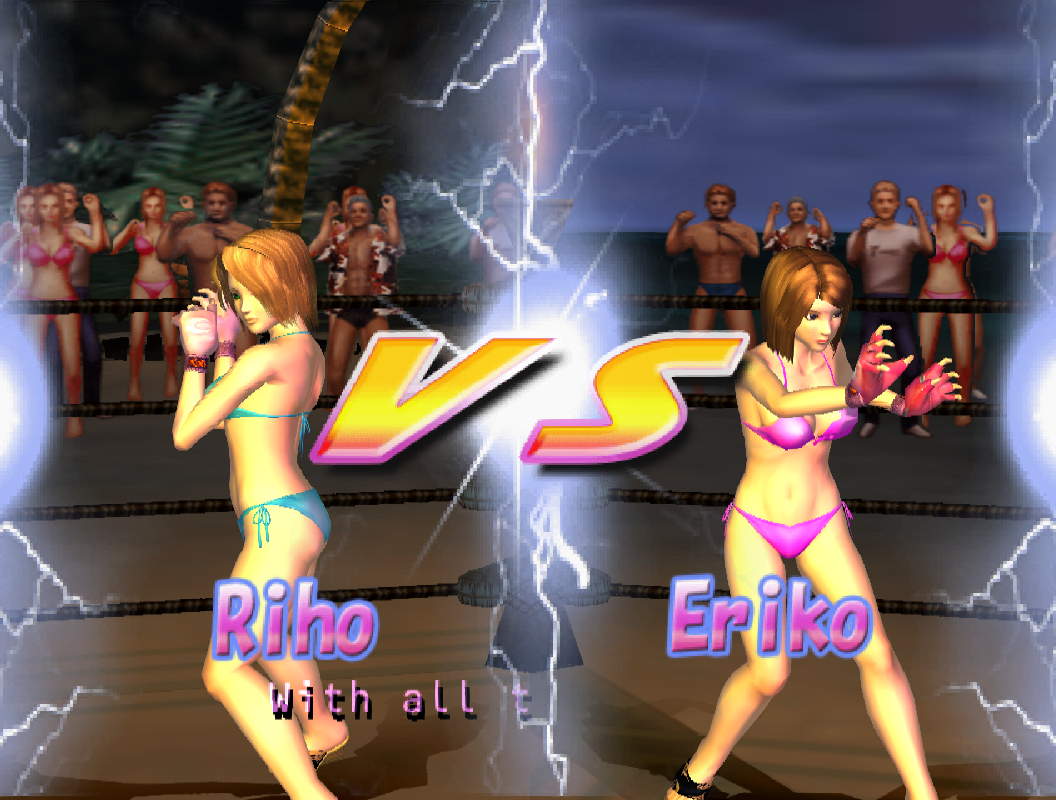
Fighting Angels is very clearly reusing assets from Pink Pong. I suspect that it’s probably made in the same engine, as it has all of the same characters, and even has similar menu options (including the character viewer). That said, Pink Pong had a pretty great visual style. Fighting Angels doesn’t look quite as good by comparison, but it’s a damn sight better than most of the games we’ve seen thus far in this article.
How’s the soundtrack?
I honestly can’t even remember anything about this game’s soundtrack; it’s just standard, video gamey background muzak. Egregiously though, Fighting Angels does not have any voice acting, again. I could understand that with Demolition Girl: it was a joke game, I can understand some cut corners. But here, it just cements the idea that this game is a complete afterthought.
How sexy is it?
Fighting Angels‘ entire raison d’etre is supposed to be sexiness, but it is very underwhelming in this regard, all things considered. Sure, it’s got the baseline eye-candy of girls in bikinis (which, once again, is the only outfit unlocked at the start), but everything else is extremely disappointing. There are no particularly sexy moves, and the so-called “sexy dance” mechanic is actually just a standard combo that you can pull off with one button press. Hell, even the jiggle physics are broken to the point of absurdity, warping the geometry of the girls’ boobs and often clipping through themselves:
Honestly, if you’re playing this game, then that means you have a PS2: just play Dead or Alive 2: Hardcore.
Who are the characters?
Like I said earlier, the Fighting Angels reuses the entire cast from Pink Pong. I can only assume that this was done to reuse existing assets and save money/development time, but it’s actually kind of cool to see, if I’m being honest? Like, imagine if EA had taken all the characters from SSX and just randomly plopped them all into a fighting game one day: you just don’t see these sorts of genre flips happen, especially for such a mixed bag of characters, so it’s kind of exciting to see how it plays out.
Best of all, the profile pages return, with some fun new tidbits. Like, for example, we find out that Lisa is now dating Ryota (the protagonist of Pink Pong‘s story mode), for some inexplicable reason. We also get a recurring reference to Riho’s insecurity that she may be getting fat and… c’mon, Riho, you’re beautiful, don’t be so hard on yourself. Is this the first time I’m actually feeling something for this character? Yes, yes it is, and I had to dig through the menus in two separate games to get there.
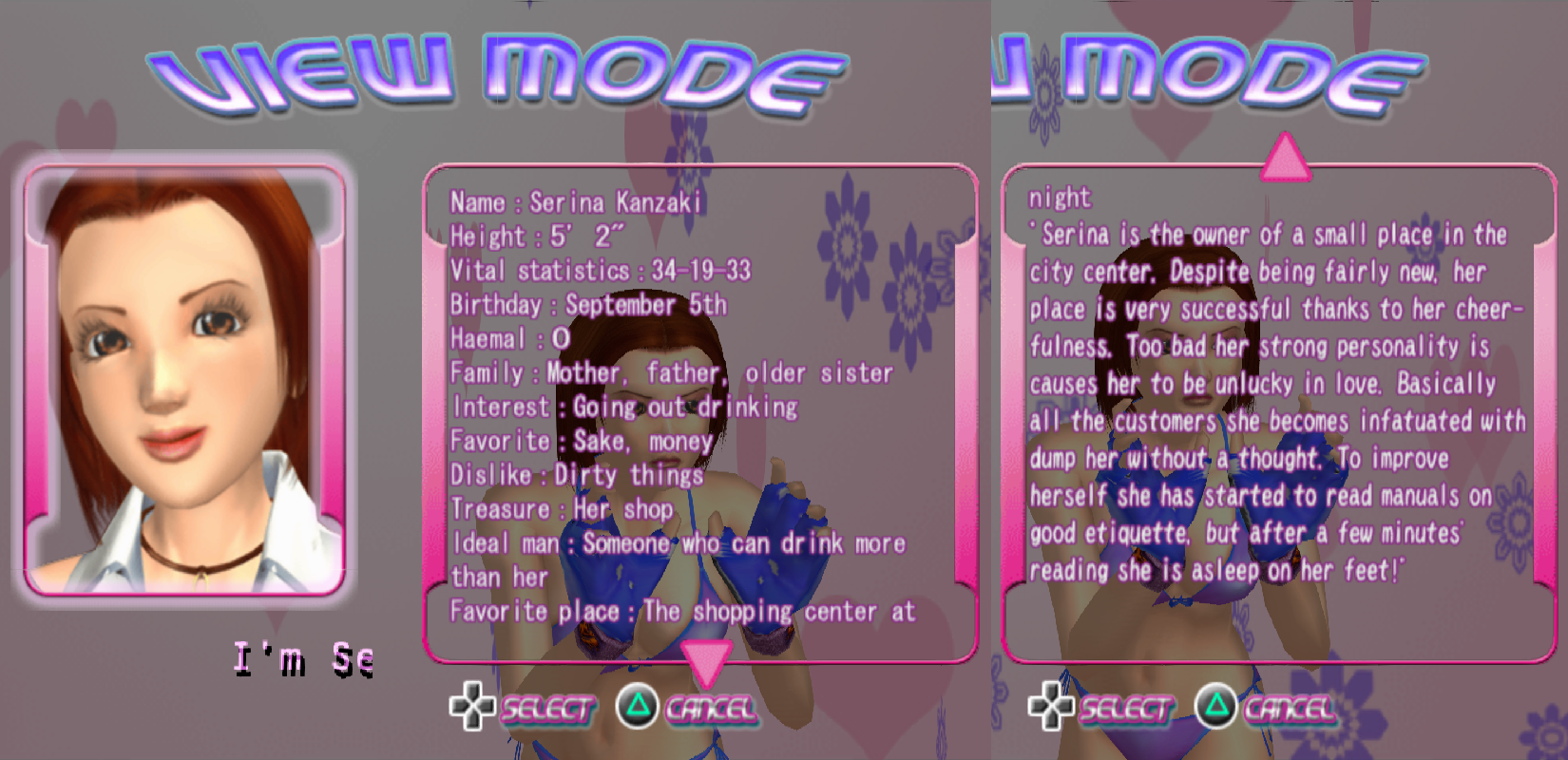
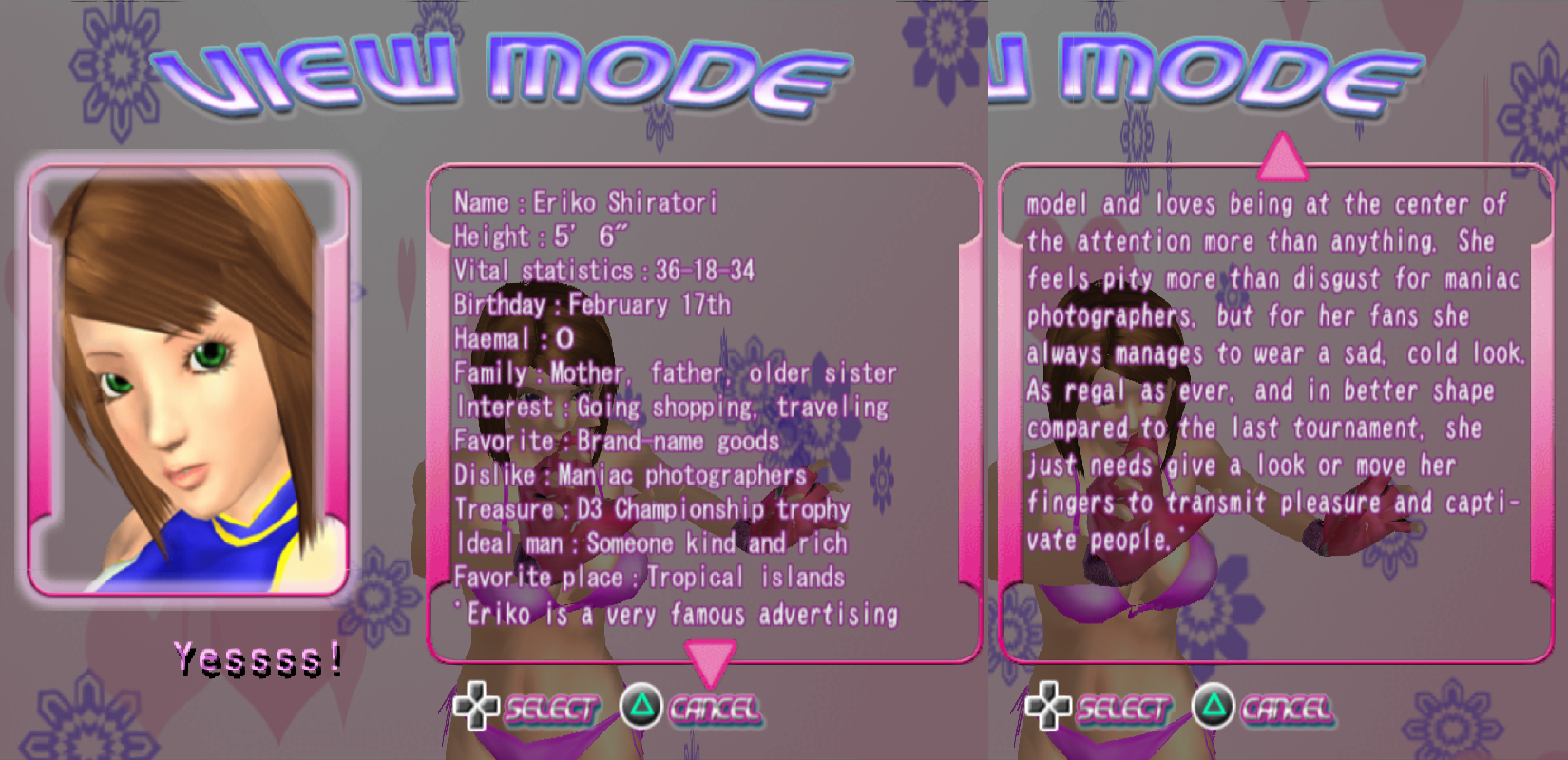
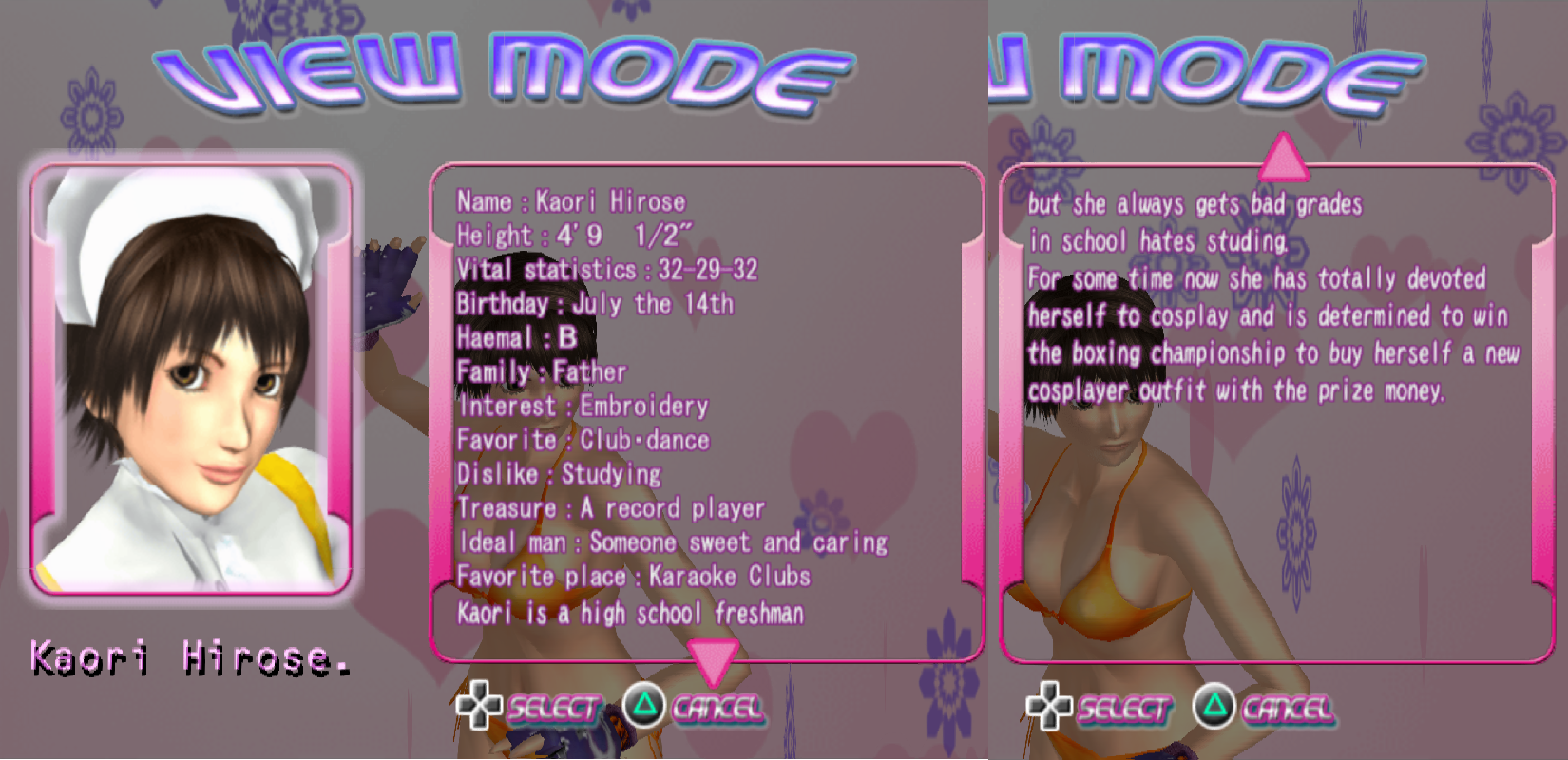
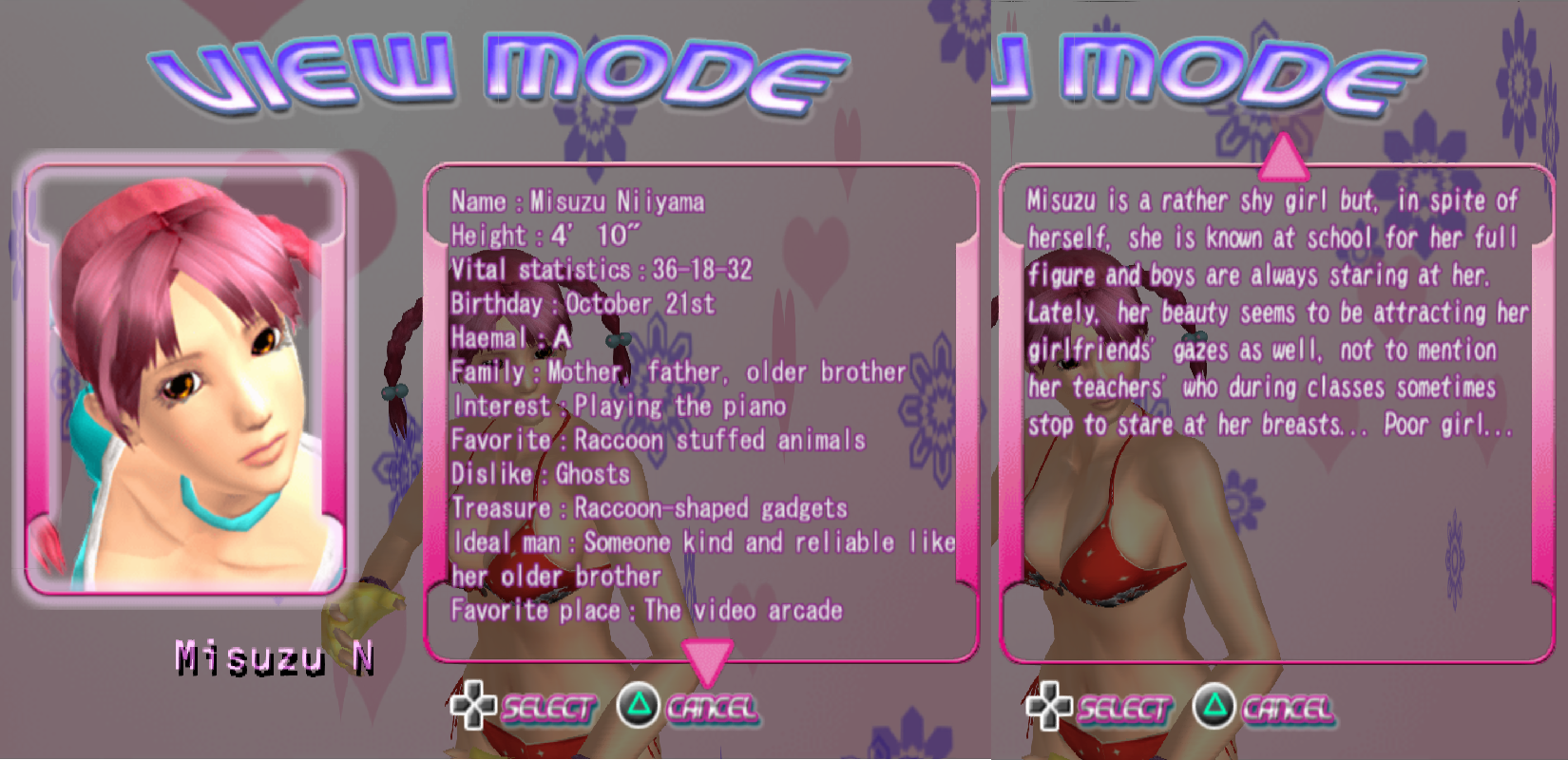
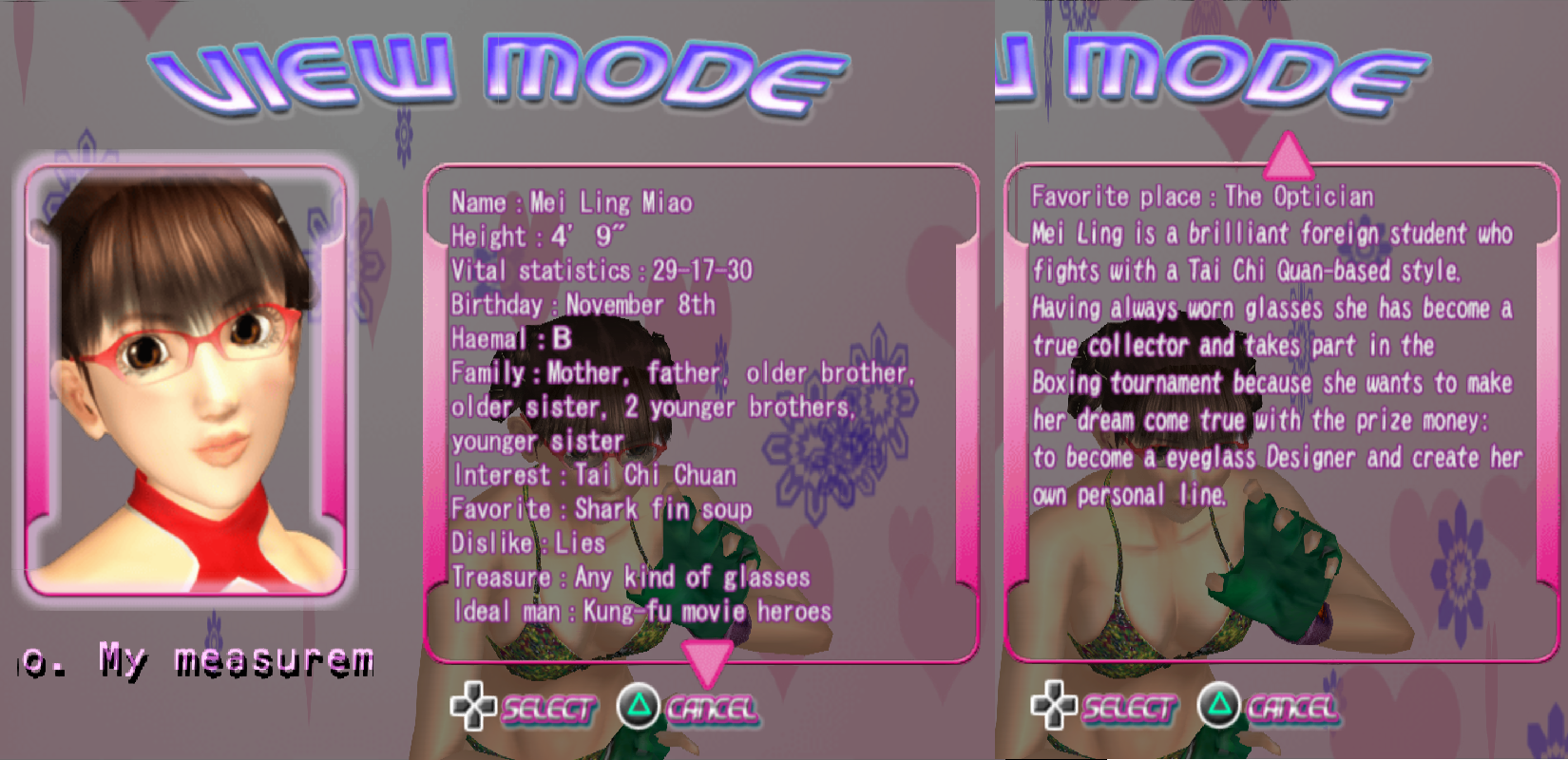
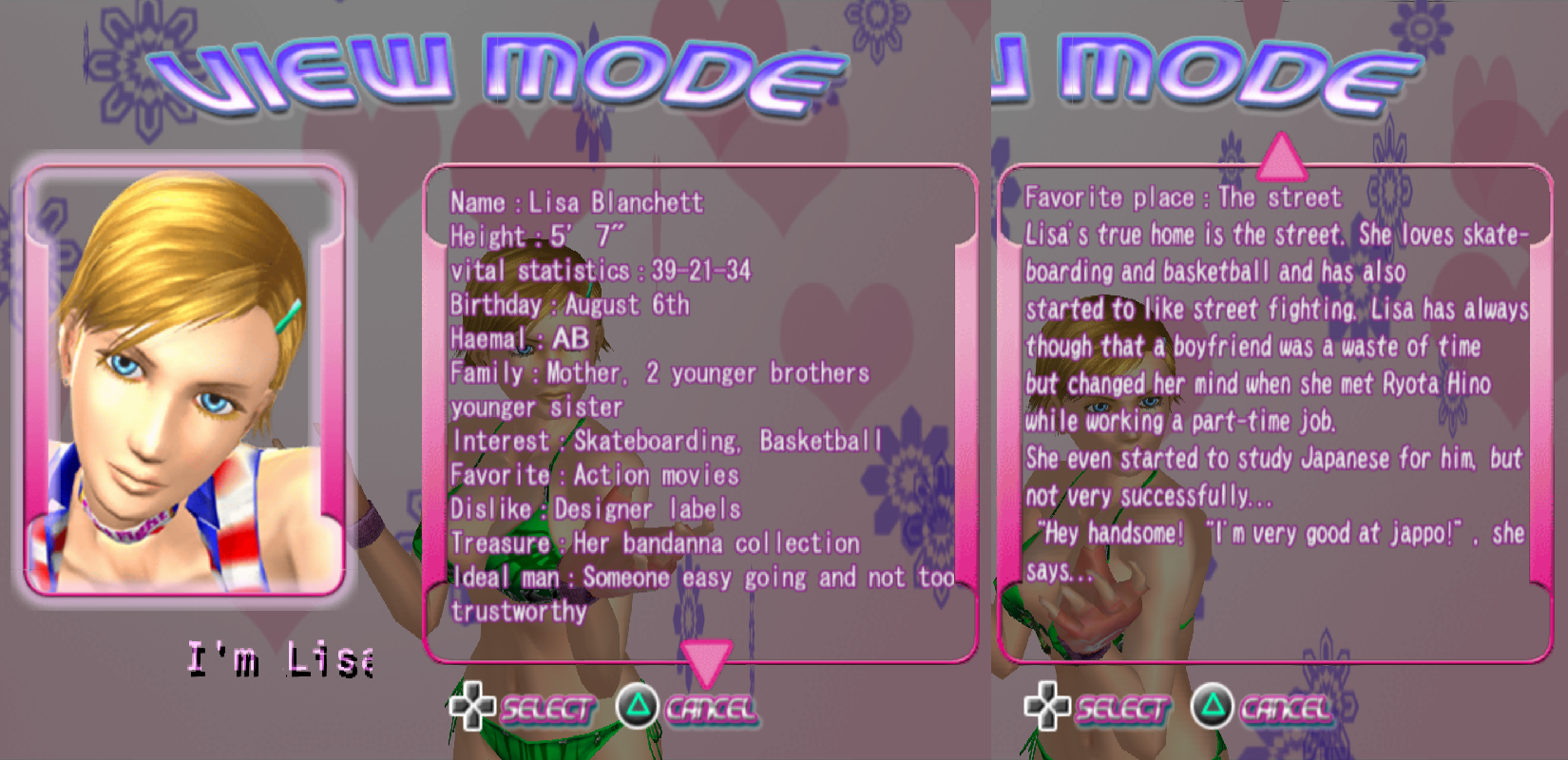
What’s the verdict?
Fighting Angels is bad. Like, straight-up bad, easily the worst game we’ve covered here thus far. I can see this being kind of funny if you’re cracking a beer with the boys and passing a controller around for some idiotic shenanigans, but Fighting Angels makes for an awful 3D fighter and an awful “sexy game”. Like, as much fun as you might have with the boys laughing at Fighting Angels, I guarantee you that you would have much more fun playing a real fighting game… or, y’know, Smash Bros. Hell, between Zero Suit Samus, Bayonetta, and Wario, you’re likely to find yourself more aroused too!
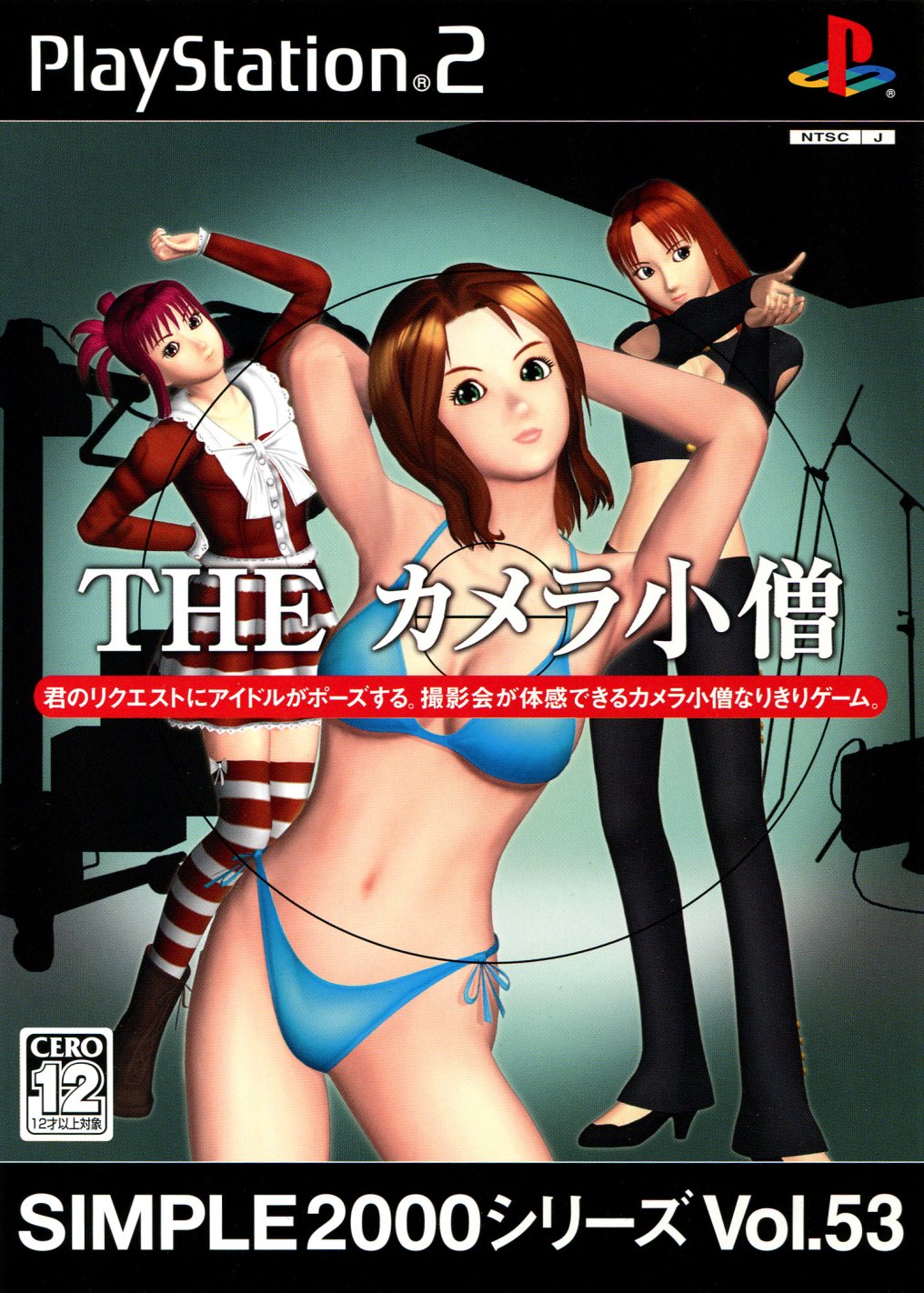
Paparazzi (aka The Camera Apprentice) (2004)
| Console: PS2 |
| Release Date: June 24, 2004 |
| Developer: HuneX Co., Ltd. |
| Publisher: D3 Publisher Inc. (in Japan) & 505 GameStreet (in Europe) |
What is it?
Check out that release date: that’s not a mistake, Paparazzi released the exact same day as Fighting Angels… again, that’s just how prolific Riho Futaba’s reign on the PS2 was!
Paparazzi has got to be one of the most creative games D3 Publisher released during this era. While there had been a handful of games revolving around photography by 2004 (most notably Pokémon Snap), it was a massively-underserved market.
How does it play?
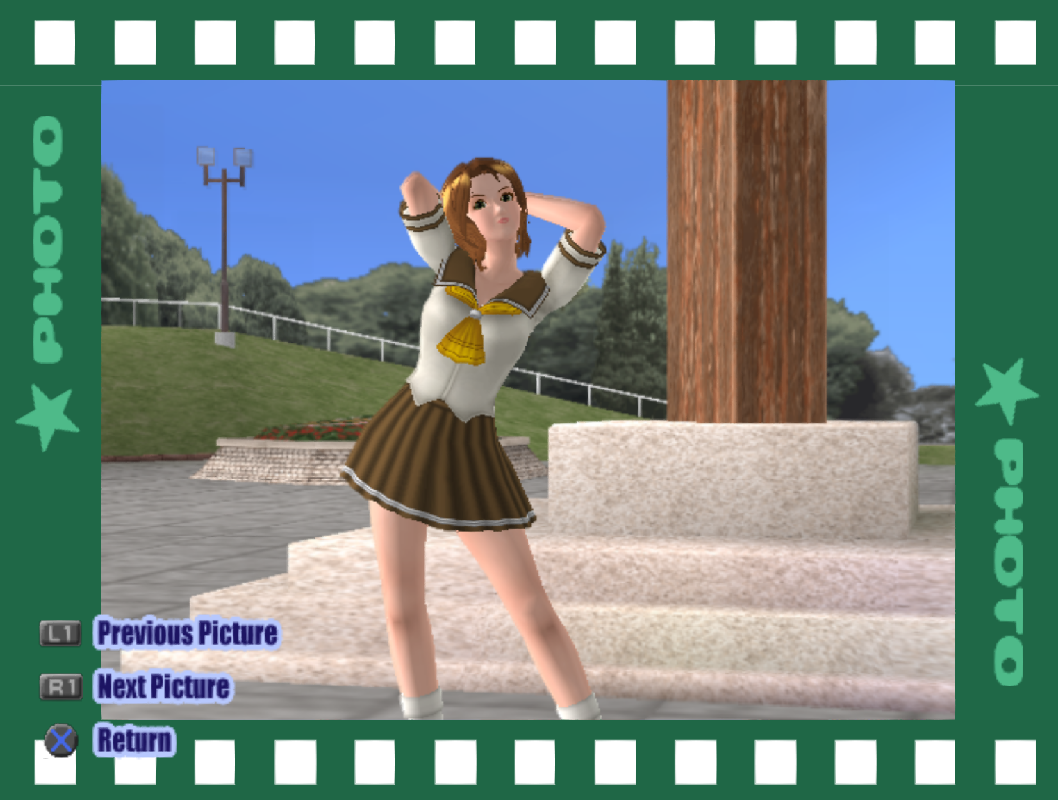
Paparazzi is a bit of a misleading title: rather than snapping illicit photos of women, you’re taking consensual shots of models during professional photoshoots… but there’s so much more to this game than that. You can tell that some genuine passion for photography has gone into bringing Paparazzi to life.
The game’s photography suite is more detailed than you might expect, with options for precise tuning of exposure, shutter speed, and focus so you can make your photos look just how you want. You can also buy new lenses, a motor drive to take sequential photos, a tripod, and various other items to help you get your perfect shot.
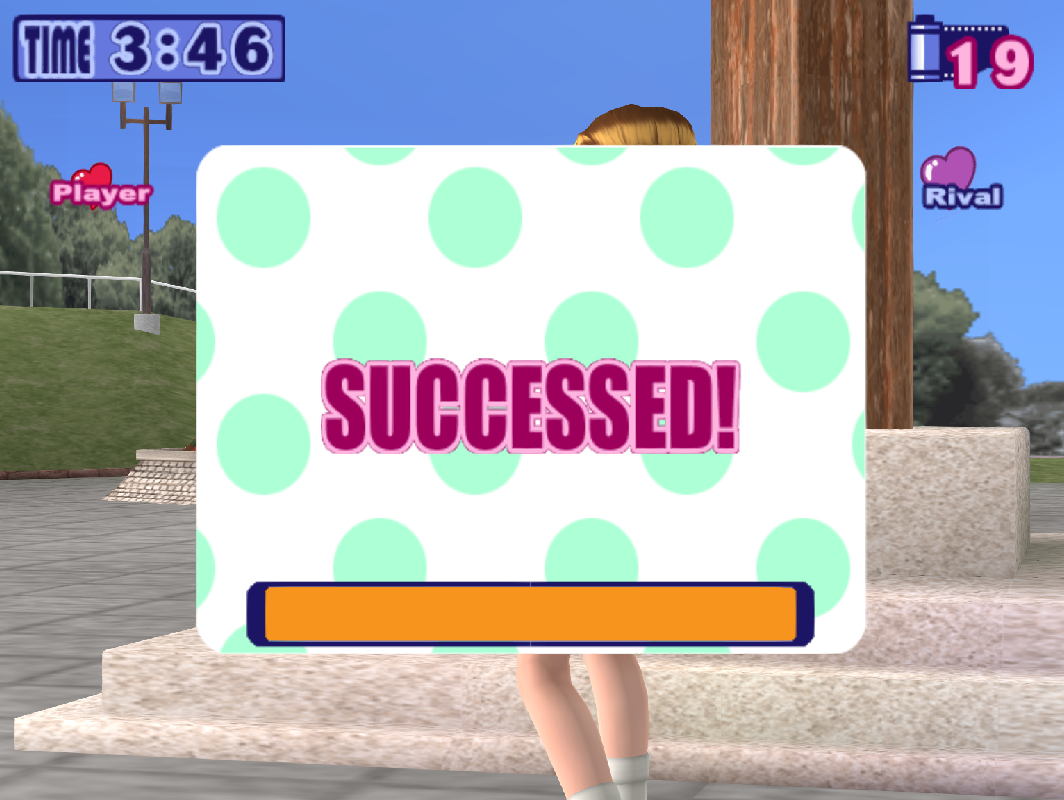
The gameplay doesn’t just end at snapping photos either, as there’s also a lite relationship-building mechanic as well. While you only have five minutes to take your shots, you really should spend some time getting your subject’s attention. After entering a couple button prompts correctly (complete with a hilarious “SUCCESSED!” pop-up upon completion), you can get her to look at you and/or perform a special pose. You really need to get the model to like you if you want to maximize your photos’ scores… and she might even start to notice you more too, if you’re lucky…
That’s not even the end of Paparazzi‘s surprises though, because the game also has a pretty decent story mode, all things considered. You get a simple, but solid storyline about a guy who tries to get into photography to get the attention of his favourite idol. Your actions in-game even influence how the story plays out! The game has plenty of replay value too, with three different story routes (depending on which model you choose at the start), more unlockables than you can purchase in a single run… and, honestly, it’s just fun taking photos, so you end up wanting to play long after a single playthrough ends.
Unfortunately, there are a couple issues with Paparazzi which hold it back from being a truly great game. First of all, the camera’s manual settings are poorly explained and communicated. The game doesn’t teach you how to properly set exposure, focus, and shutter speed… which would be fine if you could just see how your picture will look in real-time, but unfortunately you won’t know if your settings are fucked until you reach the end of the level. I had to replay one level several times just experimenting with my camera’s settings, trying to get the photos to turn out half-decently. Suffice to say, this was fucking annoying. You basically have to already understand photography settings for any of this to make sense. You can get by without using the manual settings, but some of the later levels require you to use them to get a decent score, so you’re going to have to deal with this headache sooner or later.
The other issue with Paparazzi: there’s just not enough game here. You’ve got five levels per story route, which will take about an hour to complete, and a very limited number of poses that your models can make. Even if you enjoy taking photos in this game, you’re going to run out of things to do way too soon. I’d love to see this game get expanded out, with more levels and a longer storyline… fuck, maybe it’s finally time for me to do that Elise playthrough in Venus Vacation Prism I’ve been wanting to do…
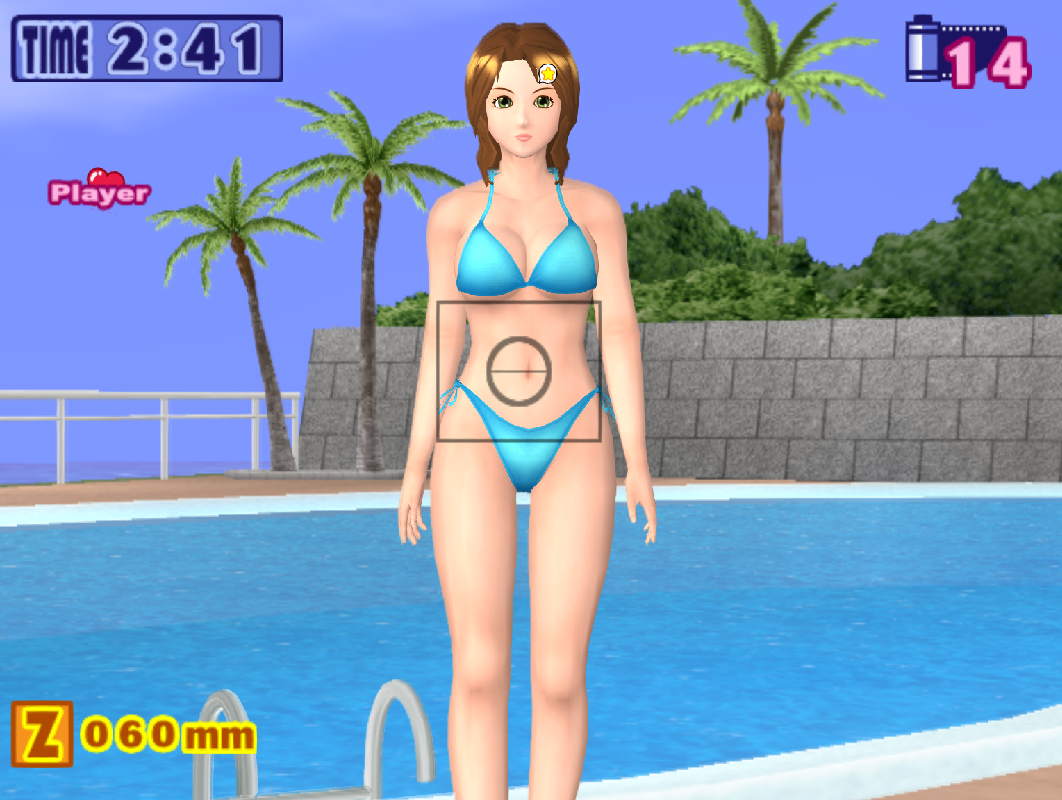
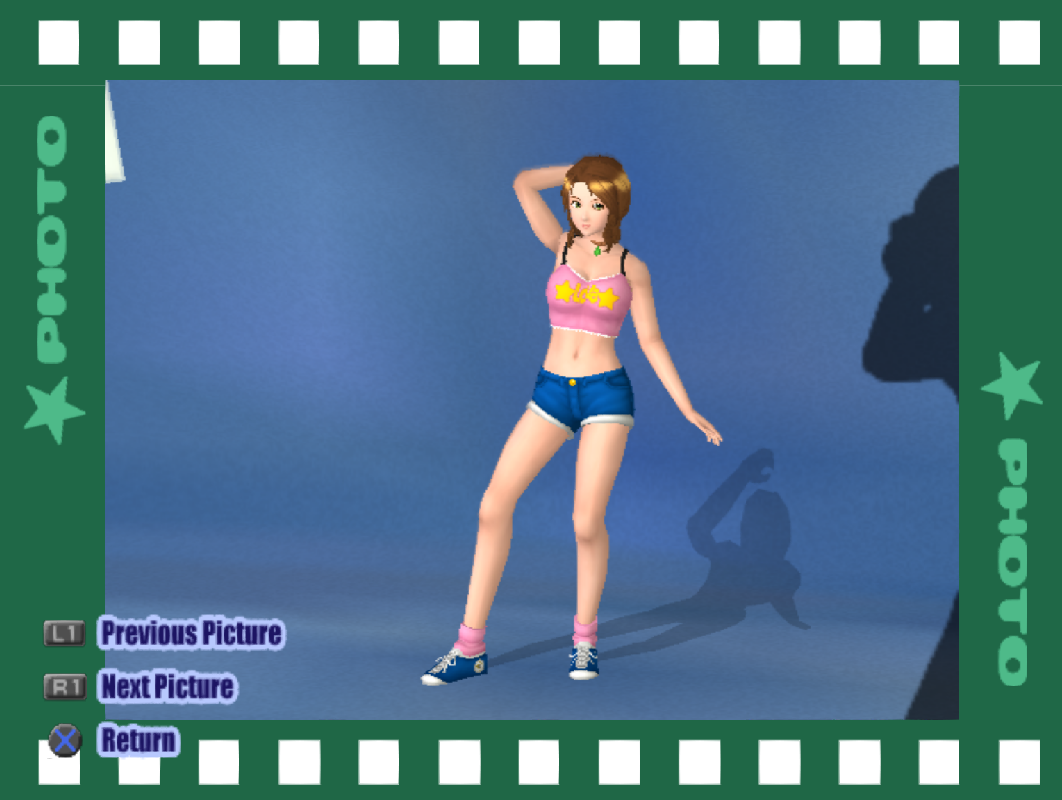
How does it look?
Paparazzi isn’t a particularly great-looking game, even by the standards of 2004. It’s about as good as it needs to be, but it’s still very clearly a budget title.
That said… even with the “less impressive” graphics, I think that this is my favourite art style of all the D3 Publisher games we’ve played thus far. In my opinion these simpler, softer, more anime-inspired character models have aged much better than the more detailed models in previous D3 Publisher titles.
How’s the soundtrack?
Paparazzi‘s soundtrack is quirky and calm… it really reminds me of the ambient music you’d expect to hear in a standard visual novel. Once again, there’s also no voice acting, but with the visual novel-style presentation, it doesn’t feel as jarring.
How sexy is it?
So here’s where Paparazzi gets even more interesting. On the one hand, this game is all about taking photos of models in sexy outfits and provocative poses. The jiggle physics are also completely crazy, swinging about wildly at the lightest movement.
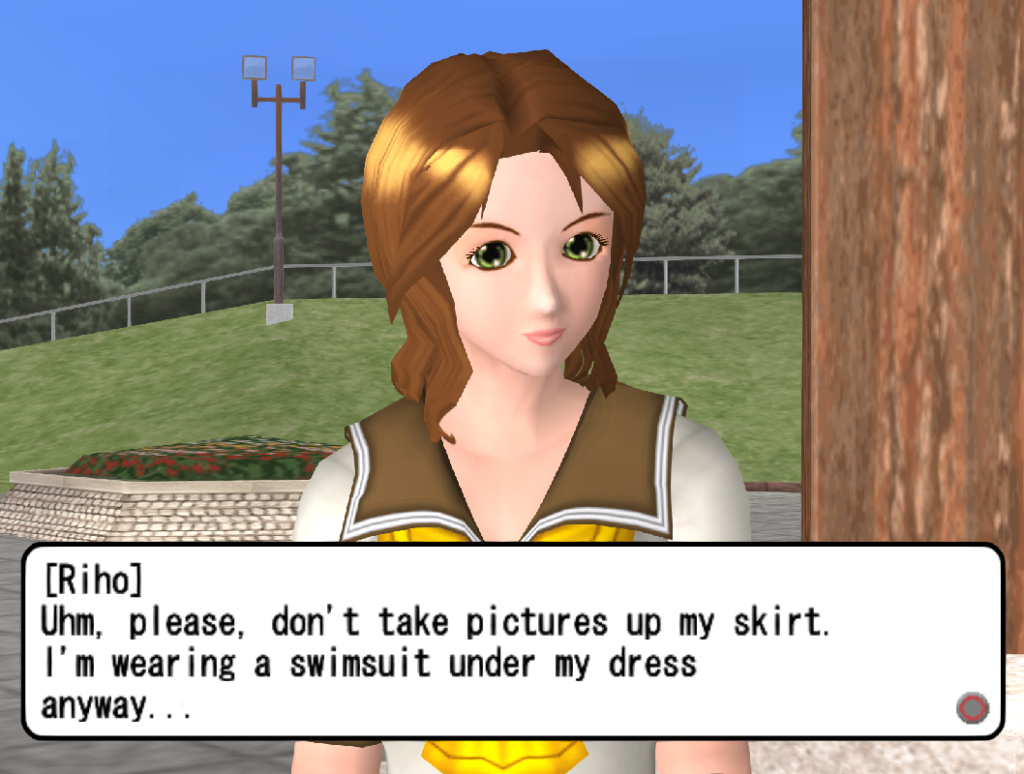
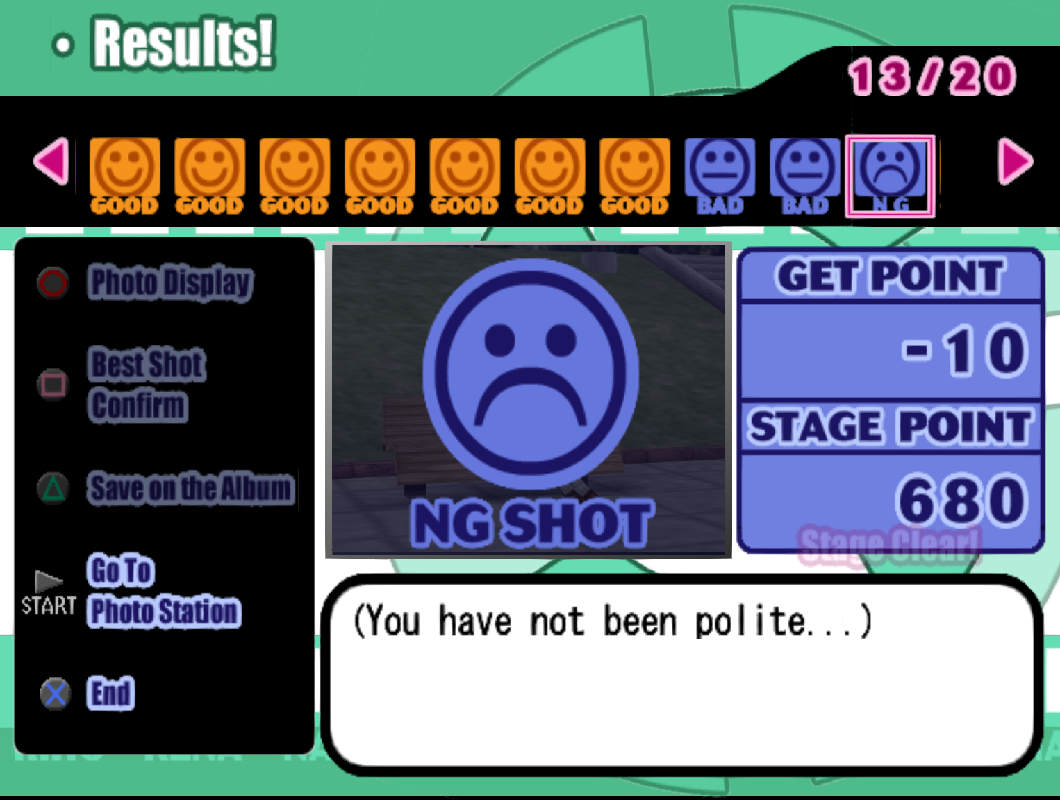
However, Paparazzi is less-lewd than you might expect from D3 Publisher. For one thing, the game will actively try to prevent you from up-skirting the models, and if you do manage it anyway, you will actually lose points! Yeah, this game actively punishes you for being a pervert! On top of that, you actually have to unlock the bikini in this game! Are we sure that this is even a D3 Publisher game at all?!
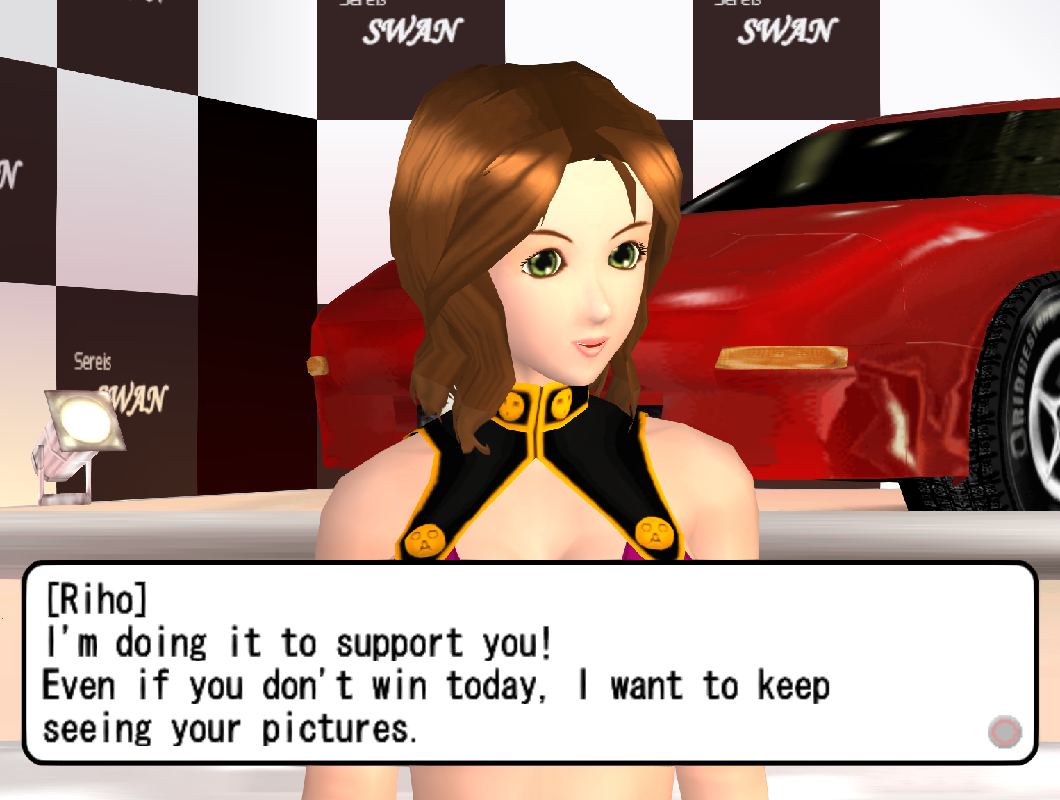
Honestly though, I think the sexiest part about Paparazzi is its story mode. Like I said before, it’s simple, but having some motivation and some returned affection makes the ensuing photography sessions so much more appealing. Having your model make special poses just for you makes you want to get the best photos you can in return… consent is fucking hot, my dudes!

Who are the characters?
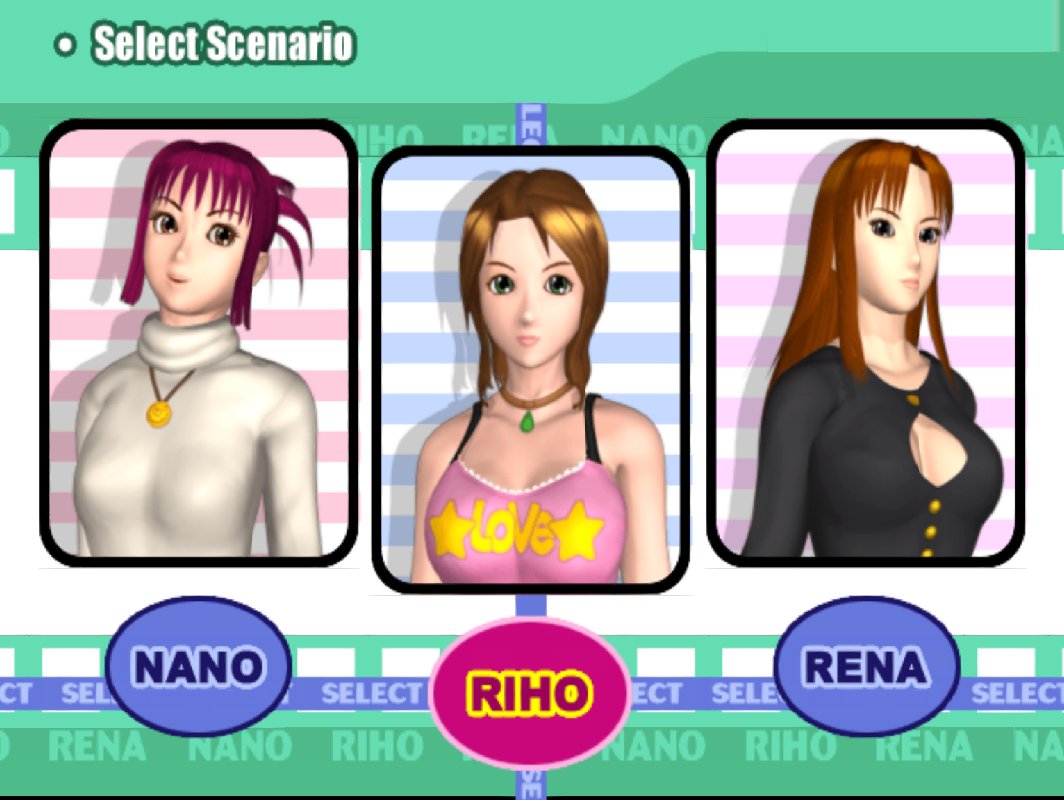
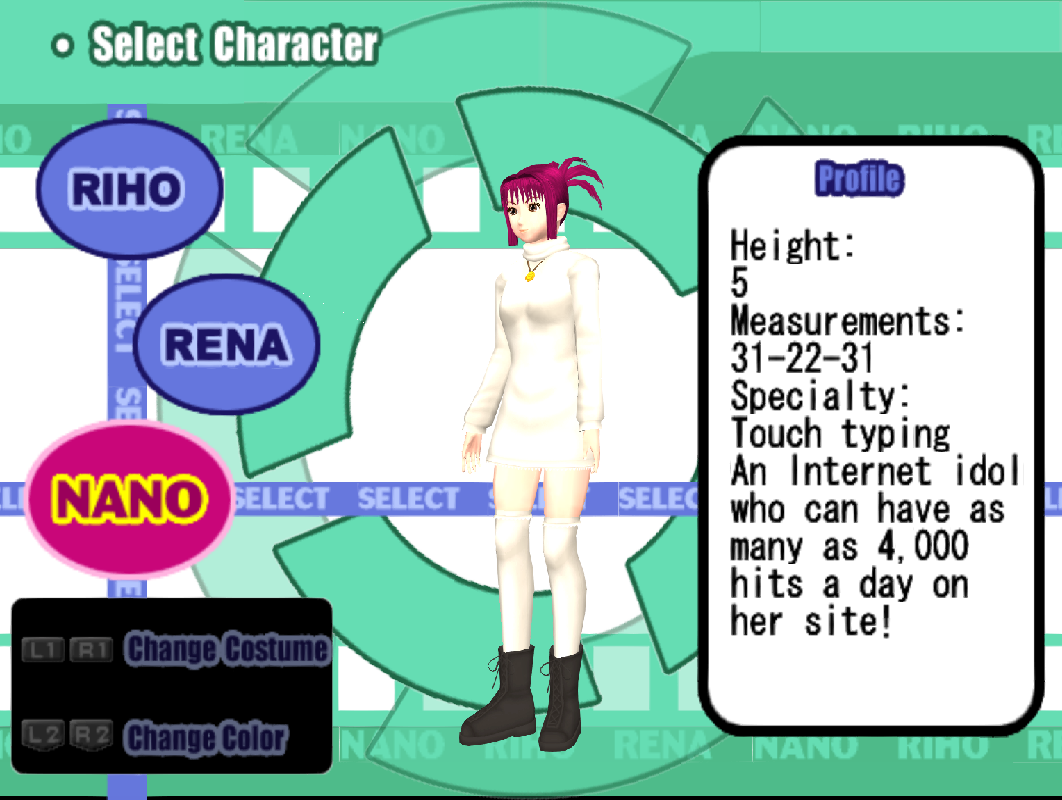
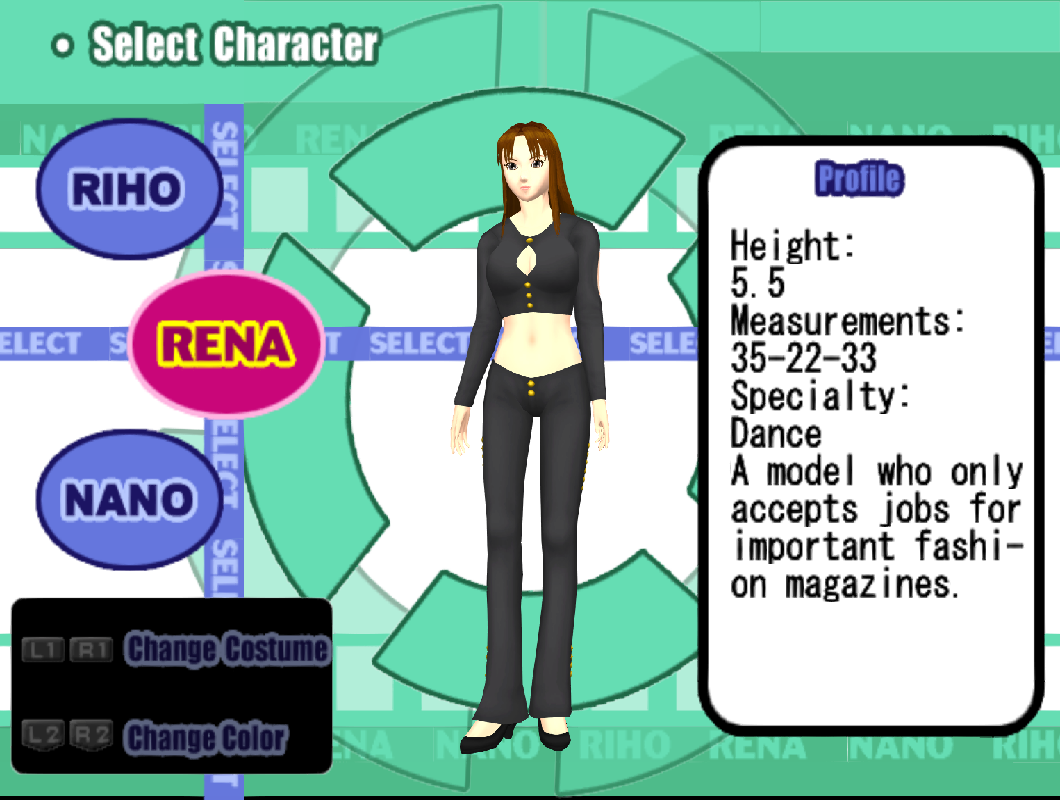
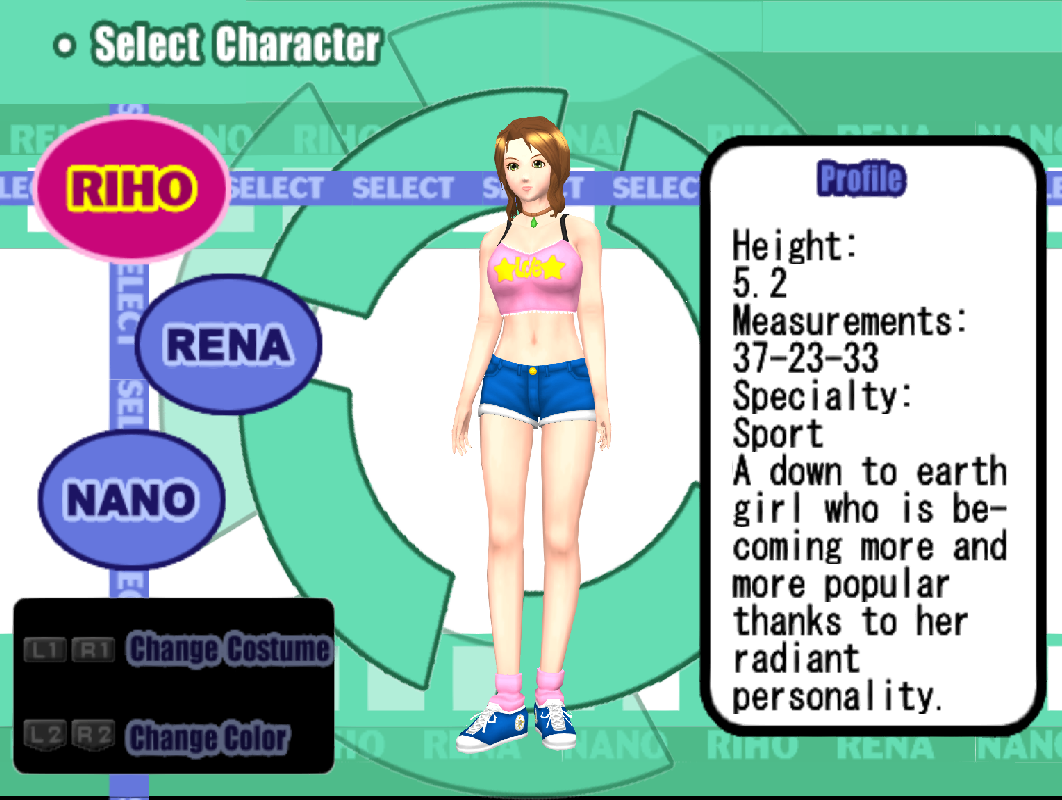
Paparazzi has three models to choose from: Riho Futaba, Rena, and Nano… I obviously chose Riho.
I’m glad that I did too: for the first time since we started this article, Paparazzi actually made me like Riho as a character. Riho Futaba has been relegated to vapid eye-candy in every game we’ve seen her in thus far, but here she finally gets a chance to show off her genuinely charming personality. She comes across as very professional, personable, polite, and adorably bashful when she’s embarrassed. She’s not exactly a deep or unique character, but she seems really nice and you enjoy getting to hang out with her. This is by far my favourite Riho: looks, personality, everything is great!
What’s the verdict?
Okay, if there’s one game on this list that I genuinely recommend that you play, it’s Paparazzi. There’s so much creativity and genuine passion here, I just wish that it could have been expanded out into a full-fledged game. As cool as that would be, there’s still enough unique ideas here that I would heartily recommend giving Paparazzi a look!
Zombie Hunters (aka The Sister Champloo ~The Sister Special Compilation) (2005)
| Console: PS2 |
| Release Date: June 23, 2005 |
| Developer: Tamsoft Corporation |
| Publisher: D3 Publisher Inc. (in Japan) & Essential Games (in Europe) |
What is it?
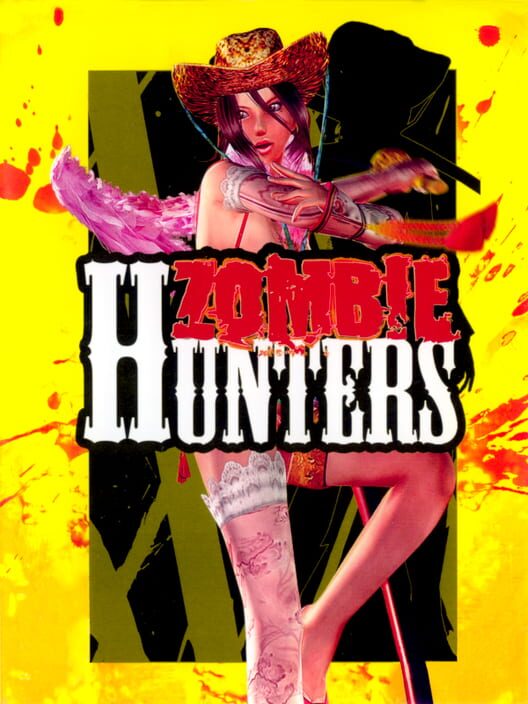
You might know this game by its original, more well-known title: Onechanbara. That’s right, Riho Futaba appeared in the first Onechanbara game… sort of. Zombie Hunters is actually an expanded re-release of the original Onechanbara, which adds some extra playable characters (including Riho herself).
I’ve never actually played a Onechanbara game before, so I’m excited to finally get a chance to experience the zombie hack and slash action! I remember back when Onechanbara: Bikini Samurai Squad came out and how ridiculous I thought the whole premise was… now I’m old and don’t have any pretensions of taste left, bring on the schlock!
How does it play?
Okay, so I wrote the intro section before actually playing Zombie Hunters… and man have I been left bitterly disappointed for many reasons. A warning up-front: I only played this game for a bit more than an hour, and only saw the first couple levels in that time. Maybe the game gets better as it goes on, or there’s some cool new mechanics added later, but a) I doubt it, and b) there’s no way in hell I was putting myself through this game’s shit to find out.
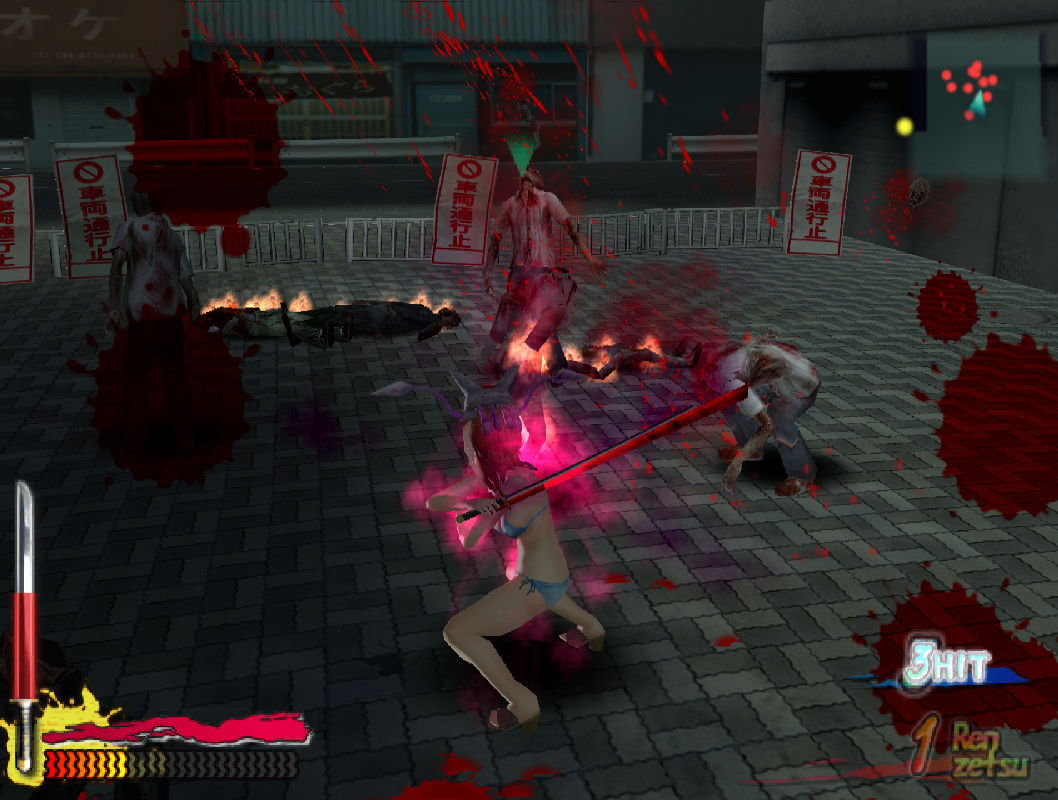
Going in, I assumed that Zombie Hunters would play kind of like Lollipop Chainsaw or Dynasty Warriors: simple hack ‘n slash action, not on par with a Devil May Cry or a Ninja Gaiden, but still some mindless fun. It turns out that those expectations were very optimistic. As the title would suggest, the enemies in this game are just hordes of zombies, which pose very little threat to you. You have to be standing by one for a few seconds before they’ll attack you, so unless you get surrounded by a horde, you shouldn’t be taking damage from the zombies very often. This would be fine if zombies died in a hit or two, but instead they take several hits (upwards of seven!) to kill.* Considering how many zombies you have to kill to clear an area, this soon becomes agonizing (especially when you backtrack through an area you’d already cleared out, only to see the entire horde returned to life). I eventually got a point where I was just running past all the hordes of zombies that aren’t mission critical… but even this isn’t a great idea, because the game has an XP system, which you use to upgrade your character’s stats (health, attack power, speed, etc). It takes an utterly INSANE amount of grinding through enemies to get enough XP to upgrade even one of your stats, so if you’re running past enemies, you’re just making this process take longer, and make the game more difficult for you (which apparently becomes a problem in the latter levels).
That leads us to the level design, which just fucking sucks. Levels themselves were very basic (city streets, parks, hospital, etc), with zero thought put into the world design. There’s no character or storytelling to the level design, they’re just combat arenas connected to combat arenas with nothing to break the action up. This doesn’t help the monotony of the combat any either. They’re also often mazes, with you having to fight your way through a horde of zombies in order to find a key, which you then have to take to the other side of the map (fighting through a ton of zombies on the way) to unlock a door, which then leads you to another key, that will open another door on the other side of the map so you can fight a boss… suffice to say, this gets old very fast.
Still, by far the worst thing about Zombie Hunters is the core gameplay. Zombie Hunters‘ combat revolves around sword swings and kicks… but here we come to the first problem with the combat, because I do not understand why kicks are even an option. Kicks are good for crowd control, but they do very little damage… which begs the question of why you wouldn’t just perform a wide swing your sword, which is also good for crowd control, but also does damage (which is important considering how long it takes to kill zombies). You’d think that there would be combos that let you mix up your sword and kicks, but I didn’t encounter any in my playtime.*
In addition, I really do not like how Zombie Hunters‘ combat system has been implemented. Special attacks are performed by pressing square (for the sword) or triangle (for kicks) and a direction input. This is an issue, because it means that you can’t be moving when you make an attack, or you’ll perform a special attack that you weren’t intending to. You end up having to stand your ground to maximize the number of hits you can get in, which makes you more susceptible to getting surrounded and attacked by enemies. This is a particular issue here, because all special attacks cause enemies to get knocked backwards. If you were trying to kill that enemy, you end up having to chase them down, making it take even longer to kill them… and even this is annoying because there’s no sprint button to close the distance quickly. You see what I’m saying here? The core mechanics are so fucking annoyingly-designed, it’s an endless parade of frustration.
By the way, that isn’t even the end of this game’s fucking bullshit design. Enemies don’t provide much of a threat, but I still died several times in my playtime… because the game’s mechanics were literally killing me. First of all, there’s the Iai technique, which blasts all nearby zombies backwards and heavily damages them in the process… however, this is done at the cost of a chunk of your health. This makes using the Iai technique extremely risky, used maybe a couple times per life unless you’re getting really greedy. More egregious though is the berserk mode: if you fill up a bar, then your character will automatically go into a standard “Super Saiyan” state where they attack faster and do more damage. Standard stuff really… except for the part where you take more damage from enemies while in berserk mode, and lose health every few seconds, AND you cannot manually end berserk mode, meaning that you will die in a matter of seconds as soon as it’s activated! This last point is especially ridiculous, because the only way to avoid guaranteed death is to find a goddess statue in the level (which will likely be too far away to reach before you die), or be lucky enough to have a goddess statue fragment consumable in your inventory when you need one. AND EVEN THEN, this wouldn’t be a problem if the game would let you heal regularly; instead you’ve got to take health consumables and have to hope you don’t run out… God, just writing all this out really made me realize that I kind of hate this fucking game.
*Granted, I believe that these issues can be mitigated if you spend upgrade points to increase your attack power and combo skills. Don’t take this as me defending the game though: the amount of grinding you need to do to do shit you should have been able to from the start is absolutely insane.
How does it look?
Zombie Zone certainly looks like a budget title, but I wouldn’t say that it’s necessarily a terrible-looking game by any means. It’s got a fair bit of style, which helps it to stand out at least a little bit.
How’s the soundtrack?
I honestly can’t even remember the soundtrack… that’s probably a bad sign.
How sexy is it?
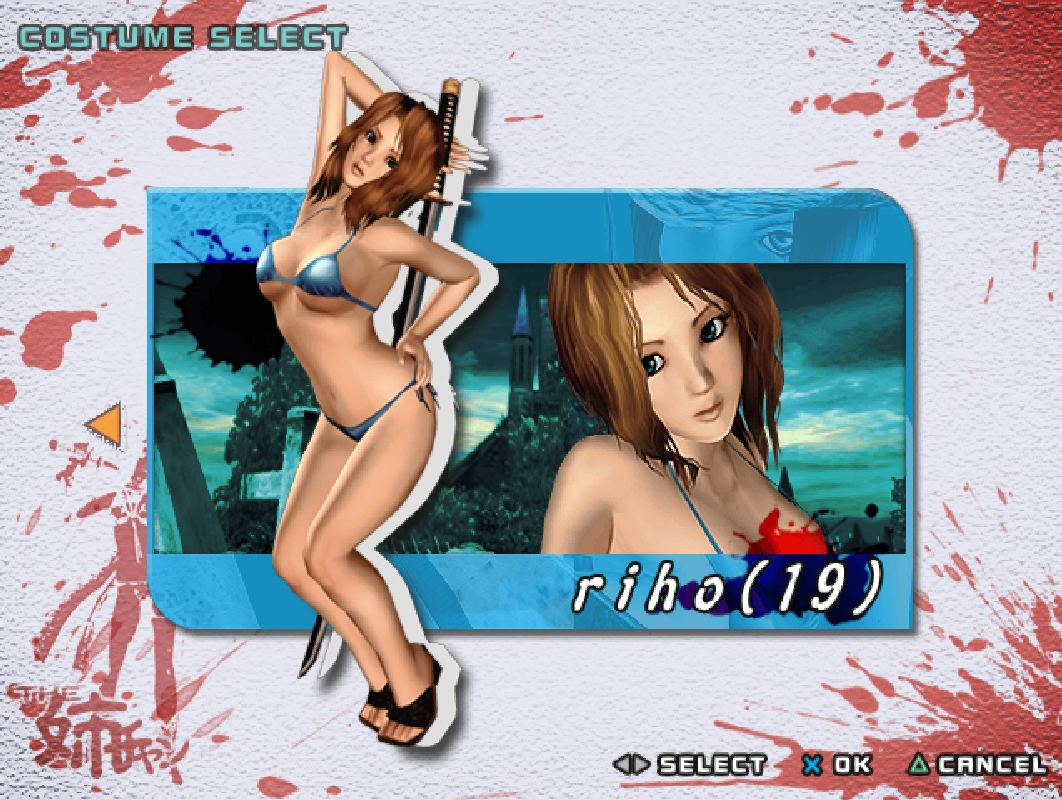
And here we get into Zombie Hunters‘ entire raison d’etre: you’re playing as a katana-wielding swordswoman dressed in only a bikini. As you’d expect, there’s a generous amount of jiggle physics on display. Given the silly/sexy premise, I was pretty shocked when I saw that your character can get completely covered in blood as they fill their berserk bar… but I guess some people might be into that?
Other than that… Zombie Hunters was honestly not all that arousing. Unlike, say, Bayonetta where sexiness is baked into the game’s systems, Zombie Hunters‘ sexiness is literally skin-deep. The combat system soon became such a dreary slog that I stopped registering that I was even playing as a sexy lady in a bikini… that’s honestly a major issue. The more I think about it, this game just makes me more and more appreciative of Lollipop Chainsaw.
Who are the characters?
Like I said in the intro, Zombie Hunters is an expanded re-release of the original Onechanbara. In addition to Aya (the main character of the Onechanbara games), this version has added Riho Futaba and her younger sister, Makoto. Unfortunately, Riho doesn’t get her own unique story or cutscenes… she’s basically just thrown into contextless levels that you complete just because the game said so. That said, I do appreciate that Riho’s berserk mode causes her to become mind-controlled by one of the aliens from Demolition Girl… but maybe that’s just because it reminds me of a much better game.
What’s the verdict?
I was pretty sour on Zombie Hunters when I played it, but just writing my thoughts on the game out makes me realize that I kind of fucking hated this game. There may be an audience for this game if they can be patient and grind their character to max level, but I found Zombie Hunters to be insufferably-designed and not worth the time it would ask of me to be even moderately-enjoyable.
All-Star Fighters (aka The All*Star Fighting Festival) (2005)
| Console: PS2 |
| Release Date: December 15, 2005 |
| Developer: Digital Zero |
| Publisher: D3 Publisher Inc. (in Japan) & Essential Games (in Europe) |
What is it?
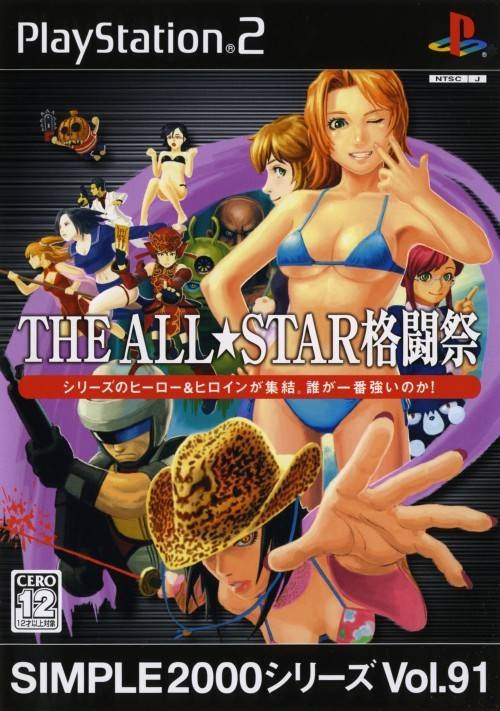
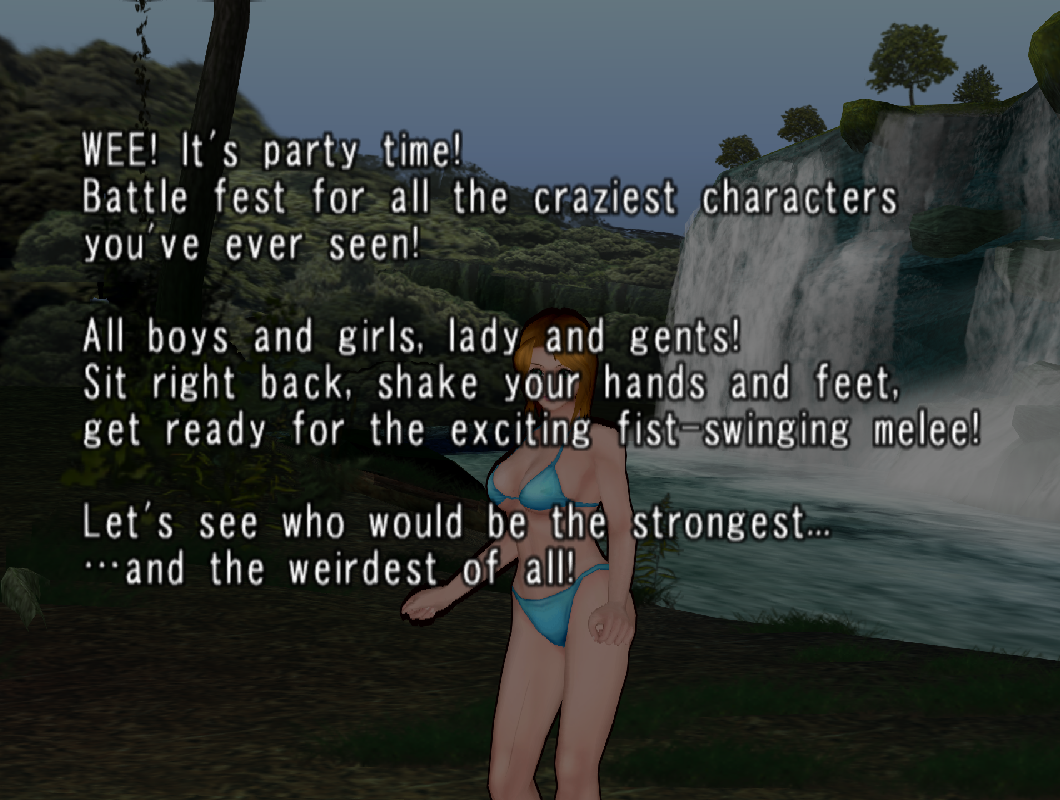
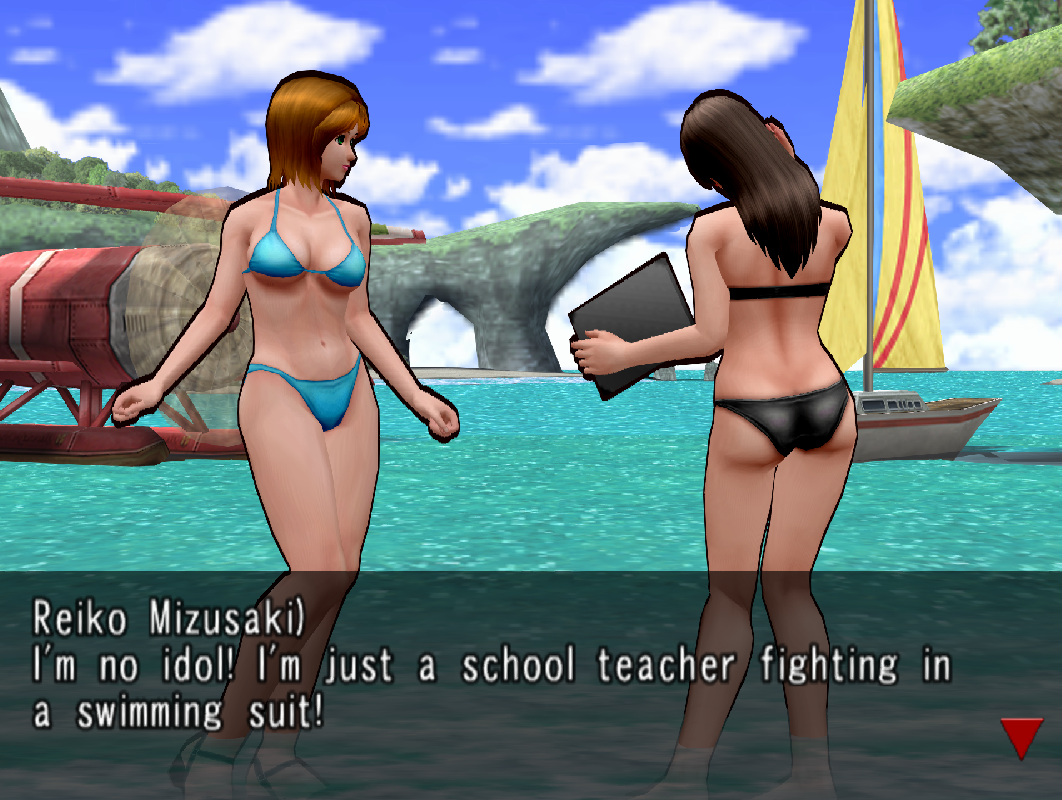
A few months after her appearance in Zombie Hunters, Riho would appear once again, this time in D3 Publisher’s crossover fighting game, All-Star Fighters! The game features characters from all over D3 Publisher’s Simple 2000 series of games… In retrospect, it’s wild for a low-budget publisher to have such cohesion between their franchises, not to mention the level of audience loyalty required for them to put together a crossover like this, but I’m so glad they did. I love seeing all the crazy surprises and cool appearances that these kinds of crossover fighters bring, so I’ve been very curious to see how All-Star Fighters will fare!
How does it play?
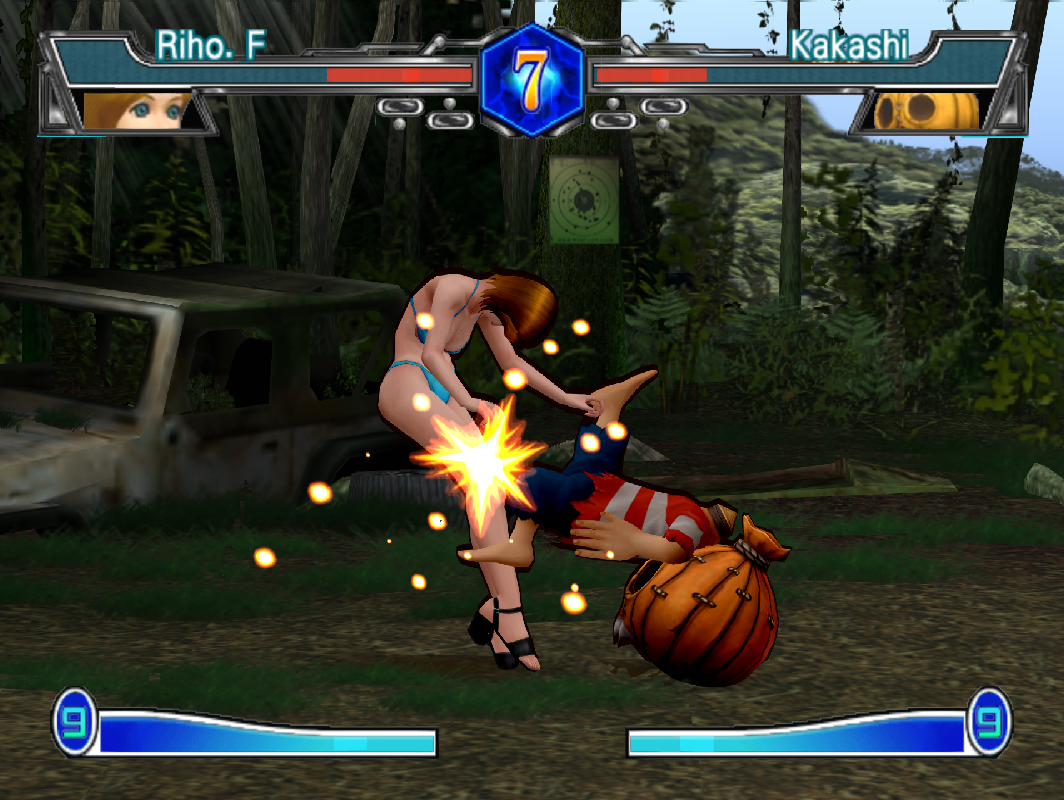
Unlike the last couple fighting games we’ve seen from D3 Publisher, All-Star Fighters is a classic 2D fighter in the vein of Street Fighter 2 and Mortal Kombat. All four face buttons can perform a different type of attack and you can use directional inputs for high/mid/low attacks. There are also some directional input combos, but I honestly could not figure out how to perform any. In any case, the fighting system is pretty simple and primitive, and it’s really weird that it doesn’t let you use the analog sticks for movement, but it functions decently enough overall.
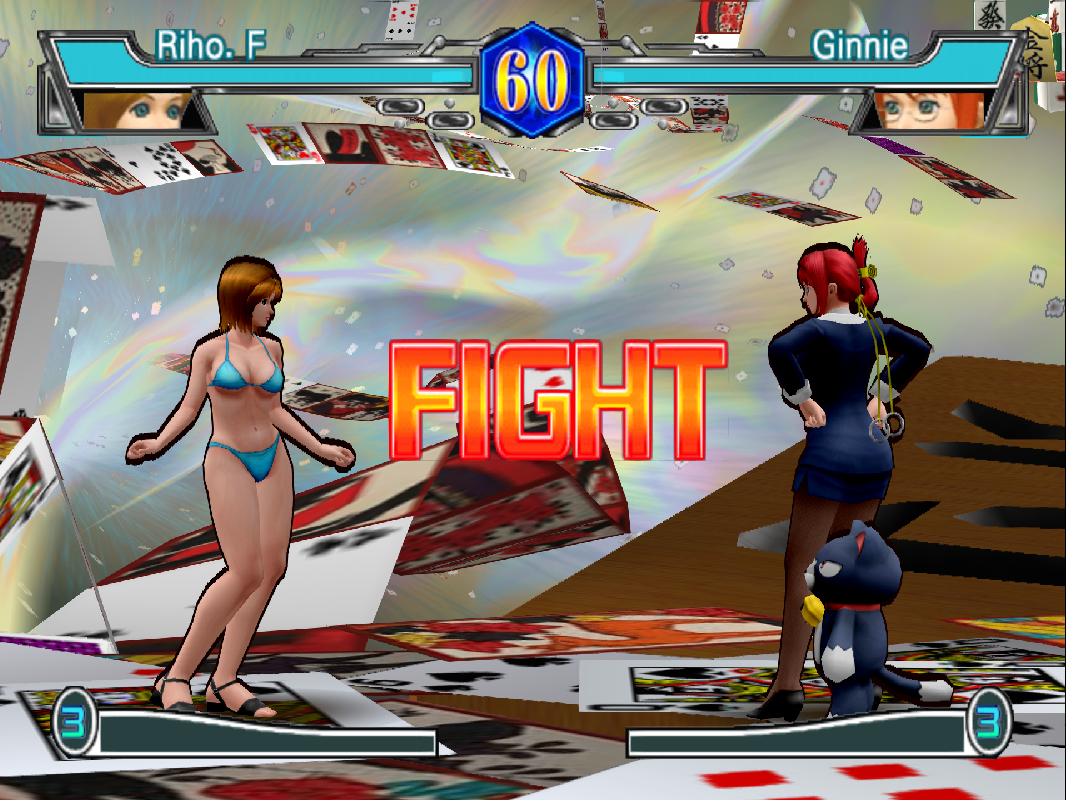
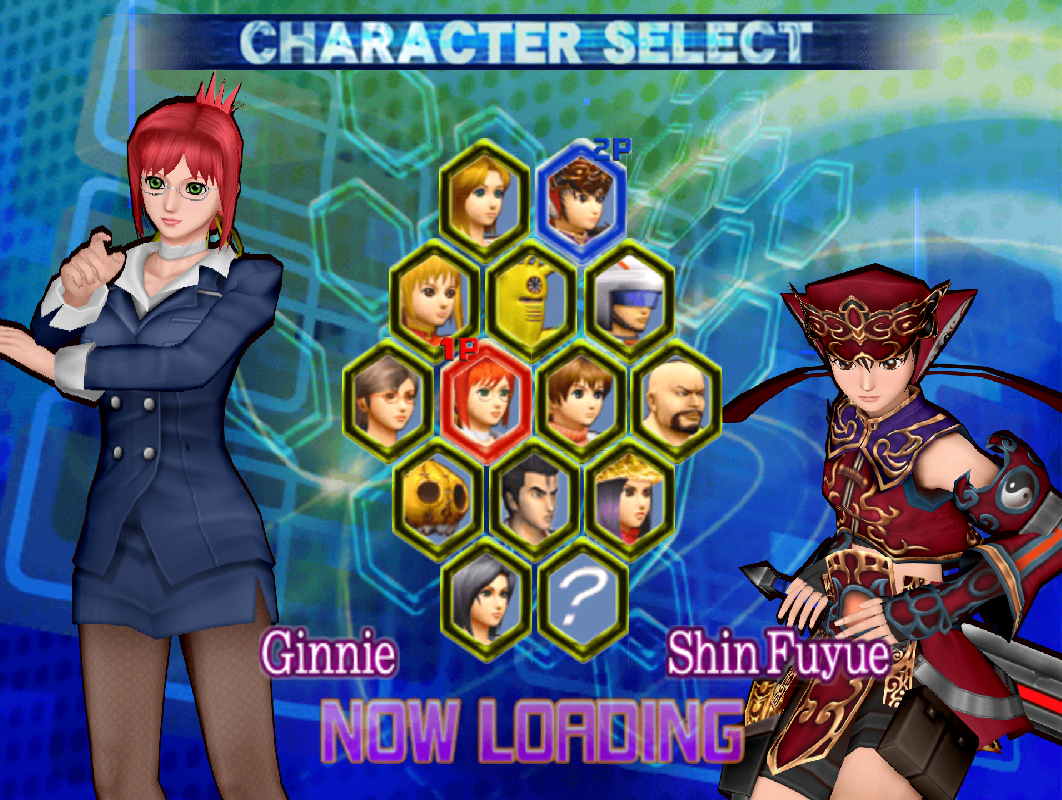
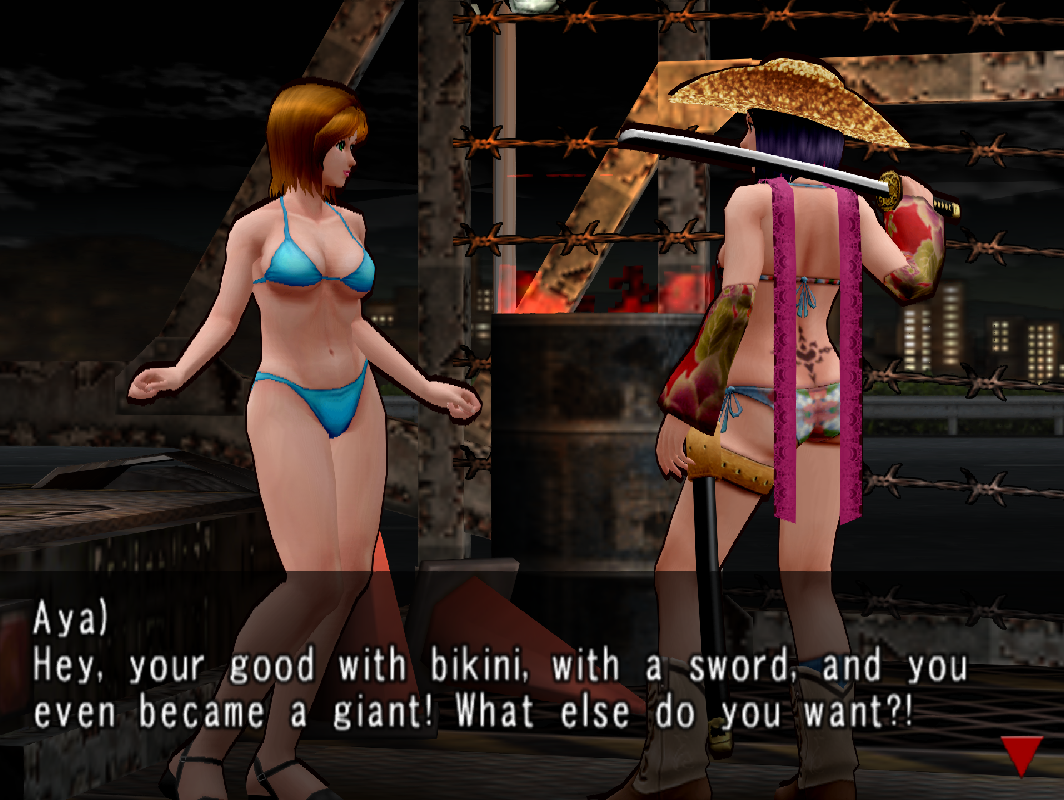
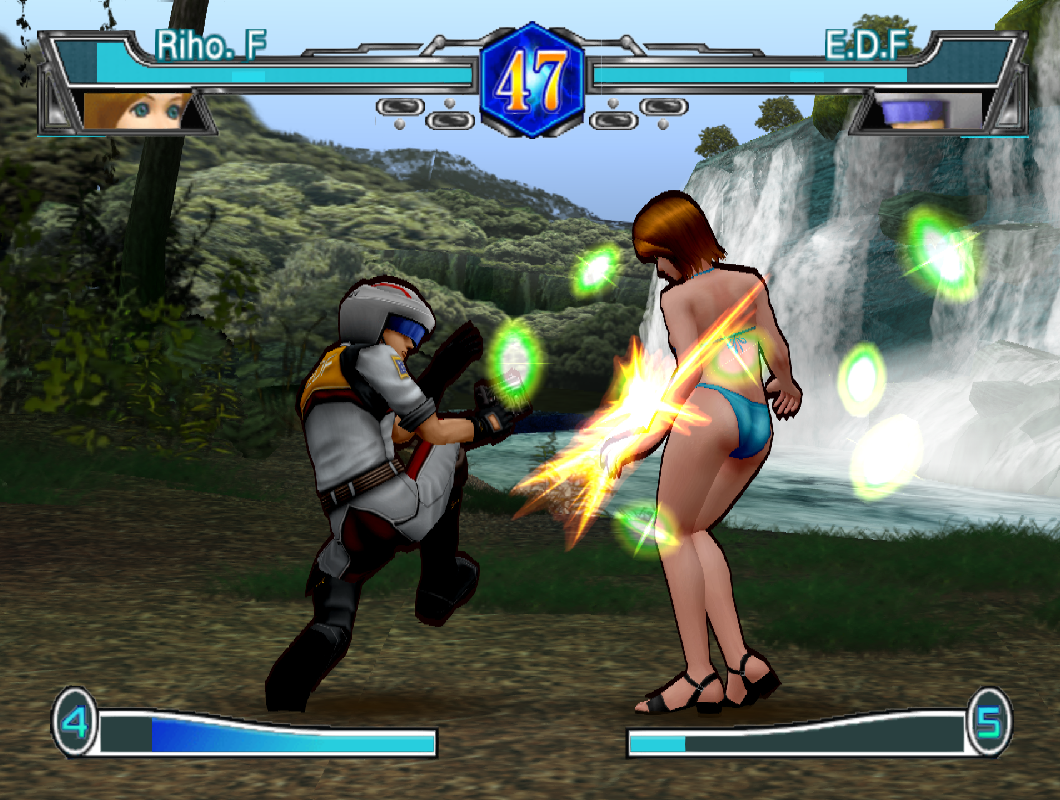
What really makes All-Star Fighters worth a look though is the fact that it’s a crossover fighter. The roster is very diverse and unique, with varied, distinctive, and unusual fighting styles, which makes every match-up feel fresh. One minute you’re in a fist fight with a Yakuza enforcer, the next you’re fighting a magical girl and her cartoon cat, then you’re in a gunfight with a sci-fi soldier, and then you’re facing a woman with a bo-staff… it’s honestly a really cool character roster overall!
The other big thing that All-Star Fighters has going for it is its creative stages. You’ve got a stage on the back of a moving, post-apocalyptic transport truck, one in a galaxy of playing cards, one in a Japanese garden, and one where you’re a giant destroying a city, amongst others! They’ve have clearly been themed after existing D3 Publisher games and have had a lot of love put into them!
How does it look?
All-Star Fighters‘ visual style reminds me of Super Smash Bros. for Nintendo 3DS with its thick outlines around the 3D models. The elaborate stage designs help make the game more enjoyable to look at too. However, All-Star Fighters looks more like a PSP game than it does a PS2 game, especially considering that this released at the tail-end of 2005. It’s not a particularly great-looking game, but it’s acceptable enough for me.
How’s the soundtrack?
Again, I can’t even remember this game’s soundtrack, aside from the generic rock track on the menu screen. That said, the character voices in-game are very repetitive and annoying.
How sexy is it?
All-Star Fighters isn’t a particularly sexy game. Like, don’t get me wrong: there are three or four different female characters dressed in nothing but a bikini, so it’s certainly going to raise a few eyebrows (amongst other things). However, beyond that and some barely noticeable boob jiggle, this game isn’t really trying to be overtly sexy.
Who are the characters?
As I’ve said earlier, the characters really help make All-Star Fighters a pretty good time. Particular highlights include:
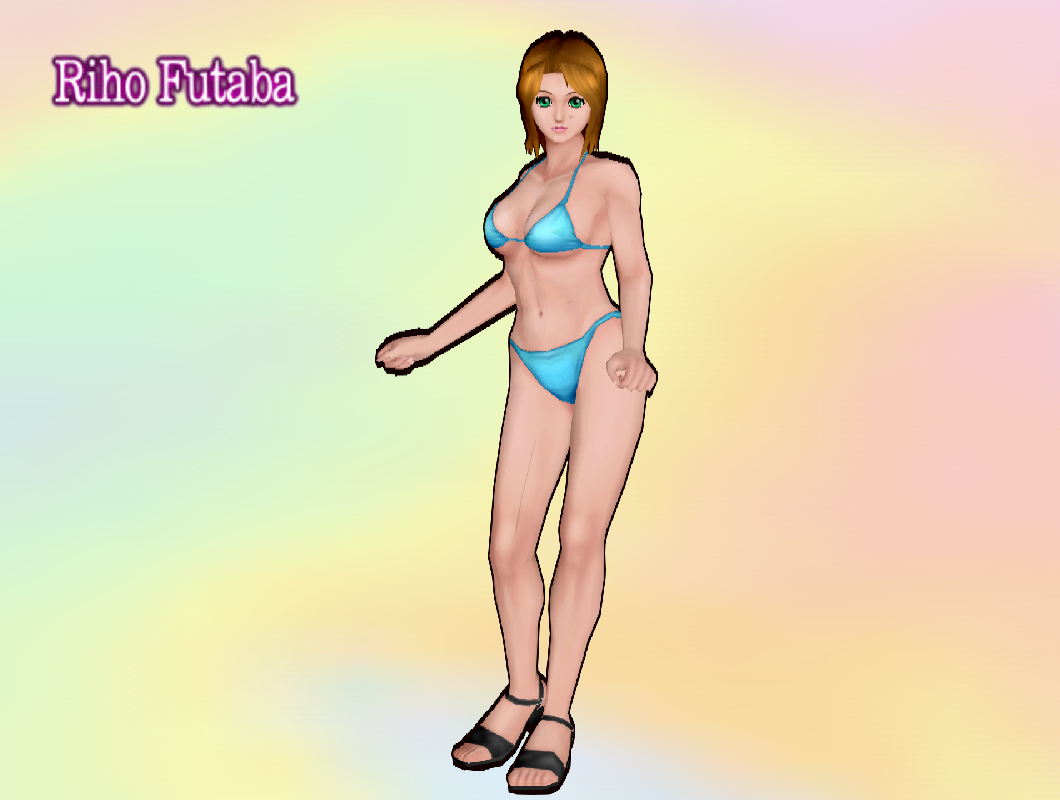
- So obviously there’s Riho Futaba, sporting her signature blue bikini. She has some of her moves from Fighting Angels and seems like more of a cutesy/joke character, despite also being arguably the game’s main heroine.
- Then there’s Makoto Futaba, Riho’s younger sister. She was also in Zombie Hunters, but I didn’t play long enough to unlock her… plus I was also kind of worried to see how D3 Publisher would handle a minor in one of their games. That said, if All-Star Fighters is anything to go by, she actually seems really cool. She’s more of a gruff tomboy than Riho, and seems like she’s ready to kick your ass at a moment’s notice.
- Reiko makes another appearance here, which would be her last appearance before her starring role in Onechanbara 2. She isn’t one of the more stand-out characters in the roster, but I had to mention her considering how often she’s recurred throughout this article.
- There’s also Aya from Onechanbara, whose katana attacks hit hard and have long reach, making her a really deadly opponent.
- Then there’s a random soldier from Earth Defense Force. He’ll straight-up pull out a gun and shoot you, which is kind of hilarious to see in a fighting game like this.
- In terms of fighting style, my favourite character might have to be Ginnie & Blacky who apparently hail from a Japan-only game called “The Kanshikikan“. She fights alongside this cartoon cat (Blacky), floats like a psychic, and can counter and hit you with lightning. It’s a wild and eclectic moveset, which really makes her fun to play and face off against.
What’s the verdict?
All-Star Fighters is not a great game by any means, but I honestly had some fun with it. It’s very simple and primitive, but the wild variety amongst the cast at least helps it to stand out. I can see this game being really fun with friends… although, again, you’d still probably have more fun playing Smash Bros considering the sort of experience this is going for.
Fitness Fun (aka Love*Aerobics) (2006)
| Console: PS2 |
| Release Date: March 10, 2006 |
| Developer: Tamsoft Corporation & HuneX Co., Ltd. |
| Publisher: D3 Publisher Inc. (in Japan) & 505 GameStreet (in Europe) |
What is it?
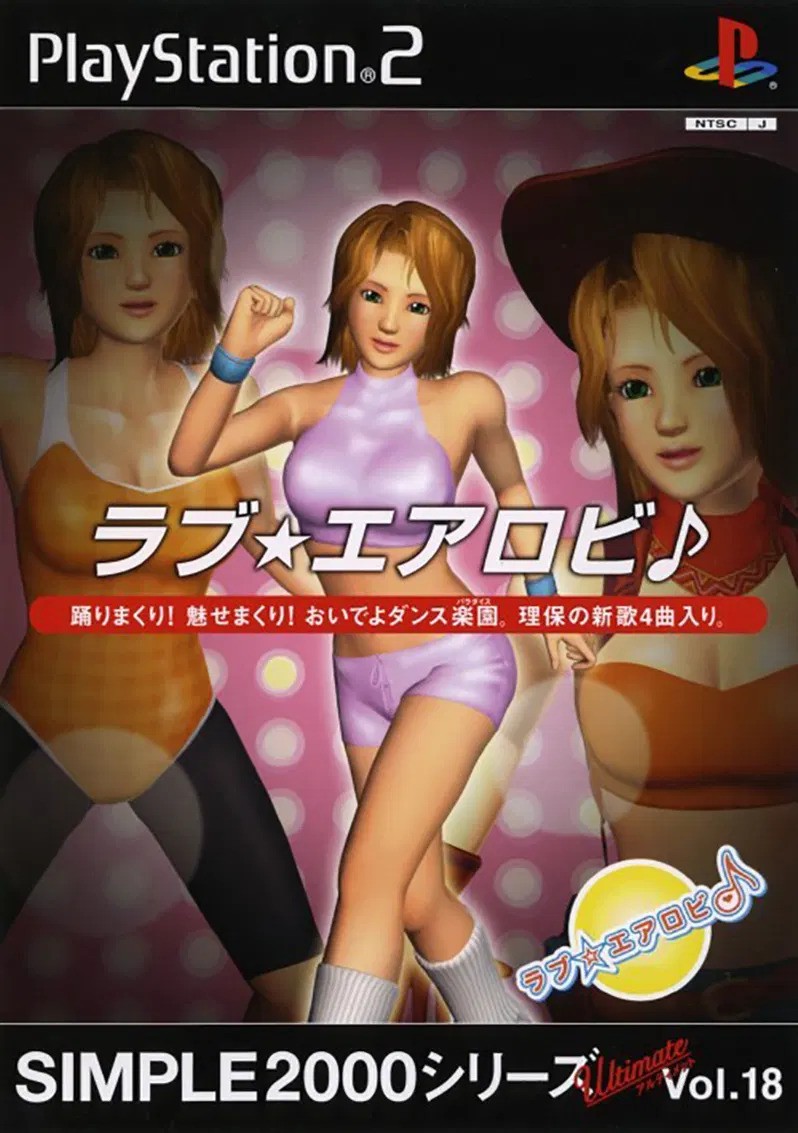
Released a few months after All-Star Fighters, Fitness Fun makes good on the idea that Riho Futaba has body image issues, which she tries to correct by doing some aerobics routines. This game would have released just before the Wii and games like Wii Fit were popularizing this sort of genre, so it makes for another moderately-trailblazing experience from D3 Publisher.
How does it play?
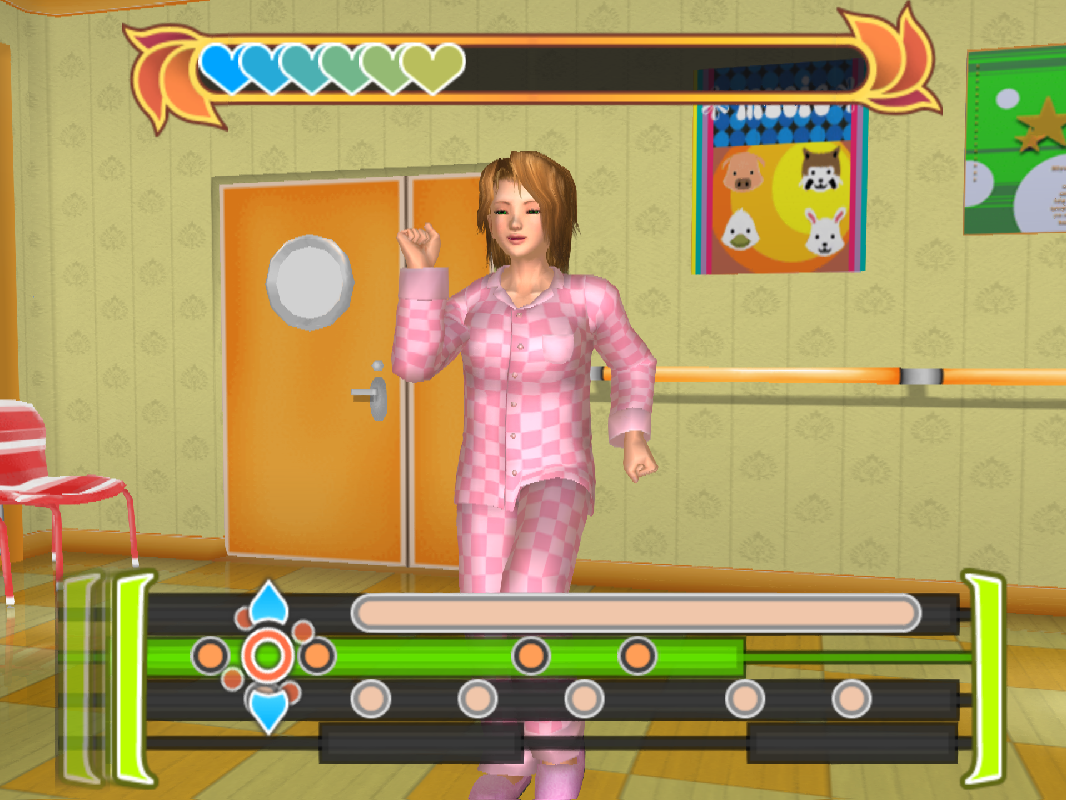
Considering that there are no peripherals to get you moving, it’s kind of hard to consider Fitness Fun to be a proper “fitness” game. I think it’s actually more accurate to call this a rhythm game in the vein of Amplitude.
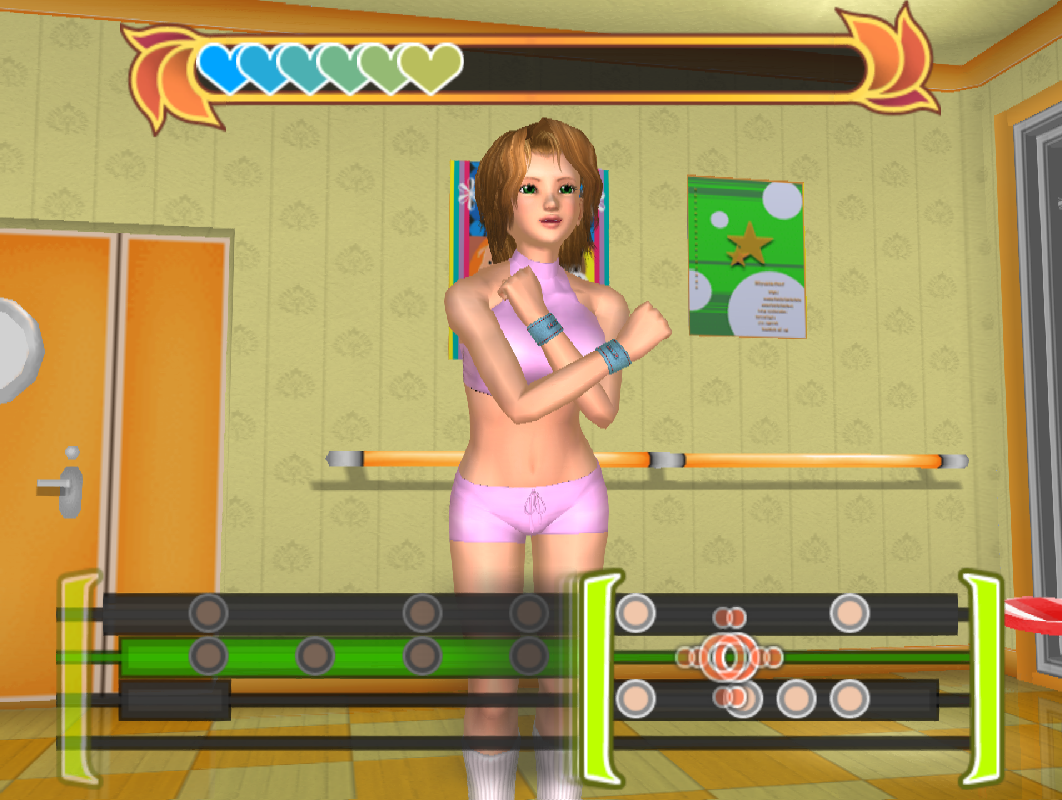
Riho has a stamina bar which will tick down as she performs her fitness routine. Your goal is to hit as many notes as perfectly as possible in order to minimize your stamina drain. To do this, you have four tracks with notes on them that you can switch between to maximize your score. However, you can only switch tracks while the track is “thick”, which forces you to think ahead and be strategic with your lane choices, because you can get caught without any notes to perform for a few seconds and no way to switch lanes if you aren’t thinking ahead. A poorly-timed note can actually be more penalizing than a missed note, so you’re really rewarded for being precise and strategic. As you’d might expect, this makes Fitness Fun‘s core gameplay rock solid, legitimately fun, and something you actively want to replay to get better at.
Really, there’s only two issues I have with Fitness Fun. First of all, there are only twelve tracks, which can be completed (including retries) in less than an hour. Granted, learning to perfect them can take quite a bit longer, but it would have been nice to have some more variety. Worst of all though, you cannot pause the game normally: if you press Start during a run, you will be forced to restart or quit the track, which is just a baffling design choice.
How does it look?
Fitness Fun is, once again, reusing Riho’s character model from Pink Pong, but it still looks solid, even this late in the PS2’s lifecycle. The levels are simple, but detailed well-enough, and the visual effects that play as you perform well are aesthetically pleasing. I also really like how the menu screen is diegetic, having you go to different areas of Riho’s bedroom for options, new outfits, the next level, etc.
How’s the soundtrack?
Considering that this is a rhythm game, the soundtrack holds on outsized importance in Fitness Fun. While the tracks here aren’t exactly memorable (just a bunch of sugary sweet J-pop), they sync properly with the notes to help you time your button inputs accurately.
How sexy is it?
Fitness Fun came out loooooong after the heyday of sexy aerobics tapes, but it’s pretty clear that this game’s tapping into the same sort of appeal. You can also unlock new costumes for Riho for performing well, but this game’s sexy content is, overall, pretty tame. You don’t even get access to her signature bikini immediately and must unlock it after replaying levels.
Who are the characters?
This is a Riho-only show – literally no other characters appear or are alluded to. Riho is her usual self, we don’t get a whole lot of insight into her that hasn’t been seen before. Still, it’s nice to see her working on her body image issues, and seeing her feel good about herself after a solid run gives you extra incentive to try to succeed.
What’s the verdict?
I was very surprised by Fitness Fun. As a bit of context, I found Fitness Fun after all the other games in this list and was tempted to just ignore it, because how good can a fitness game be anyway? Honestly… it might just be the best game in this entire article. The core gameplay is rock-solid and, even though it’s a bit short, it’s addictive and really makes you want to replay and improve. I was never able to get better than a B-grade, but with some practice, I think that higher scores are very achievable. Hell, the game has a replay save system, so you can record your best performances for posterity.
Man… I expected that I’d like Onechanbara, but meanwhile I’m hating that game and loving Fitness Fun and Paparazzi… what a strange, unexpected world we live in! This is exactly why I love these “That Time When” articles, they always are full of surprises!
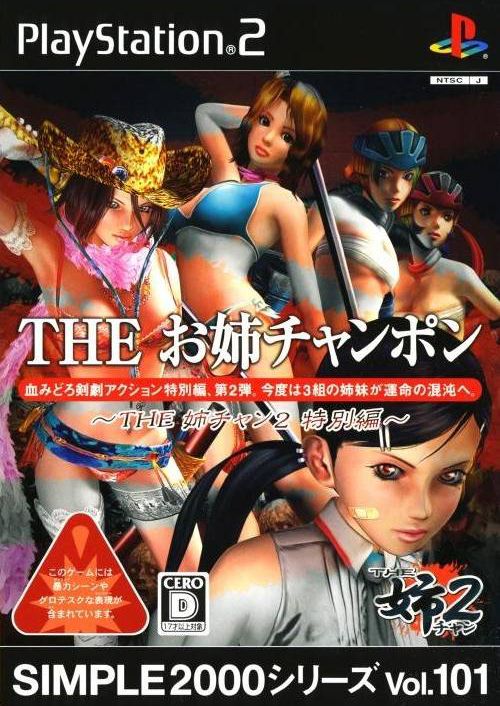
Zombie Hunters 2 (aka The Sister Mixture ~The Sister 2 Special Edition ~) (2006)
| Console: PS2 |
| Release Date: June 29, 2006 |
| Developer: Tamsoft Corporation |
| Publisher: D3 Publisher Inc. (in Japan) & Essential Games (in Europe) |
What is it?
It’s Onechanbara 2… with how disappointingly awful the first game was, I sincerely hope that this sequel makes some MASSIVE improvements, or this will be the shortest review of all-time…
How does it play?
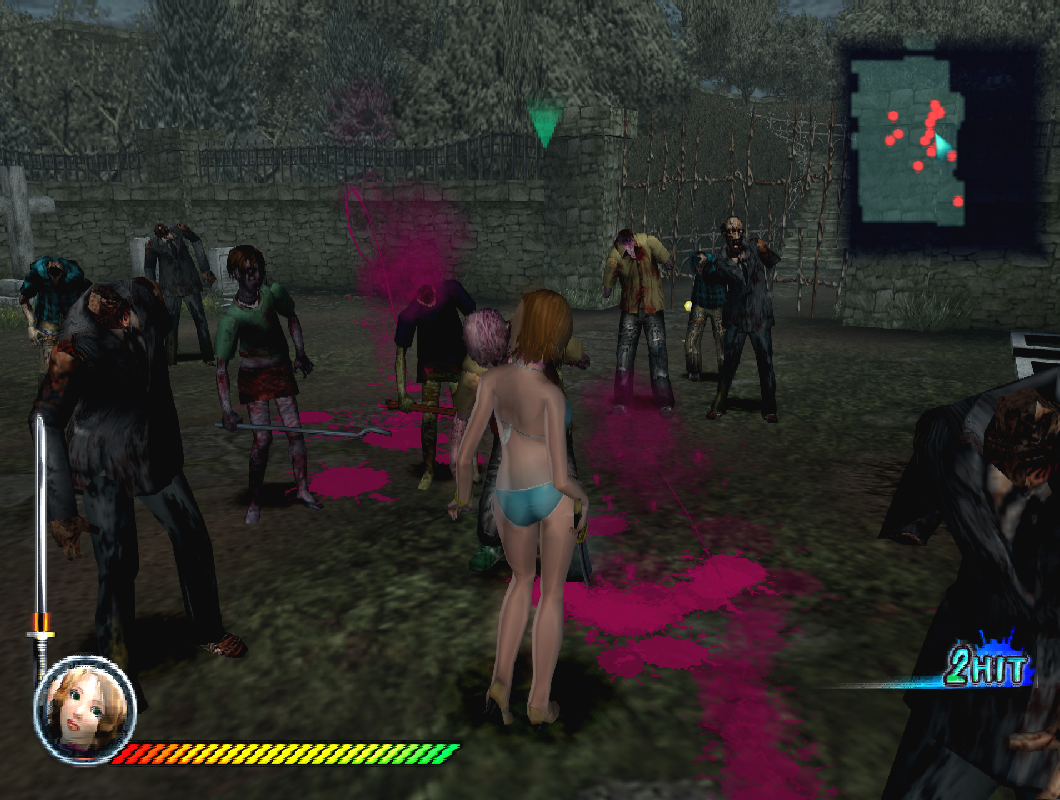
Okay, so I’m in luck: nearly every major complaint I had about the first Zombie Hunters has been addressed in this sequel. Zombies often die in as little as one or two hits, which considerably speeds up the pace of the levels and makes it feel less monotonous, THANK GOD. Your Iai technique no longer costs health to use, so you can actually use it as needed without fucking yourself over. The berserk bar takes longer to fill and you have more goddess statues dotted around to avoid getting into berserk state when you cannot afford the health drain it brings. There’s more enemy variety, with zombie crows also dotting the levels and requiring different approaches to fight effectively. You can actually use the right analog stick to manually move the camera now too! Everything is just so much better. While there are still some issues (combos are still pretty limited, and level design still kind of sucks) Zombie Hunters has been brought to where it should have been in the first place.
How does it look?
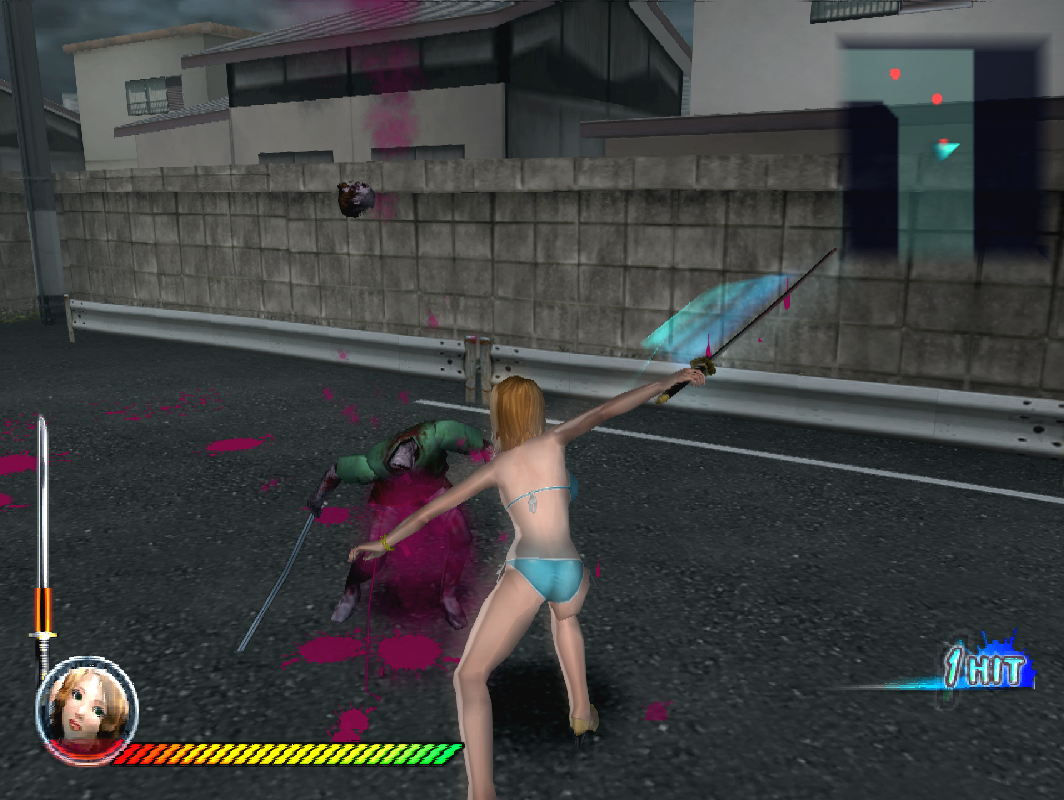
Zombie Hunters 2‘s graphics are definitely a step up from its predecessor. While it’s is still not exactly a “good-looking” game, the improvement is appreciated. It is kind of weird that the blood is now pink rather than red though, what’s up with that?
How’s the soundtrack?
Zombie Hunters 2 has a fairly generic rock soundtrack, but it works for the sort of tone these games are going for.
How sexy is it?
Zombie Hunters 2 is pretty similar to its predecessor in terms of sexiness. The graphics have improved, so the girls are a bit more defined and jiggly, and there are way more scantily-clad girls to oogle, but otherwise this is about on-par with its very shameless predecessor.
Who are the characters?
In addition to Riho, Makoto, and Aya from the previous game, Zombie Hunters 2 introduces Reiko to the franchise, along with two other D3 Publisher characters, Hana and Kiku. This gives the action (and eye-candy) a lot more variety. That said… what’s Makoto, a fifteen-year-old, doing in a game like this, D3 Publisher???
What’s the verdict?
While I struggle to say that Zombie Hunters 2 is a good game, it’s definitely an enormous improvement on its predecessor. It’s crazy how tuning your mechanics just a bit can make such a massive difference in playability!
And that is, more or less, the journey of Riho Futaba. While she did make appearances in several more Nintendo DS games over the following years, and became a regular in the Dream Club games, these didn’t get released in English and they were nowhere near as varied or ambitious as the titles we’ve looked at here. With the sun setting on the PS2 and DS, Riho Futaba’s appearances in D3 Publisher games waned in the late 2000s, before ceasing altogether with a mahjong game in 2012.
But, unexpectedly, Riho did make a cameo appearance recently in DLC for Earth Defense Force: World Brothers… unfortunately, this game has a voxel art style, so she’s practically unrecognizable (even with her blue bikini on). Still, it’s cool to see D3 Publisher give their old mascot a nod every once in a while… but I’d be legitimately excited to see Riho make a cameo appearance again in 2026!
I’ll be honest: I still don’t really get why Riho Futaba became a mascot for an entire company. Her design was very generic. Her personality was bland. Her entire appeal was that she was dressed in a blue bikini all the time. And yet… by sheer, overwhelming exposure, I did find myself becoming quite fond of Riho Futaba over the course of these ten games. She’s been in so many weird and varied games over the years, and maintains such a consistently cute personality across all of them that you just love seeing what she’ll be up to next time your paths cross.
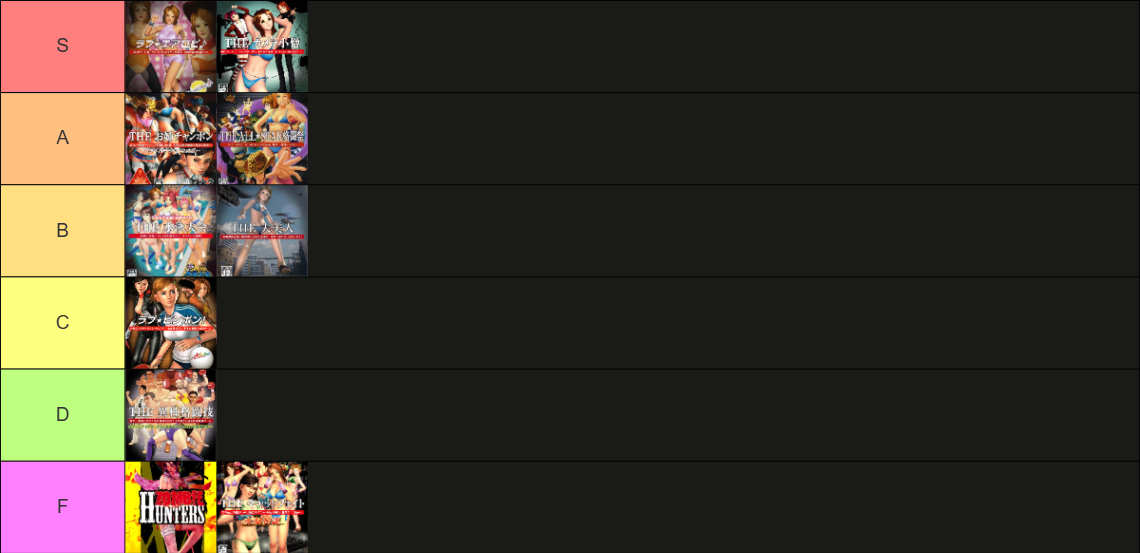
With all that said, here’s how I’d rank the Riho Futaba games we looked at for the article:
If you liked this article…
I hate ads. You hate ads. In order to stop polluting my site with obtrusive and annoying ads, I’ve elected to turn them off on IC2S. That said, writing still takes time and effort. If you enjoyed what you read here today and want to give a token of appreciation, I’ve set up a tip jar. Feel free to donate if you feel compelled to and I hope you enjoyed the article! 🙂
About the Author
